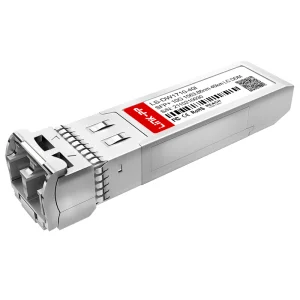
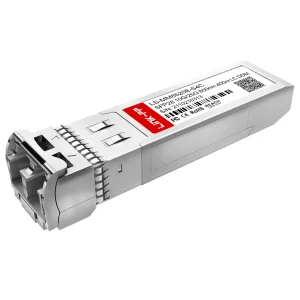
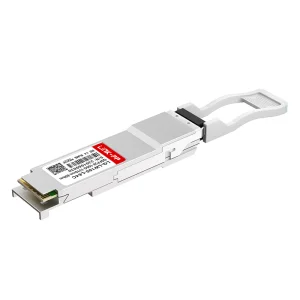
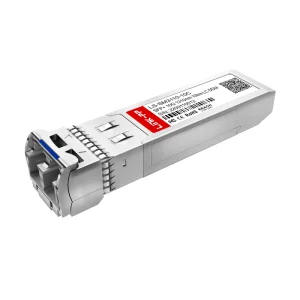
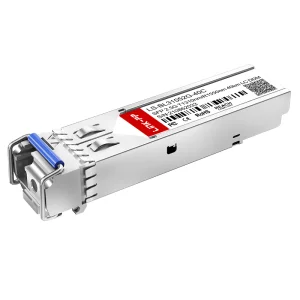
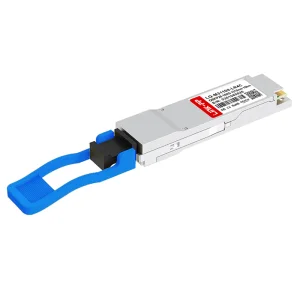
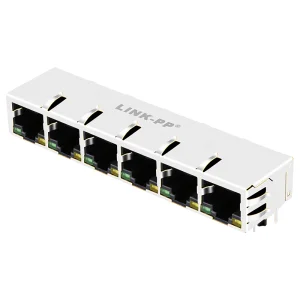
Explore our high-density modules engineered for reliable signal integrity and optimized thermal performance.
Understanding the critical engineering parameters that govern optical transceiver enclosures in modern hardware design.
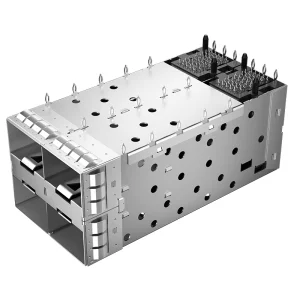
EMI is a primary failure mode in high-density optical interfaces operating above 10Gbps. Standard SFP+ and SFP28 cages employ metallic shielding structures manufactured from high-tensile copper alloys. Grounding tabs and spring fingers seal gaps between the cage envelope and the bezel cutout, establishing a low-impedance path to the system ground. This design prevents electromagnetic radiation from leaking or interfering with adjacent high-speed traces.
As transceivers process higher data rates (up to 28G per channel for SFP28 and 112G for QSFP-DD), power consumption rises, generating localized heat. Cages are configured with optional riding heat sinks (pinned, finned, or customized geometries) locked by clip-assembly mechanisms. This configuration draws heat away from the transceiver module jacket and dissipates it via internal chassis fan currents, maintaining operating temperatures within the safe 0°C to 70°C window.
Modern telecommunication backplanes utilize press-fit compliance pins (such as eye-of-the-needle pins) rather than hand soldering. This solderless termination provides mechanical stability and maintains low impedance connections. Additionally, it eliminates thermal shock to the host PCB during assembly, facilitating clean surface routing for high-speed differential signal pairs.
Advanced SFP, SFP+, and SFP28 cages are engineered to comply with the Small Form Factor Committee multi-source agreements (MSAs) including SFF-8431, SFF-8432, and SFF-8071. This compliance ensures complete mechanical and intermateable interoperability with multi-vendor hot-pluggable optical modules, direct attach copper (DAC) cables, and active optical cables (AOCs).
How specialized manufacturing clusters deliver global supply chain resilience, cost efficiency, and technical accuracy.
China has established itself as the center for advanced high-frequency connector and metal enclosure production. By leveraging vertically integrated supply chains, manufacturers can manage process stages from raw copper alloy refining and high-speed precision progressive stamping to electroplating and automated assembly inside localized high-technology industrial zones.
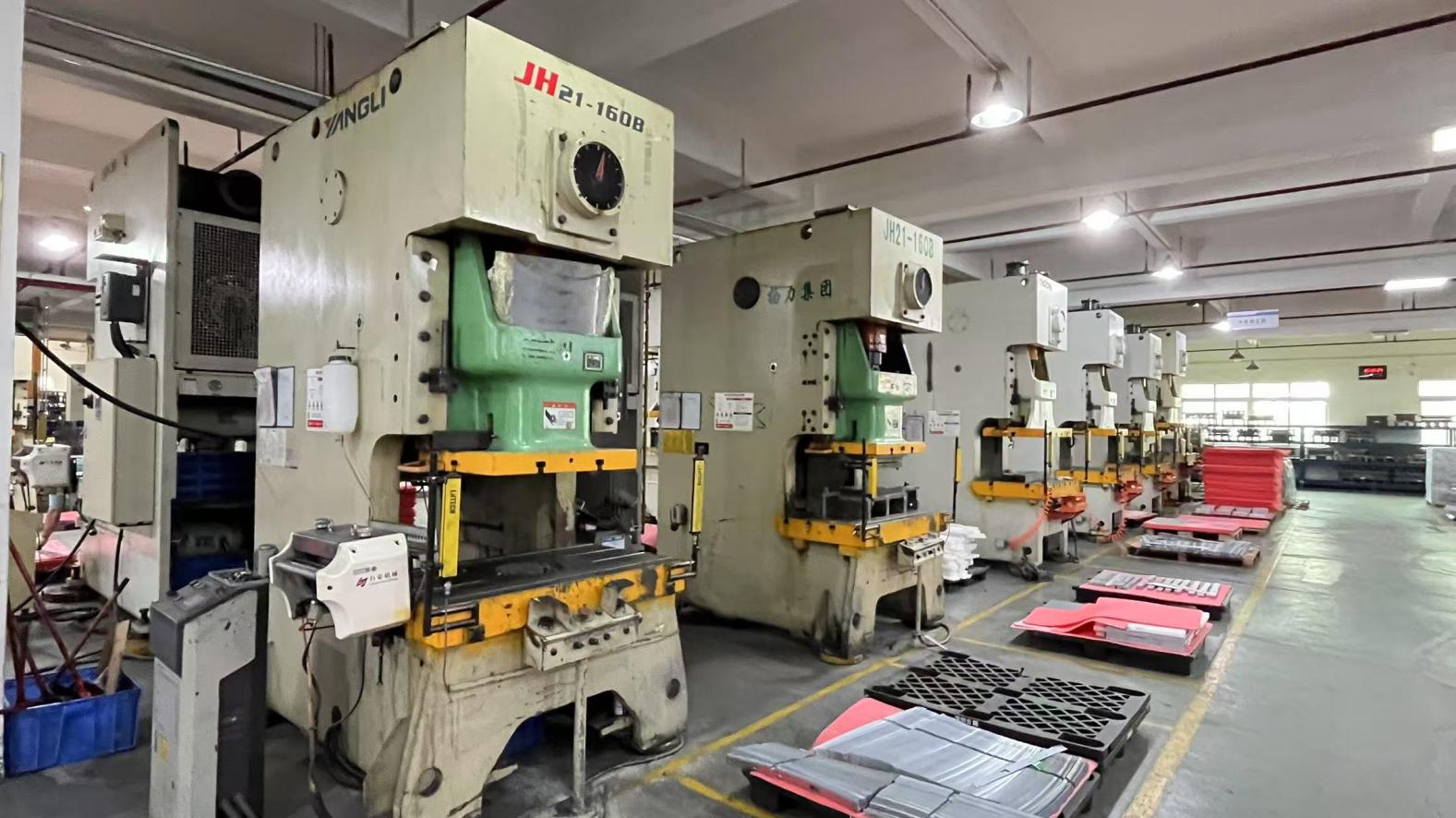
These capabilities allow Chinese manufacturers to produce micro-stamped components with tight tolerances (down to ±0.02 mm) at high volume. Using progressive dies with up to 40 stages, complex SFP cages can be stamped from a single metal sheet, eliminating mechanical seams that weaken structure and cause EMI leaks.
Additionally, local access to specialized plating plants ensures precise control over nickel-barrier underplating and selective gold or tin finishes on terminal pins. This structure provides durability for up to 100 mating cycles while preventing oxidation and whisker growth.
For global hardware OEMs and procurement managers, partnering with an experienced exporter in China yields significant advantages:
| Feature Parameter | Standard Specifications | Advanced Custom Configuration Options |
|---|---|---|
| Base Metal Material | Copper Alloy / Phosphor Bronze (C5191 / C5210) | Beryllium Copper for high-elasticity requirements | EMI Gasket Types | Elastomeric Conductive Gaskets / Metal Spring Fingers | Hybrid EMI shielding fingers with selective plating |
| PCB Termination | Press-Fit (Eye of the Needle) / Through-Hole Solder | Surface Mount Technology (SMT) custom grounding tabs |
| Port Configurations | Single Port (1x1), Ganged (1xN), Stacked (2xN) | Custom matrix layouts with integrated light pipes |
| Thermal Integration | Clip-on Aluminum Heat Sinks (Finned/Pinned) | Copper Pedestal blocks with phase-change TIMs |
A trusted manufacturing partner for optical transceivers and high-performance interconnect components.
Founded in 2016, Novafiber is a professional optical transceiver manufacturer specializing in high-performance fiber optic communication solutions for global data centers, telecom operators, and enterprise networking applications.
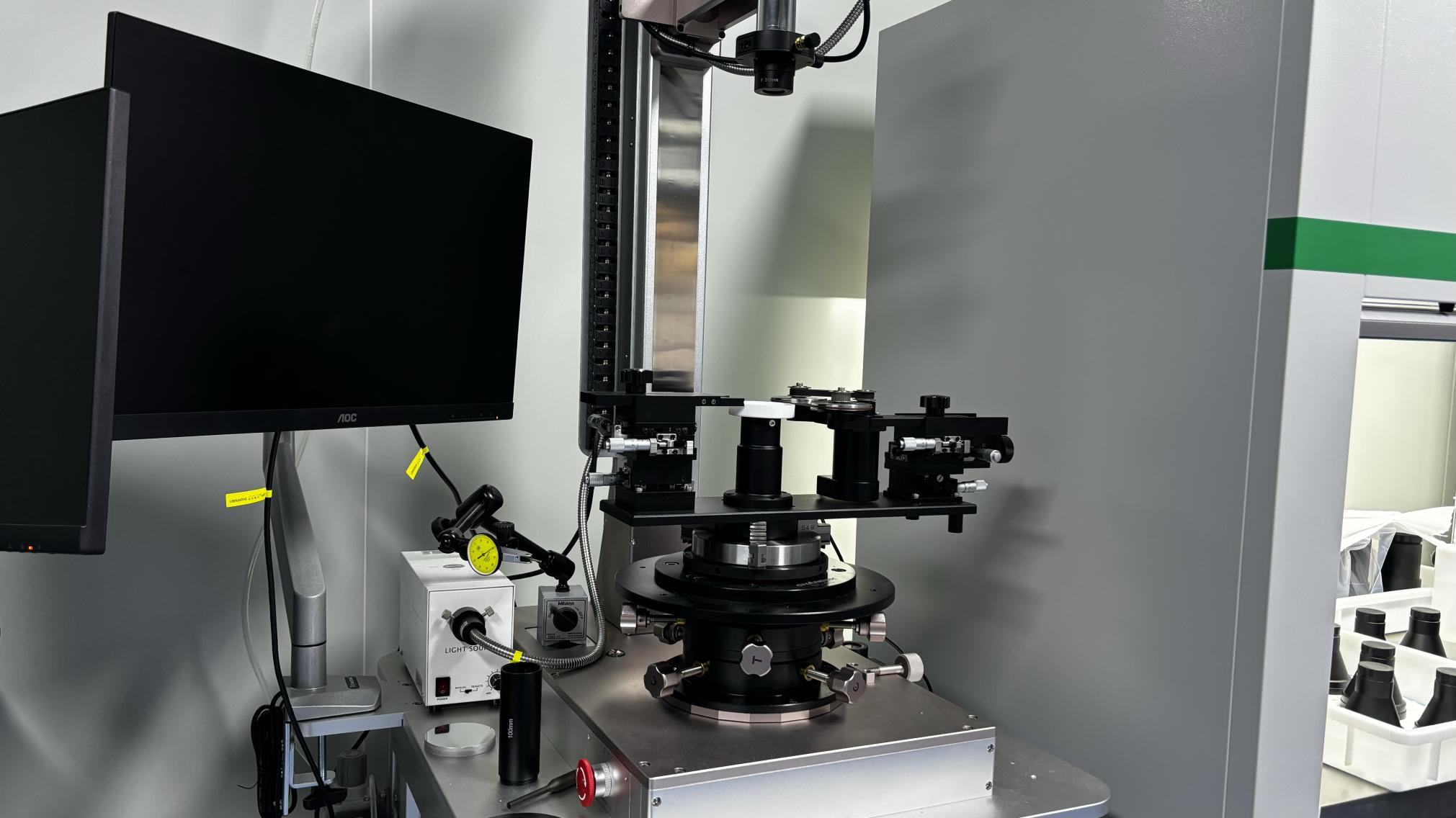
With a modern production facility covering approximately 420㎡, Novafiber leverages over 9 years of industry experience and 7 years of export experience to serve customers across North America, Europe, Southeast Asia, and the Middle East. The company maintains a flexible and efficient supply chain network with more than 1,200 supply chain partners, enabling stable mass production and fast delivery.
Quality assurance is central to Novafiber’s operations. The company employs 65 quality inspection personnel and follows strict control protocols, including IPC standards, automated optical testing, and environmental stress screening (ESS). Product testing includes 100% functional testing, burn-in testing, and high-temperature aging tests to ensure long-term field reliability.
Novafiber's R&D team consists of 180 experienced engineers supporting advanced optical module development. Demonstrating strong innovation capabilities, Novafiber launched 320 new products in the past year, spanning 1G to 800G optical transceivers, DAC/AOC cabling systems, and customized interconnect products.


Deploying high-speed interface cages and transceivers across critical system topologies.
Artificial Intelligence training clusters require low-latency interconnects. The high thermal density of GPU computing units necessitates SFP and QSFP cages equipped with optimized heatsinks and press-fit connectors. These configurations ensure stable performance, low bit error rates (BER), and minimal insertion loss during massive data transfers.
Cellular base stations require hardware that operates reliably under varied outdoor temperatures. Ruggedized cages with anti-corrosion finishes, dual-rate transceivers (like the Cisco 10G/25G SFP28), and moisture-resistant grounding structures ensure long-term stability in harsh outdoor environments.
Enterprise data storage networks depend on high port density. Ganged configurations, such as 1x4 and 1x6 layouts, and stacked 2xN configurations enable network switches to fit up to 48 ports in a single 1RU rackmount unit, maximizing data throughput per rack unit.
Important criteria for procurement departments sourcing SFP components.
Enterprise procurement requires compliance with environmental standards, including RoHS and REACH. Transceiver cages and connectors must be manufactured from compliant copper alloys and utilize lead-free plating processes to prevent hazardous materials from entering the supply chain.
High-quality cages must undergo cycle testing to ensure mechanical durability. Mating forces must be controlled to prevent damage to host PCBs and transceiver contacts during module installation and extraction.
Modern system design often requires customized dimensions, mounting methods, and configurations. Partnering with a manufacturer capable of producing custom cage designs and modified heat sink options helps resolve physical layout challenges on dense PCBs.
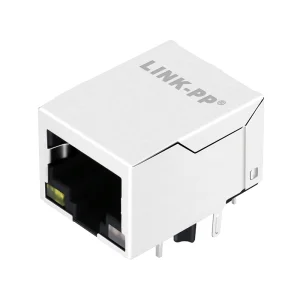
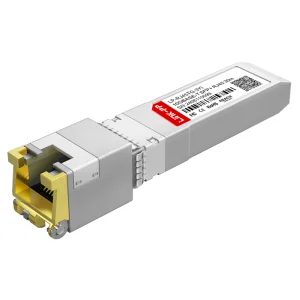
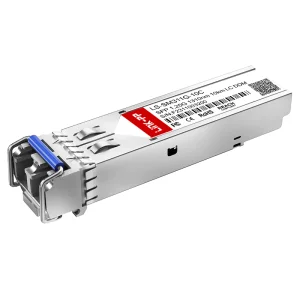
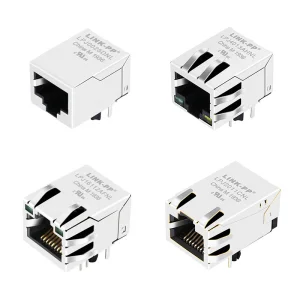
Complete your design with our high-reliability board-level jacks, transceivers, and compatible cabling accessories.
Technical answers to common engineering and sourcing questions regarding transceiver enclosures.
The primary difference lies in the signal integrity optimizations required for higher data rates. Standard SFP cages support speeds up to 4Gbps. SFP+ cages are optimized for 10Gbps to 16Gbps transmissions, requiring improved EMI shielding. SFP28 cages are engineered for 25Gbps and 28Gbps per channel. They feature advanced high-frequency resonance dampening and tighter mechanical tolerances to maintain return and insertion loss profiles within limits at high frequencies.
Press-fit compliance pins (such as eye-of-the-needle pins) establish a solderless, gas-tight mechanical connection inside plated-through holes on host PCBs. This design avoids the thermal stress of reflow soldering, which can warp thin-clad multi-layer PCBs. Additionally, press-fit termination is easier to replace in the field during repairs and produces fewer signal impedance anomalies compared to thick solder fillets.
Riding heat sinks sit directly on top of the optical transceiver module jacket. An open-window cage design allows physical contact between the heatsink's base plate and the module. A spring clip applies constant mechanical downward force, ensuring thermal contact. When air flows through the system chassis, it draws heat from the heatsink fins, cooling the transceiver.
Conductive elastomeric gaskets provide superior EMI sealing at higher frequencies (25Gbps and higher) because they offer continuous electrical contact around the bezel perimeter, closing micro-gaps. Metal spring fingers are durable and cost-effective, making them suitable for standard 10Gbps SFP+ deployments with lower mating cycles.
Yes. Custom engineering options include modified light pipe arrays, custom heat sink profile modifications (finned, pin-fin, low profile), and specialized mounting dimensions to fit compact designs.
 Novafiber