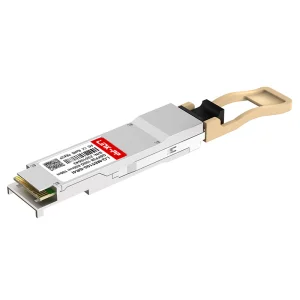
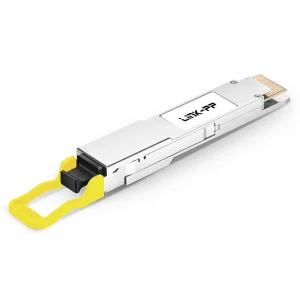
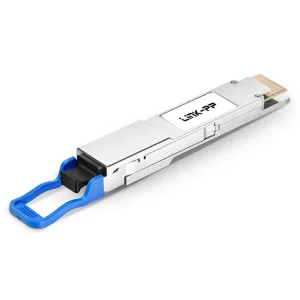
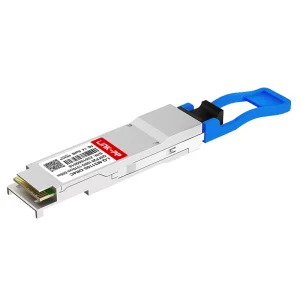
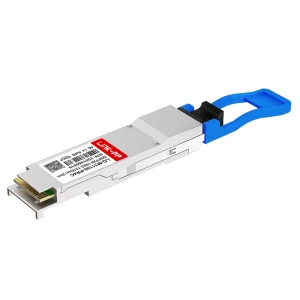
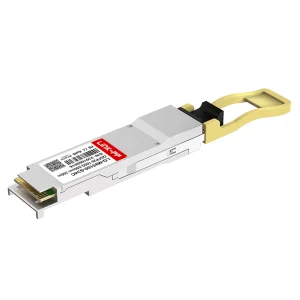
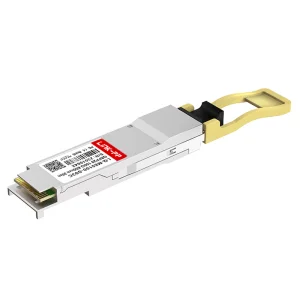
Optical Transceivers 100G/200G/400G Module Supplier & Exporter

Empowering Hyperscale Data Centers, AI Infrastructure, and Next-Gen Telecom Networks with Leading-Edge Optical Modules and Custom OEM/ODM Engineering

Premium 100G & 200G Optical Modules

Explore our high-performance transceivers, fully compatible with top-tier switching systems and engineered for low latency, low power consumption, and optimal density.
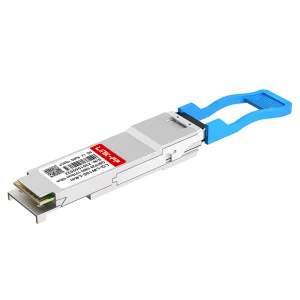
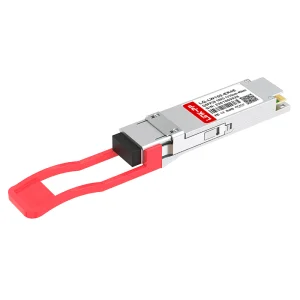
100G Base-t MPO QSFP28
100G Base-t Ethernet Module 850nm 100m MPO QSFP28 Optical Transceiver
View Details
QSFP28 100G Base-t MMF
QSFP28 100G Base-t 850nm 100m MPO MMF Fiber Optical Transceiver Module
View Details
100GBASE-LR4 QSFP28 10km
100GBASE-LR4 Duplex LC SMF Optical Transceiver Module Single Mode 1310nm 100G QSFP28 10km
View Details
100GBASE-ER4 QSFP28 40km
100GBASE-ER4 SMF QSFP28 Transceiver Duplex LC Single Mode 1310nm 100G Optical Module 40km
View Details
100GBASE-ZR4 QSFP28 80km
100GBASE-ZR4 Duplex LC SMF Optical Module 1310nm Single Mode 100G QSFP28 Transceiver 80km
View Details
200GBASE-SR4 QSFP56 100m
200GBASE-SR4 Optical Transceiver Module MTP/MPO-12 MMF Multimode 850nm 200G QSFP56 100m
View Details
400G DR4 QSFP-DD 500m
400G DR4 QSFP-DD PAM4 1310nm 500m MTP/MPO-12 APC SMF Optical Transceiver Module
View Details
400G CWDM QSFP-DD LR4 10km
Single Mode 400G CWDM QSFP-DD LR4 10km Duplex LC SMF Optical Transceiver Module
View Details

Global Leader in Optical Interconnect Technology

Novafiber Communications Co., Ltd. delivers carrier-grade manufacturing and elite R&D capabilities for critical network links globally.

9+
Years Industry Experience
180+
R&D Engineers
$8.5M
Annual Export Revenue
1,200+
Supply Chain Partners

Unmatched Manufacturing Integrity & Precision Testing

Founded in 2016, Novafiber has developed high-level engineering and manufacturing architectures with a modern production facility covering approximately 420㎡. Designed from the ground up for high-capacity, multi-rate optical module testing, our infrastructure supports the entire lifespans of high-speed transceivers from 1G up to 800G.

Our operation relies on a workforce of 65 specialized quality inspection personnel. Every module we export goes through a rigorous quality regime featuring automated optical inspections, IPC-standard optical fiber cleaning and testing, and environmental stress screening (ESS). The reliability of our transceivers is secured by 100% functional validation, active burn-in testing, and high-temperature aging cycles.

Tailored OEM/ODM Customization & System Compatibility

For systems integrators, cloud service providers, and global telecom networks, compatibility is paramount. Our engineering capability accommodates complex, custom firmware architectures. We support custom EEPROM configurations to match strict vendor parameters, wavelength tuning, custom optical link budgets, and tailored branding and packaging.

With 320 new product releases in the past year alone, Novafiber is a responsive and fast-moving player in the optical market. We partner with over 1,200 suppliers globally to lock in components, offering steady pricing, resilient lead times, and continuous product iterations.

Optical Transceiver Engineering Whitepaper

Architecting Next-Generation Network Interconnects: Analyzing Paradigm Shifts in 100G, 200G, and 400G Networks

1. The Evolution of Optical Transceiver Architectures

The global demand for bandwidth, driven by hyperscale cloud operations, generative AI, and high-frequency trading networks, has catalyzed a major migration in optical transceiver technology. Historically, standard networks relied on NRZ (Non-Return-to-Zero) modulation. However, as link speeds pushed past 25Gbps per channel, NRZ encountered severe physical limitations regarding signal integrity, chromatic dispersion, and high power consumption.

To overcome these physical bottlenecks, the optical industry developed PAM4 (4-Level Pulse Amplitude Modulation). By transmitting two bits of information per symbol period, PAM4 halves the required Nyquist bandwidth, allowing 50Gbps and 100Gbps per lane transmission. This advance underpins the modern 400G (using 8x50G or 4x100G lanes) and 800G form factors. Furthermore, integrating DSP (Digital Signal Processing) chips within transceivers allows real-time compensation for channel distortions, ensuring high-speed transmission over long distances.

2. Global Procurement Priorities: TCO, Compatibility, and Quality Assurance

For enterprise IT directors, data center infrastructure planners, and telecommunication hardware procurers, selecting optical transceivers involves analyzing several key factors:

  • Multi-Vendor Compatibility: Modern data centers avoid vendor lock-in. Transceivers must interface flawlessly with switches and routers from Cisco, Arista, Juniper, Mellanox (NVIDIA), and other major vendors. Decoupling hardware purchases from the switch vendors reduces Capital Expenditures (CAPEX) while maintaining hardware agility.
  • Thermal Efficiency and Power Budgets: High-density switch environments are limited by heat dissipation. Transitioning to newer architectures like QSFP-DD and QSFP56 requires transceivers with low power consumption profiles (typically below 10-12W for 400G transceivers) to prevent thermal overload and minimize datacenter cooling expenses (OPEX).
  • Mean Time Between Failures (MTBF): For mission-critical networks, transceivers must achieve an MTBF of over 1 million hours. Quality control must include rigorous thermal stress tests, optoelectronic calibration, and comprehensive optical spectrum profiling.

3. Macro-Level Optical Network Solutions

Novafiber delivers customized optical link solutions for diverse network topologies:

Hyperscale Datacenters

Engineered for high density and low latency. Utilizing 100G QSFP28 SR4/LR4 and 400G DR4/FR4 modules to support Spine-Leaf physical configurations over short and medium distances.

Metro & Long-Haul Carriers

Engineered for long distances. Utilizing 100G ER4/ZR4 and 400G LR8/ER8 modules to link nodes up to 40km and 80km without inline amplification.

AI/ML Clusters

Optimized for Ultra-Low Latency and massive throughput. Using PAM4-enabled QSFP-DD, QSFP56, and active optical links to bypass network processing bottlenecks during distributed AI training workloads.

4. Strategic Product Customization and ODM Logistics

As a global OEM/ODM provider, Novafiber handles the complex customization requirements of telecommunication providers. We offer customized digital diagnostic monitoring (DDM/DOM) configurations, specialized wavelengths (CWDM and DWDM grids), and custom optical power budgets. Our production line uses automated alignment systems to maintain consistency across batch productions.

We streamline international shipments via duty-minimizing routing, standard custom declarations, and robust logistical tracking. Operating under strict Quality Management Systems, we ensure our shipments arrive safely to markets across North America, Europe, Southeast Asia, and the Middle East.

Technology Roadmap: The Path to 800G and 1.6T

Where high-performance optical communication is heading next.

The optical networking industry is moving fast. As data centers transition from 100G/200G/400G architectures, we are actively developing and deploying 800G and 1.6T optical systems to meet the needs of next-generation infrastructure.

Key technologies driving this evolution include:

  • LPO (Linear Drive Pluggable Optics): By removing the DSP from the optical module and utilizing the host ASIC for signal recovery, LPO reduces power consumption by up to 50% and minimizes latency, making it ideal for AI computing clusters.
  • CPO (Co-Packaged Optics): This approach moves the optical engine directly onto the same substrate as the network switch ASIC, eliminating copper traces to reduce power loss and maximize bandwidth density.
  • Silicon Photonics (SiPh): Integrating lasers, modulators, and photodetectors onto silicon chips enables mass manufacturing, high yield rates, and lower per-gigabit manufacturing costs.

Our Testing Standards

Novafiber transceivers undergo a thorough validation pipeline to ensure reliable performance in production environments.

  • Bit Error Rate (BER) Testing: Validated below 1E-15 limits across all channels under heavy workloads.
  • Eye Diagram Verification: Ensures clean optical signal output and ample margins above MSA standards.
  • Multi-Switch Interoperability: Tested in real-world environments on Cisco, Arista, Juniper, and Mellanox platforms.
  • Thermal Chamber Aging: 24-hour heat and humidity cycling to verify stability from 0°C to 70°C.

Frequently Asked Questions

Expert answers regarding optical transceiver compatibility, technical standards, and procurement options.

1. How does Novafiber guarantee transceiver compatibility with third-party switches?
We operate a dedicated compatibility testing lab containing switches and routers from major networking brands, including Cisco, Arista, Juniper, Mellanox, Dell, and HP. We analyze and update the EEPROM coding to match the target device's software environment, ensuring seamless recognition, hardware handshake, and proper DDM readings.
2. What is the difference between QSFP-DD and QSFP56 form factors for 200G/400G links?
QSFP56 utilizes 4 lanes of 50G PAM4 to achieve 200G throughput. QSFP-DD (Double Density) doubles the electrical interface lanes to 8, allowing up to 400G (using 8x50G lanes) or 800G (using 8x100G lanes). QSFP-DD remains backward compatible with standard QSFP28 and QSFP56 modules.
3. How are 100G ER4, ZR4, and LR4 optical transceivers categorized by distance?
100G LR4 is designed for transmission distances up to 10km over single-mode fiber (SMF). 100G ER4 supports long-reach spans up to 40km by utilizing LAN-WDM wavelengths and highly sensitive APD receivers. 100G ZR4 uses advanced amplification and modulation techniques to reach up to 80km without intermediate optical repeaters.
4. What quality control standards does Novafiber implement for exported products?
We follow IPC standards for manufacturing and employ 65 QC inspectors. Our test processes include automated optical inspection (AOI), 100% optical power calibration, bit error rate (BER) checks, and high-temperature burn-in tests. This ensures our products maintain a low return rate and reliable long-term field performance.
5. Can Novafiber handle custom OEM/ODM production and custom packaging?
Yes. Our R&D team of 180 engineers provides full customization services, including custom firmware, wavelength tuning, custom optical link budgets, and custom private-label branding and packaging.

Advanced 400G & High-Density 100G Modules

Explore our high-performance optical modules, engineered for hyperscale data centers, deep-reach networks, and AI clusters.
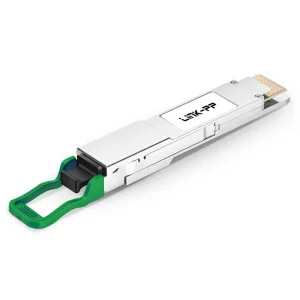
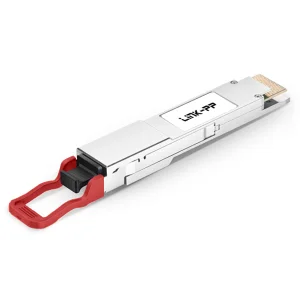
400GBASE-FR4 QSFP-DD 2km
400GBASE-FR4 Duplex LC Optical Module 400G CWDM QSFP-DD PAM4 2km DDM SMF Optical Transceiver
View Details
400GBASE-LR8 QSFP-DD 10km
400GBASE-LR8 Duplex LC Optical Transceiver Module SMF 1310nm 400G QSFP-DD 10km
View Details
400GBASE-ER8 QSFP-DD 40km
400GBASE-ER8 Single Mode 1310nm 400G QSFP-DD 40km Duplex LC SMF Optical Transceiver Module
View Details
400G QSFP-DD SR8 100m
Multiple Mode 850nm 400G QSFP-DD SR8 100m MTP/MPO-16 APC MMF Optical Transceiver Module
View Details
100GBASE-PSM4 QSFP28 500m
100GBASE-PSM4 QSFP28 1310nm 500m SMF 100G MPO-12 Optical Transceiver Module
View Details
QSFP28 100GBASE-PLR4L 2km
QSFP28 100GBASE-PLR4L 1310nm 2km 100G MPO-12 SMF Optical Transceiver Module
View Details
100GBASE-ESR4 QSFP28 300m
100GBASE-ESR4 QSFP28 100G 850nm 300m MPO-12 MMF Optical Transceiver Module
View Details
100GBASE-SL4 QSFP28 30m
100GBASE-SL4 Multimode 100G QSFP28 850nm 30m MPO-12 MMF Optical Transceiver Module
View Details

Production Facility & Engineering Infrastructure

A look inside our ISO-compliant manufacturing center, cleanrooms, and optical testing laboratories.


All 100G/200G/400G Module Products