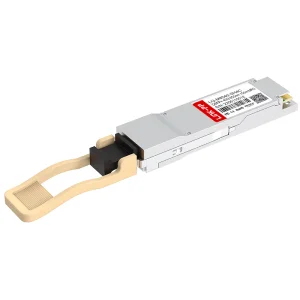
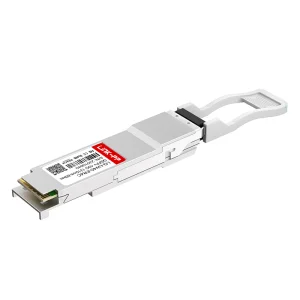
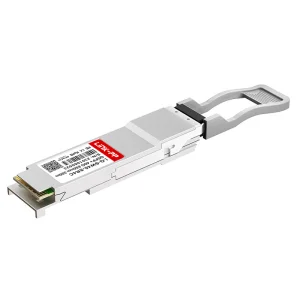
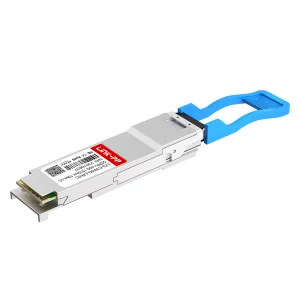
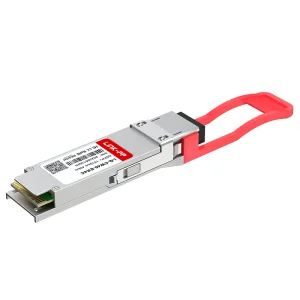
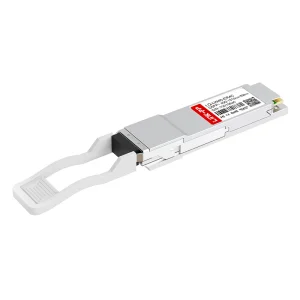
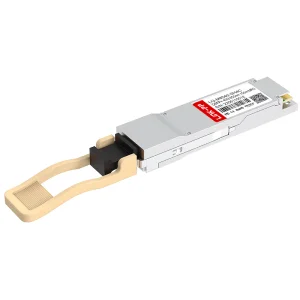
Explore our top-tier, carrier-grade 40G optical modules, designed for low latency, maximum throughput, and full MSA compliance.
In the contemporary digital landscape, structural shifts toward hyperscale computing, AI workloads, and edge intelligence are accelerating bandwidth requirements. The 40G QSFP+ (Quad Small Form-factor Pluggable Plus) transceiver module remains an indispensable standard for mid-range aggregation, storage area networks (SAN), and regional telecommunications backhaul. By utilizing four independent transmit and receive channels operating at 10 Gbps per lane, the 40G QSFP+ standard allows network operators to multiply their throughput without completely overhauling physical cabling topologies.
From a global commercial standpoint, while 100G and 800G form factors dominate the core of Tier-1 hyperscale cloud platforms, the 40G standard represents the primary migration path and architectural cornerstone for enterprise campuses, public administration intranets, and industrial automation networks. It strikes a crucial economic and technical balance: delivering low power consumption, high port density, and massive cost savings compared to premature migration to newer, higher-cost interfaces. Consequently, global demand for highly reliable 40G QSFP+ exporters continues to rise, especially for those capable of delivering broad vendor compatibility and custom programming configurations.
Full EEPROM register customization ensures seamless interoperability with Cisco, Juniper, Arista, Huawei, and Zyxel switches, eliminating brand lock-in.
Covering reach metrics from short-range multi-mode links (150m via SR4) to long-haul single-mode applications reaching up to 80km (ER4/ZR4).
Optimized thermals under 1.5W per port significantly reduce cooling costs in hyper-dense spine-leaf data center switch configurations.
Understanding the transmission media, wavelength division multiplexing (WDM) techniques, and optical interfaces for high-performance deployments.
The standard 40G QSFP+ transceivers function using a variety of optical interfaces, customized for specific distances and fiber optic infrastructures. Short-range modules like the 40GBASE-SR4 utilize vertical-cavity surface-emitting lasers (VCSEL) running at 850nm over multi-mode ribbon fiber (MMF), utilizing MPO/MTP connectors. For longer spans, 40GBASE-LR4 employs Coarse Wavelength Division Multiplexing (CWDM) over single-mode fiber (SMF) via LC duplex connectors, multiplexing four discrete wavelengths (1271nm, 1291nm, 1311nm, and 1331nm) onto a single fiber pair. ER4 and ZR4 modules extend this capability further, pushing the limits of single-mode systems to 40km and 80km respectively, utilizing Avalanche Photodiodes (APDs) for superior receiver sensitivity.
| Module Type | Wavelength (nm) | Fiber Type | Connector Option | Maximum Distance Reach | Typical Application Scenario |
|---|---|---|---|---|---|
| 40GBASE-SR4 | 850nm | MMF (OM3/OM4) | MPO-12 / MTP | 100m / 150m | Intra-rack, switch-to-switch interconnects |
| 40GBASE-LR4 | 1271, 1291, 1311, 1331 (CWDM) | SMF (G.652) | Duplex LC | 10km | Campus core backbone, distributed data centers |
| 40GBASE-ER4 | 1271, 1291, 1311, 1331 (CWDM) | SMF (G.652) | Duplex LC | 40km | Metro area networks, carrier aggregation node |
| 40GBASE-ZR4 | 1271, 1291, 1311, 1331 (CWDM) | SMF (G.652) | Duplex LC | 80km | Long-range telecom backhaul, regional links |
| 40GBASE-SR BiDi | 850nm & 900nm | MMF (OM3/OM4) | Duplex LC | 100m / 150m | Upgrading 10G to 40G without changing MMF cabling |
The Evolution Trend: Coexistence and Integration
As networking topologies migrate from NRZ (Non-Return-to-Zero) to PAM4 modulation formats, 40G QSFP+ serves as a robust base layer. The technology roadmap emphasizes backward compatibility with 10Gbps SFP+ lanes using breakout cables (QSFP+ to 4x SFP+), offering network architects the modularity required to upgrade network nodes progressively rather than pursuing costly greenfield installations.
Deploying 40G optical interconnect solutions under complex physical environments and demanding workloads.
Within high-density data centers, 40G QSFP+ SR4 modules are deployed to establish high-throughput uplink ports from Top-of-Rack (ToR) switches to the network spine, maintaining low port latency.
For financial institutions and government campuses requiring synchronous data mirroring, 40G QSFP+ ER4 and ZR4 provide the necessary power budget to span metropolitan distances without repeaters.
Deployed in manufacturing environments and telecom central offices, industrial-temperature modules ensure stable link efficiency under varying thermal environments (-40°C to +85°C).
In the highly competitive optoelectronics industry, supply chain integrity and precision manufacturing are critical. Founded in 2016, Novafiber Communications Co., Ltd. has positioned itself as an industry-leading optical transceiver manufacturer, specializing in high-performance fiber optic communication solutions for global data centers, telecom operators, and enterprise networking applications.
Operating a modern production facility spanning 420㎡, Novafiber combines agile production lines with extensive raw material sourcing partnerships. Boasting over 9 years of industry experience and 7 years of export experience, the enterprise has established a solid reputation in the international optical communication ecosystem. Its global footprint is sustained by an annual export revenue of approximately USD 8.5 million, shipping high-speed modules across North America, Europe, Southeast Asia, and the Middle East. With a robust network of over 1,200 supply chain partners, Novafiber guarantees raw materials availability, insulating global buyers from standard semiconductor component shortages.
Advanced Quality Verification & Testing Methodologies
To ensure total reliability, Novafiber employs 65 quality inspection personnel who strictly follow standardized procedures, including IPC-A-610 standards, automated optical inspections (AOI), and environmental stress screening (ESS). Every optical transceiver module undergoes a battery of quality verification processes before shipping:
With an engineering division consisting of 180 experienced engineers, Novafiber released 320 new products in the past year, offering flexible OEM/ODM services such as protocol adaptation, wavelength tuning, customized EEPROM coding, firmware customization, and personalized retail branding.




In global supply chains, international trade compliance and technical support are critical. Novafiber guarantees complete alignment with global regulatory directives. Our optical transceivers are engineered in accordance with CE, FCC, RoHS, and REACH directives, ensuring they are free from hazardous materials and fit for deployment in green data centers worldwide.
Our global engineering network provides pre-sales network topology design support and fast field troubleshooting. Through customized programming boards, system integrators can reprogram EEPROM values on-site to resolve multi-vendor compatibility issues in real time. Backed by solid warranties and comprehensive hardware failure analyses (FMA), we minimize network downtime for systemic peace of mind.
Find answers to key technical questions on 40G QSFP+ transceivers and compatibility optimization.
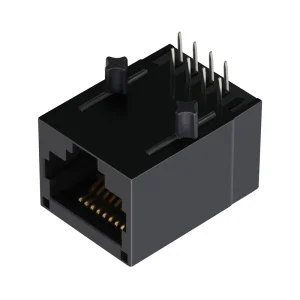
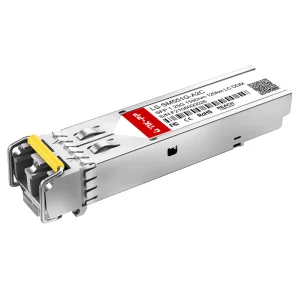
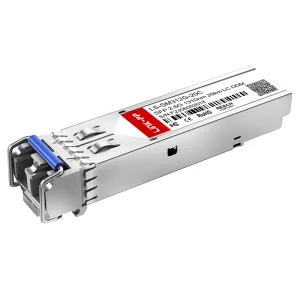
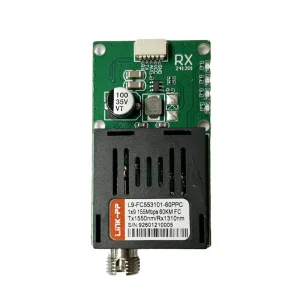
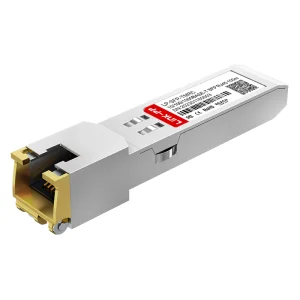
From long-range fiber modules to copper transceivers and modular RJ45 connectors, we offer a comprehensive range of interconnect solutions.
 Novafiber