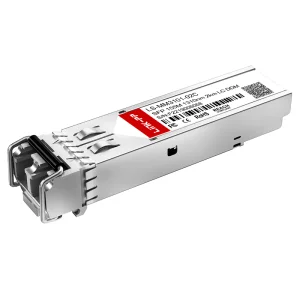
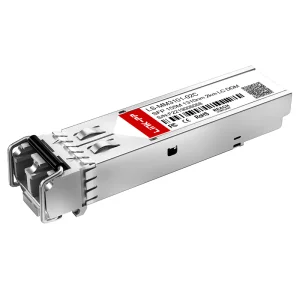
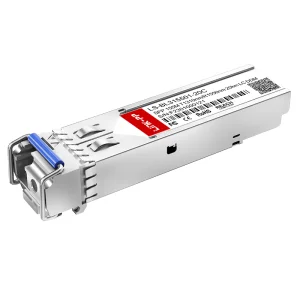
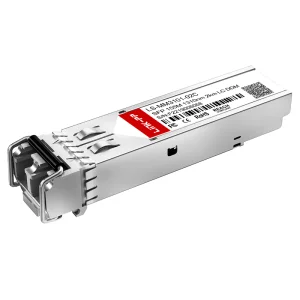
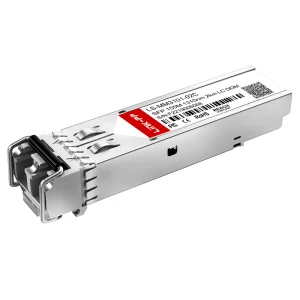
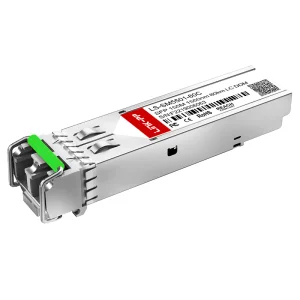
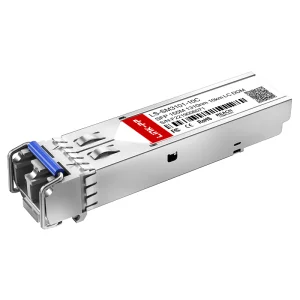
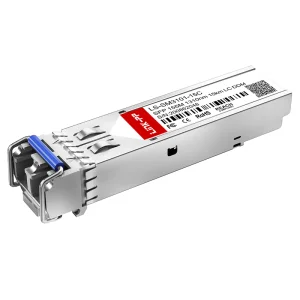
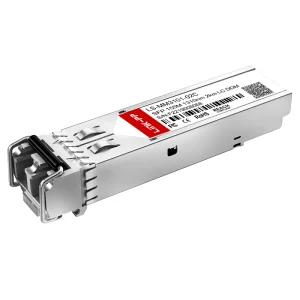
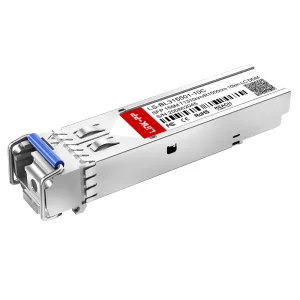
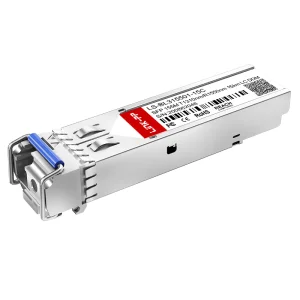
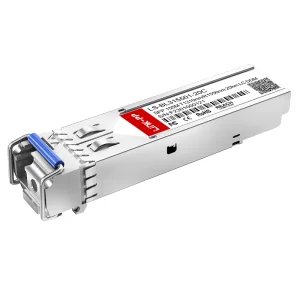
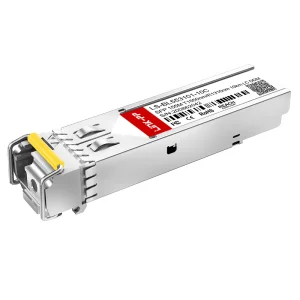
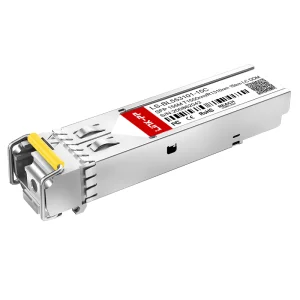
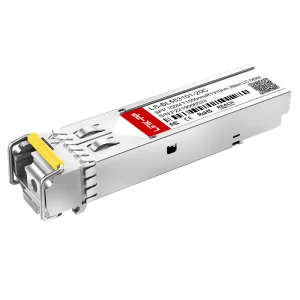
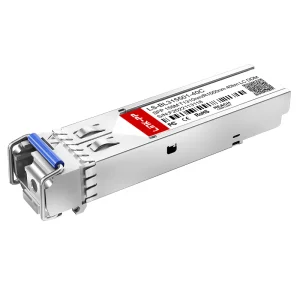
Explore our premium grade selection of standard dual-fiber and bi-directional (BiDi) SFP optical transceivers, fully compatible with market-leading legacy equipment manufacturers.
Novafiber Communications Co., Ltd. is a professional, technology-led optical transceiver manufacturer specializing in the research, development, and mass-scale production of high-performance fiber optic communication solutions. Our offerings support global data centers, telecom operators, municipal networks, and critical industrial automation architectures. Founded in 2016, Novafiber has systematically built a robust core infrastructure combining high-level engineering capabilities with a modern, dust-free manufacturing facility spanning approximately 420㎡.
Backed by over 9 years of industry experience and 7 years of direct export operations, we serve an expansive international network. We currently register an annual export revenue of approximately USD 8.5 million, ensuring consistent deliveries to clients across North America, Europe, Southeast Asia, and the Middle East. Supported by our verified ecosystem of over 1,200 supply chain partners, we manage fluctuations in component markets while maintaining highly competitive lead times and production pricing.
Our commitment to technical innovation is sustained by our dedicated R&D team of 180 experienced engineers. This team facilitates the integration of legacy designs with newer form factors, releasing over 320 new product variants in the past year alone. This product spectrum covers everything from traditional 155M/622M SFP modules to cutting-edge 100G, 400G, and 800G optical transceivers, alongside DAC (Direct Attach Copper) and AOC (Active Optical Cable) assemblies.




In a global market dominated by discussions of 400G and 800G coherence, a crucial question arises: Why do 155M and 622M SFP modules continue to experience heavy global demand? The answer lies in the resilience of critical physical infrastructure. Modern automation, legacy telecommunications, and high-security utility sectors require stable, low-latency communication lines that operate over massive lifespans. Unlike consumer-facing IT infrastructure, industrial platforms operate on cycles of 15 to 30 years.
Smart manufacturing plants and harsh processing environments rely on specialized networking brands like Hirschmann and Moxa. Standard Fast Ethernet protocols (100Base-FX or 155Mbps equivalent) offer the ideal balance of immunity to electromagnetic interference (EMI), cost-effectiveness, and real-time reliability for industrial switches.
Electrical power grids, pipeline infrastructure, and water municipal services rely on SDH (Synchronous Digital Hierarchy) systems. Modules matching the 155M (STM-1) and 622M (STM-4) signaling specifications act as the primary interface for remote terminal units (RTUs), conveying vital control signals over kilometers of single-mode fiber.
Modern railway signaling systems, maritime monitoring, and highway management systems require highly resilient transceivers. Dual-fiber LX/ZX and BiDi (Bi-directional) modules are deployed along tracks and toll lanes due to their ability to function over extended physical spans (up to 80km) without active signal regeneration.
Global procurement specialists face specific challenges when sourcing 155M and 622M SFPs. Because original equipment manufacturers (OEMs) phase out legacy modules or charge inflated prices, sourcing managers must turn to trusted compatibility partners. Key requirements include:
To help system integrators maximize the efficiency of legacy infrastructures, Novafiber delivers targeted, end-to-end transceiver configurations. By selecting the correct wavelength, power budget, and fiber medium, network planners can extend the lifespan of their fiber plants without undergoing costly structural upgrades.
In modern industrial facilities, networks are rarely homogeneous. A single plant floor may feature legacy Moxa switches connected to core Cisco routers and Hirschmann field-level hubs. Integrating these devices requires precise compatibility mapping. Our engineering team designs custom EEPROM firmware configurations that allow the same physical hardware batch to function reliably across these different host systems.
When physical fiber core resources are limited, deploying simplex (BiDi) transceivers can double network capacity. Using distinct wavelengths (typically 1310nm/1550nm or 1310nm/1490nm) over a single strand of fiber, BiDi 155M SFPs enable simultaneous transmitting and receiving. This eliminates the need to lay new fiber cables, reducing capital expenditure in municipal and metro installations.
For remote sub-stations or offshore telemetry, links can extend up to 80 kilometers. These applications require high-power transmitters (using DFB or DFB-LD lasers) paired with highly sensitive PIN or APD receivers. Our 100Base-ZX compatible modules are engineered to manage these high-attenuation links, maintaining signal integrity under varying climatic conditions.
Quality and reliability form the foundation of our engineering ethos. At Novafiber, we employ 65 dedicated quality inspection personnel. Every module undergoes rigorous quality assurance protocols to guarantee field reliability:
Our manufacturing and development cycles follow international standards, including IPC standards, CE, FCC, RoHS, and REACH. This strict adherence ensures that system integrators can deploy our modules globally in environments that require certified electromagnetic compatibility (EMC) and environmentally friendly components.
As optical communication networks evolve, legacy platforms require ongoing technical support. Our development roadmap focus remains dual-pronged: driving boundary innovations in 400G/800G silicon photonics, while optimizing the performance and lifecycle of legacy 155M/622M architectures.
Future iterations of our 155M/622M SFP modules will feature enhanced, on-board microprocessors. These smart microcontrollers automate wavelength tuning and power budgeting, adjusting output levels to compensate for aging fiber cables and maintaining link reliability without manual intervention.
With power efficiency becoming a key metric for modern data networks, reducing power consumption at the module level is critical. By refining optical components and driver chipsets, our R&D teams have reduced average power consumption by 15%, lowering thermal output in enclosed field locations.
Find technical answers to common questions about 155M and 622M SFP transceiver deployment, compatibility, and maintenance.
Browse our selection of specialized single-mode transceivers, designed for long-distance transmissions and simplex fiber configurations.
 Novafiber