Novafiber Communications Co., Ltd. is a professional optical transceiver manufacturer specializing in high-performance fiber optic communication solutions for global data centers, telecom operators, and enterprise networking applications.
Founded in 2016, Novafiber has developed strong engineering and manufacturing capabilities with a modern production facility covering approximately 420㎡. With over 9 years of industry experience and 7 years of export experience, the company has built a solid reputation in the global optical communication market.
Novafiber generates an annual export revenue of approximately USD 8.5 million, serving customers across North America, Europe, Southeast Asia, and the Middle East. The company maintains a flexible and efficient supply chain network with more than 1,200 supply chain partners, enabling stable mass production and fast delivery.
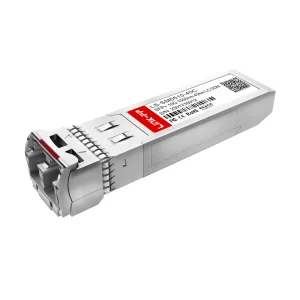
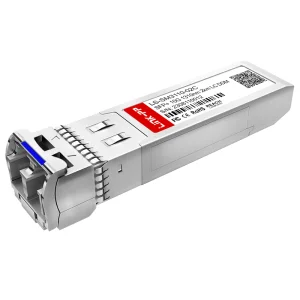
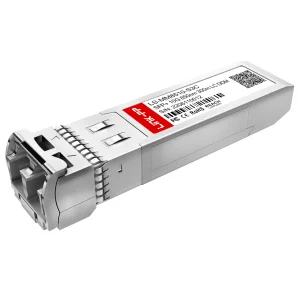
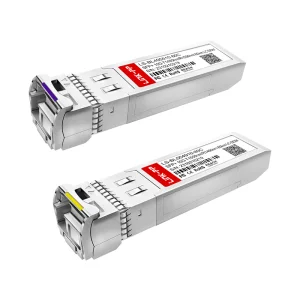
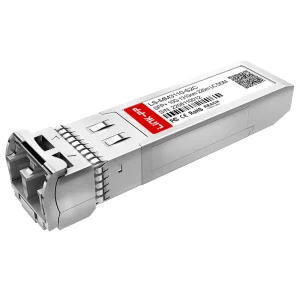
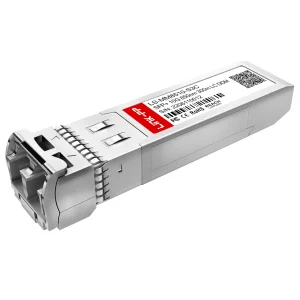
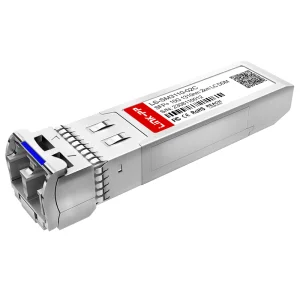
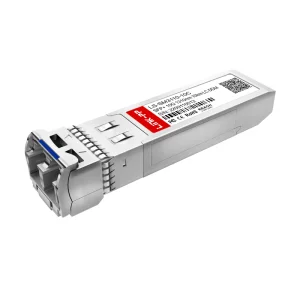
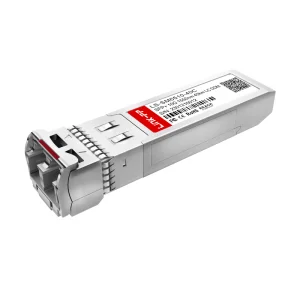
Explore our premium grade 10G duplex, single-mode, multi-mode, and BiDi SFP+ modules configured for high-performance datacenters.
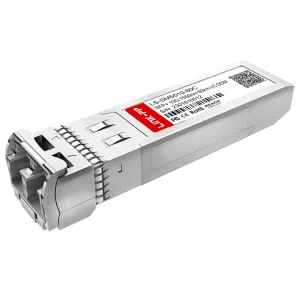
A comprehensive examination of transceiver optics, electrical interfaces, and deployment metrics for mission-critical enterprise systems.
The evolution of Small Form-factor Pluggable Plus (SFP+) modules represents a milestone in optical network miniaturization. Governed by multi-source agreements (MSAs) such as SFF-8431 and SFF-8472, SFP+ modules operate at higher performance levels compared to older SFP form factors, supporting speeds of 10 Gbps and 16 Gbps. In fiber infrastructure, these modules balance energy efficiency, low latency, and physical port density.
SFP+ modules utilize advanced optical sub-assemblies (TOSA). Short-reach (SR) modules use 850nm VCSEL lasers. Longer distances rely on 1310nm DFB (Distributed Feedback) or 1550nm EML (Externally Modulated) lasers to minimize chromatic dispersion over Single-Mode Fiber (SMF) up to 80km.
Using PIN photodiodes for standard applications or high-sensitivity APD (Avalanche Photodiodes) for long haul transmission, ROSA designs ensure low Bit Error Rate (BER) across diverse optical loss budgets.
Under SFF-8472 specifications, real-time diagnostic monitoring tracks temperature, TX/RX optical power, supply voltage, and laser bias current. This allows systems to flag faults before outages occur.
While 10G SFP+ modules dominate Ethernet local area networks, 16G SFP+ modules are engineered for Fibre Channel (FC) storage area networks (SANs). Working at 14.025 Gbps (16GFC), these transceivers double the throughput of older 8GFC links. This reduces bottleneck issues in high-performance enterprise storage systems, virtualization clusters, and heavy cloud computing environments.
| SFP+ Type | Standard Protocol | Wavelength | Fiber Type | Transmission Distance | Optics Components (TX/RX) |
|---|---|---|---|---|---|
| 10GBASE-SR | IEEE 802.3ae / 10G Ethernet | 850nm | MMF (OM3 / OM4) | 300m / 400m | VCSEL / PIN |
| 10GBASE-LRM | IEEE 802.3aq / 10G Ethernet | 1310nm | MMF / SMF | 220m (MMF) / 2km (SMF) | DFB / PIN |
| 10GBASE-LR | IEEE 802.3ae / 10G Ethernet | 1310nm | SMF (G.652) | 10km | DFB / PIN |
| 10GBASE-ER | IEEE 802.3ae / 10G Ethernet | 1550nm | SMF (G.652) | 40km | EML / PIN |
| 10GBASE-ZR | Proprietary / Multi-Vendor | 1550nm | SMF (G.652) | 80km / 120km | EML / APD |
| 16G Fibre Channel | FC-PI-5 Standards | 850nm / 1310nm | MMF / SMF | 100m (OM4) / 10km (SMF) | VCSEL/DFB / PIN |
Inside Novafiber's modern optical integration facility: automated testing, strict compliance, and high efficiency.
Novafiber runs automated manufacturing processes designed for consistency. Operating with 65 quality inspectors, our facility adheres to strict IPC standards to minimize assembly errors.
Every single optical module undergoes automated testing. We perform 100% functional validation, high-temperature burn-in testing, and environmental stress screening (ESS). This process eliminates infant mortality components and guarantees optimal signal integrity across the operating temperature range.
A key advantage is our flexible design capability. Backed by 180 engineers, Novafiber offers complete OEM/ODM options to meet custom requirements:
With a network of over 1,200 supply chain partners, Novafiber secures high-quality raw optical components (TO-can lasers, custom PCBs, structural housings) even during high market demand. This reliable supply chain prevents lead-time delays for system integrators and global buyers.




Understanding the transition to higher data rates and localized networking applications.
Data centers are transitioning from 10G access ports to 25G, 100G, and 800G fabrics to handle AI workloads. However, 10G/16G SFP+ remain essential legacy ports for enterprise branches, industrial networks, and storage area networks (SANs) due to their low cost and high reliability.
With edge computing systems deployed in diverse settings, compact 10G transceivers are critical. They process high-bandwidth data locally before transmitting to central clouds, optimizing speed and bandwidth use.
Reliable 16G Fibre Channel SFP+ transceivers support high IOPS and low latency in enterprise datacenters. Their design ensures secure, high-speed data flow between application servers and storage systems.
Practical deployment designs for modern networking infrastructure.
For large institutional offices, 10G SFP+ modules form the backbone linking closet aggregation nodes to core multi-layer chassis. By using 10GBASE-LRM transceivers, network engineers can repurpose existing OM1/OM2 multi-mode fibers, saving significant cabling costs.
Using 16G Fibre Channel SFP+ transceivers, enterprise storage networks gain high-throughput paths between disk arrays and server systems. This ensures smooth operations for virtualization platforms like VMware vSphere and Microsoft Hyper-V.
Long-reach 10G SFP+ transceivers (ER/ZR) bridge distances up to 80km. They serve as reliable, budget-friendly optical transport options for rural broadband deployments, municipal utility rings, and cellular backhaul networks.
Explore our highly compatible SFP+ transceivers, designed and coded to integrate seamlessly with Cisco, Juniper, and other major OEM platforms.
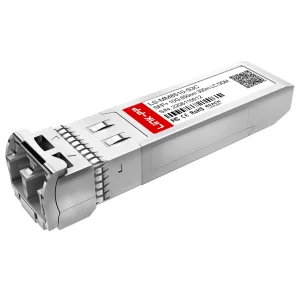
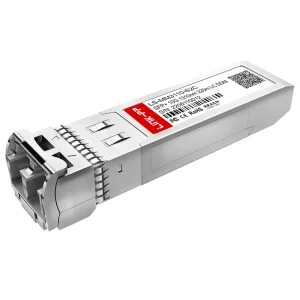
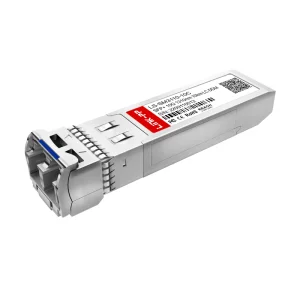
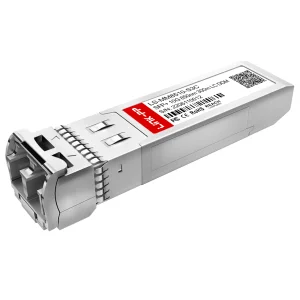
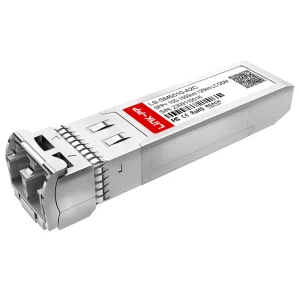
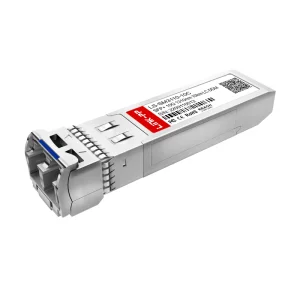
Procuring optical hardware requires balancing budget targets with performance specifications. To help procurement teams, we have outlined the core criteria for evaluating optical transceiver manufacturers.
Third-party transceivers must be flashed with correct vendor configuration codes (EEPROM signature data) to ensure compatibility with routers and switches from Cisco, Juniper, Arista, and others.
Dense switch configurations run hot. Opt for modules with power dissipation below 1.0W (and commercial temperature ratings of 0–70°C, or industrial ratings of -40 to 85°C) to reduce thermal stress.
Choose suppliers who can adapt firmware quickly. As networks upgrade, the ability to reprogram existing modules via standard firmware updates helps control long-term operating costs.
Expert answers addressing deployment, compatibility, and specifications for 10G/16G SFP+ modules.
 Novafiber