High-performance mechanical cages engineered to optimize footprint utilization and EMI attenuation in next-generation high-speed PCB layouts.
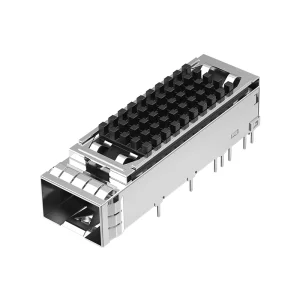
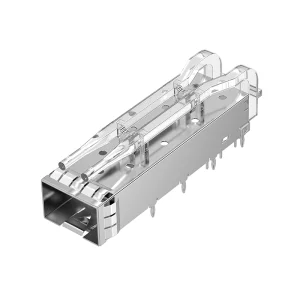
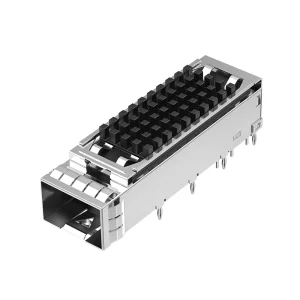
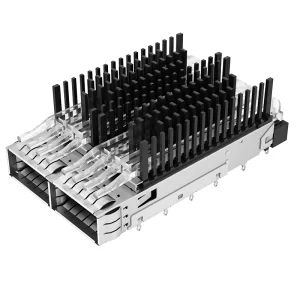
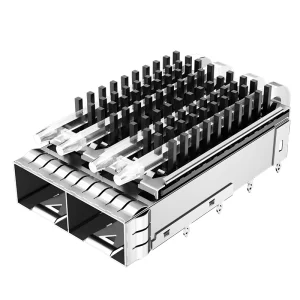
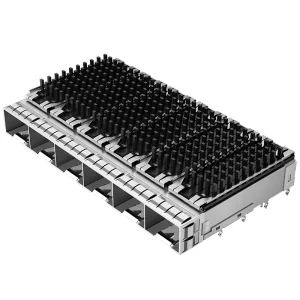
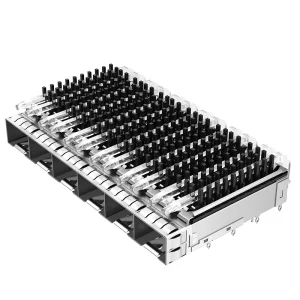
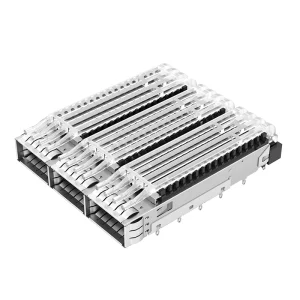
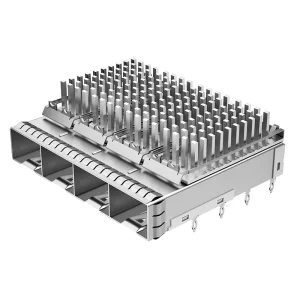
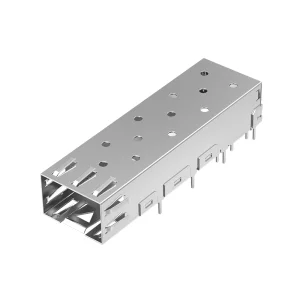
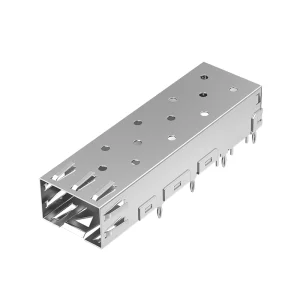
As standard-level data transfer demands scale exponentially—accelerated by AI clusters, machine learning frameworks, and edge virtualization—the architecture of physical networking ports faces intense constraints. SFP Cage 1xN (Ganged Ports) architectures represent a pinnacle of mechanical and electrical design, offering structured integration pathways for networking hardware. Rather than utilizing isolated, single-port enclosures, ganged designs host multiple consecutive SFP transceivers in a single mechanical housing. This ganged configuration significantly reduces board-level layout footprint, maximizes the edge density of 1RU line cards, and structures pathways for heat rejection and EMI shielding.
Integrated copper-alloy or stainless-steel outer spring fingers ground the enclosure tightly against the system bezel, sealing gaps to suppress high-frequency EMI leaks.
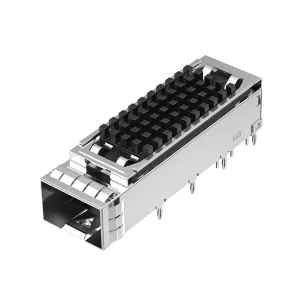
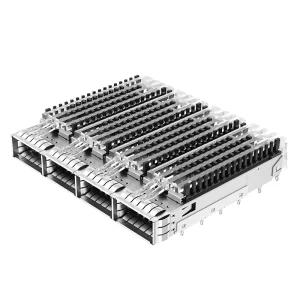
Custom heat sink configurations with optimized clip structures allow continuous air-cooling directly across the transceiver module interfaces, preventing thermal runaway.
Strict structural designs keep impedance mismatches at the press-fit or through-hole pins to a minimum, preserving trace geometry performance up to 28 Gbps and beyond.
Modern data center fabrics rely heavily on high-speed copper DACs (Direct Attach Copper) and fiber transceivers. 1xN SFP cages (ranging from 1x2, 1x4, up to 1x8 ports) provide the physical interface for these components. When transceivers operate at SFP28 (25G) or SFP56 (50G) speeds, their internal processors dissipate substantial heat. The structural engineering of the ganged cage must facilitate direct airflow. This is accomplished using customized aluminum or copper heat sinks that feature diverse fin heights (pin fin, plate fin, or high-airflow styles) designed to match specific system fan configurations.
The manufacturing and deployment of SFP cage assemblies require deep mechanical engineering expertise and adherence to stringent multisource standards. Globally, SFP+ 1xN cages must meet the physical interface definitions defined by the SFF Committee (specifically SFF-8431, SFF-8432, and SFF-8472). This guarantees that cages from different manufacturers are fully interchangeable and capable of hosting any compliant optical module. As a reliable provider, Novafiber Communications Co., Ltd. leverages a highly optimized supply chain of over 1,200 partners to deliver premium ganged cage solutions that seamlessly replace configurations from industry leaders such as TE Connectivity and Amphenol.
Novafiber, founded in 2016, features a modern, specialized manufacturing footprint and employs a specialized crew of 180 R&D engineers. Our quality verification operations employ 65 dedicated inspection experts who execute thorough validation protocols. Through advanced automation and robust process control, we maintain consistent mechanical tolerances below ±0.05mm, which is essential for ensuring trouble-free automated press-fit PCB assembly lines.
Our global commercial footprint spans North America, Europe, Southeast Asia, and the Middle East, translating into an annual export revenue of over USD 8.5 million. Our clients include global cloud providers, telecommunication operators, and enterprise hardware vendors who demand top-tier reliability.
| Feature Attribute | Novafiber Specification Standards |
|---|---|
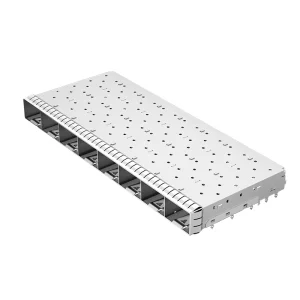
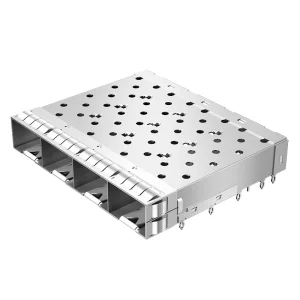
| Port Configuration | 1x1, 1x2, 1x3, 1x4, 1x6, 1x8 Ganged |
| Termination Styles | Press-Fit (Elastic Eye) & Through-Hole Solder |
| Base Materials | Copper Alloy / Stainless Steel / Tin-Nickel Plating |
| EMI Mitigation | Conductive Elastomeric Gaskets & Spring Fingers |
| Compliance | RoHS, REACH, UL 94-V0, Bellcore GR-1217 |
A glimpse inside our production capabilities, advanced inspection lines, and global logistics hubs supporting next-generation optical interface products.

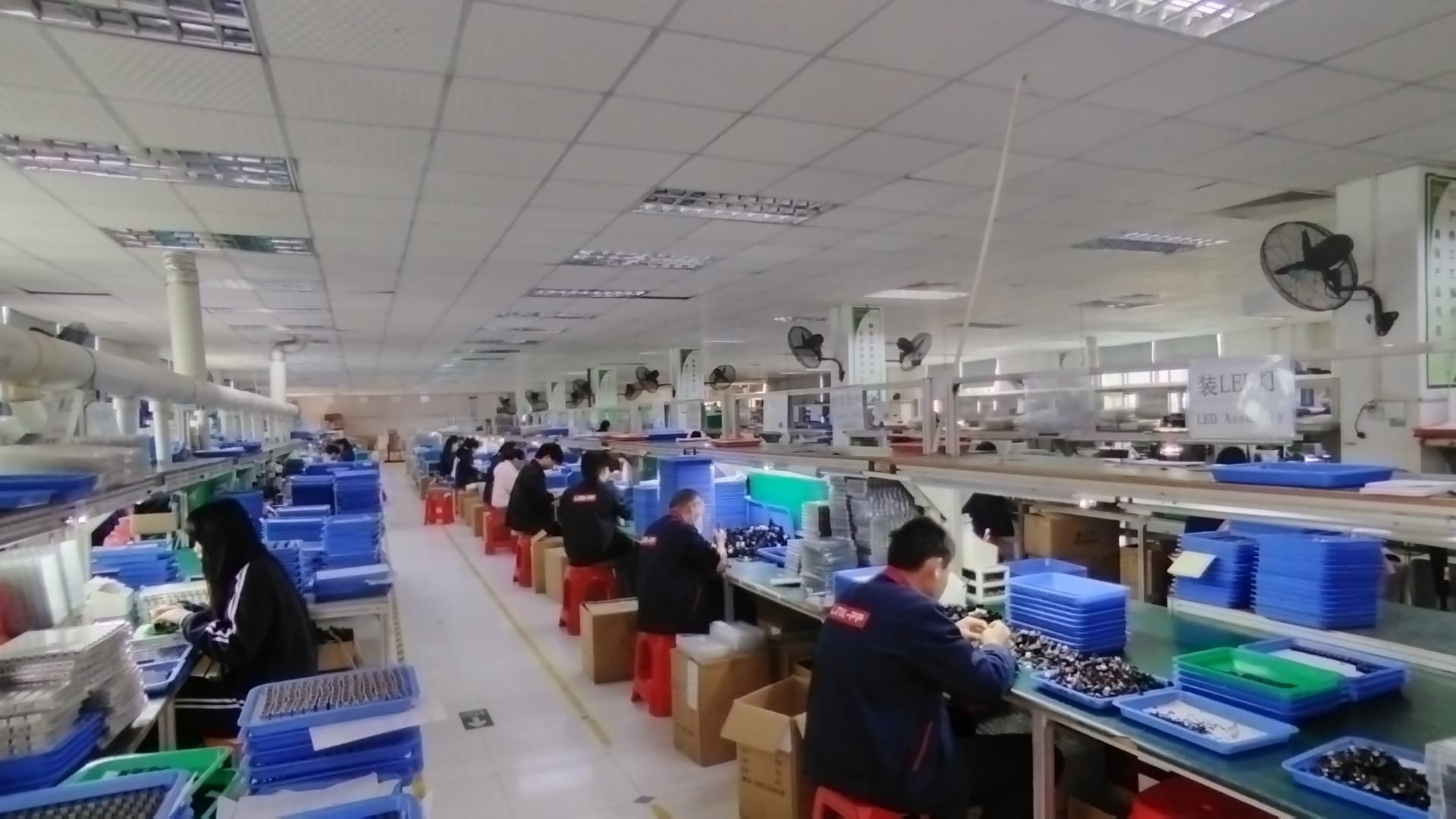
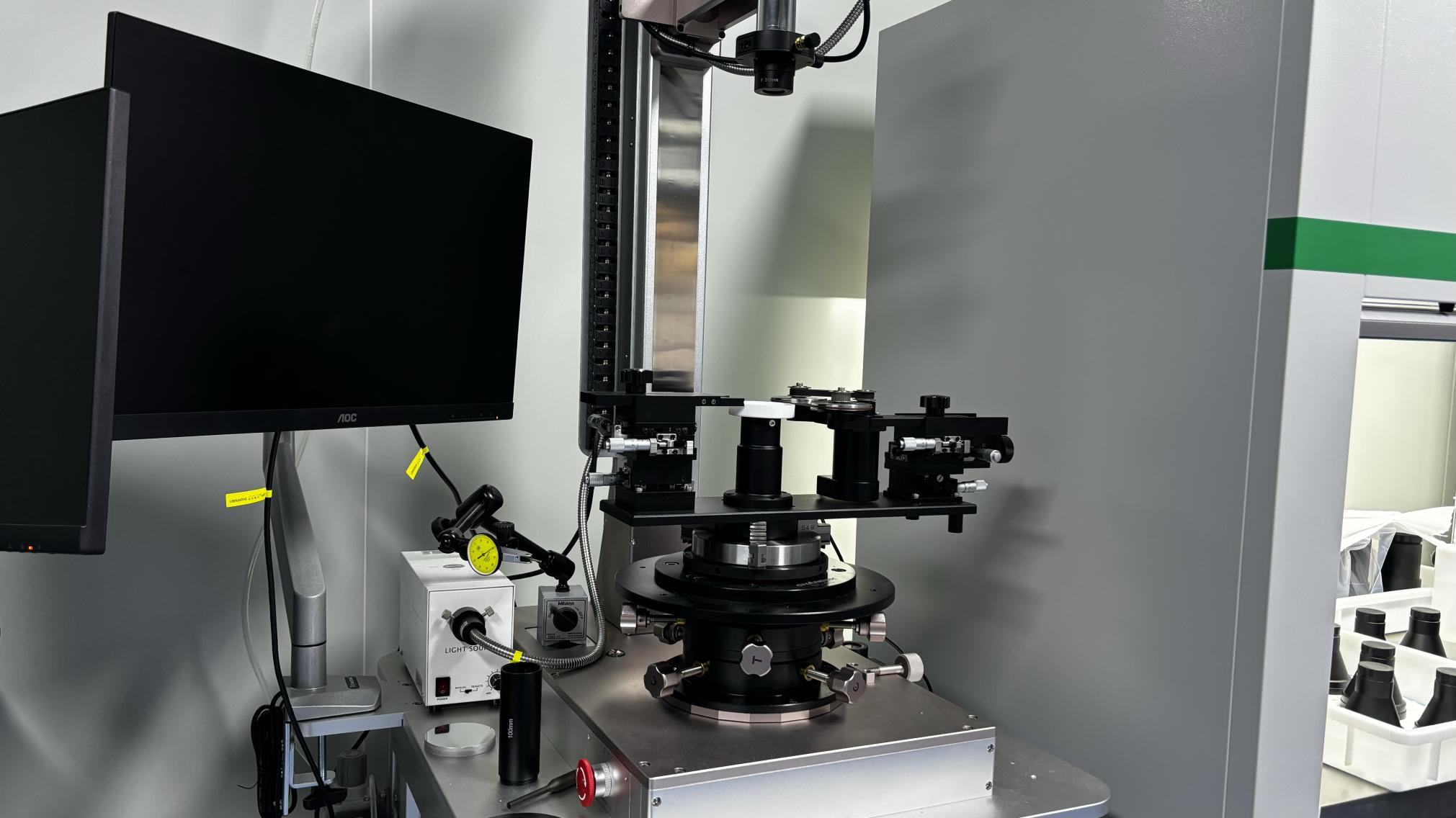
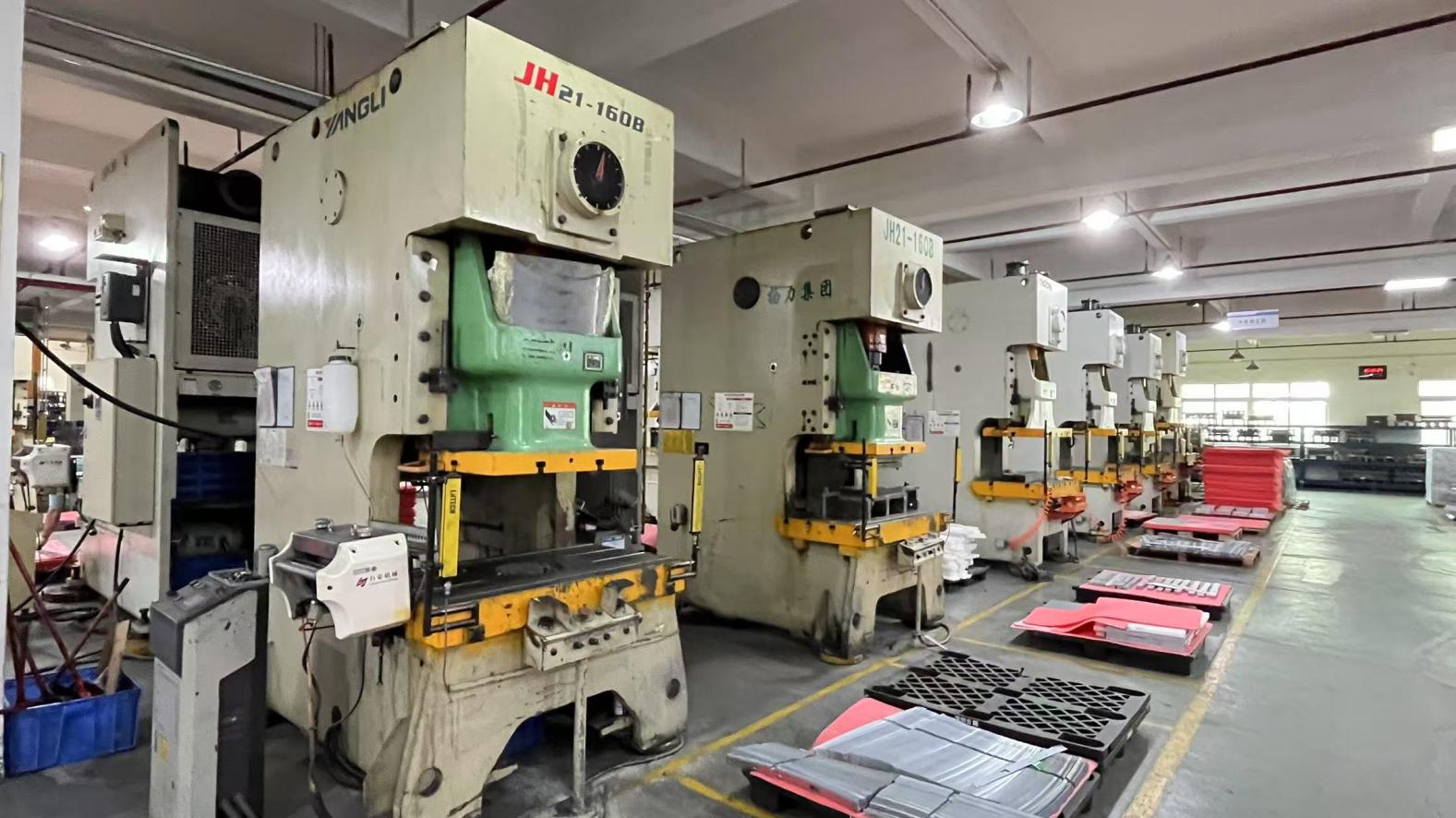
SFP Cage 1xN designs are customized to address unique localization and operational environments. From dry, high-temperature desert installations to damp, salty coastal data centers, environmental factors pose severe risks to interface contacts. Unprotected copper alloys are prone to galvanic corrosion, which degrades electrical contact resistance and compromises signal pathways. Novafiber addresses these challenges by offering targeted surface finishing options, including advanced nickel plating, localized tin layers, and selective gold contact areas.
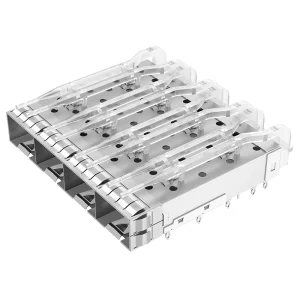
1. European Telecom & Edge Infrastructure: System architectures in Europe place high importance on compliance with strict CE and RoHS directives. These systems often require ganged cages fitted with integrated light pipes. The light pipes channel status indicators directly from the PCB surface to the front bezel, allowing field engineers to visually inspect and diagnose port status on site.
2. North American Hyperscale Cloud Sites: Major cloud service providers require SFP cages that support repeated module insertions and extractions without damaging internal grounding tabs. In these high-cycle environments, our cages feature customized EMI spring fingers that withstand more than 250 mating cycles, ensuring long-term grounding integrity.
3. APAC Industrial Automation and IoT Networks: In industrial environments exposed to ambient electromagnetic noise, cages must be securely mounted to the board. For these applications, through-hole solder (THT) configurations are often preferred over press-fit options because they provide superior mechanical anchoring against high-vibration stresses.
As transmission speeds climb from 28 Gbps per channel toward 56 Gbps and 112 Gbps PAM4, mechanical cage designs are evolving rapidly. Signal attenuation at high frequencies requires extremely short, impedance-matched PCB contacts. The transition from legacy SFP+ designs toward SFP-DD (Double Density) configurations presents new challenges, requiring twice the electrical contacts within a standard SFP footprint.
Novafiber is actively developing and validating hybrid cage-connector designs. Our upcoming generation of ganged cages utilizes advanced modeling software to simulate thermal dissipation across the transceiver interface. This allows us to optimize fin geometry to reduce airflow impedance, enabling next-generation hardware to run cooler and consume less power.
Expert technical insights answering common structural and electrical questions from hardware engineers.
Press-Fit (elastic eye-of-the-needle) termination enables solderless mechanical mounting to the PCB. This eliminates thermal stresses on the board during assembly, facilitates easy replacement or rework, and provides predictable high-frequency signal performance. Through-hole solder (THT) termination, on the other hand, offers higher mechanical anchoring strength, making it ideal for systems subjected to high vibration or frequent, manual cable connections.
EMI is mitigated using outer spring fingers or conductive elastomeric gaskets that press against the inner edges of the bezel cutout. This creates a continuous grounding path between the cage housing and the chassis ground, blocking electromagnetic radiation from escaping through the port apertures. Our designs are optimized to sustain grounding continuity even under misalignment or mechanical tolerances.
Because ganged cages place transceiver modules side-by-side, thermal transfer must be handled efficiently. We integrate copper or aluminum heat sinks that sit on top of the cage and make direct contact with the transceiver shell. Using specialized spring clips, the heat sink applies uniform pressure to ensure low thermal contact resistance, facilitating heat dissipation into the system's cooling airflow.
Yes, all Novafiber SFP cages are engineered in strict compliance with MSA standards (SFF-8432 and relevant specifications). This guarantees that our cages match the pin layout, outline dimensions, and PCB footprint of equivalent TE Connectivity and Amphenol part numbers, offering hardware designers a drop-in second-source option.
Explore additional specialized port configurations, including single-port modules and multi-port press-fit assemblies.
 Novafiber