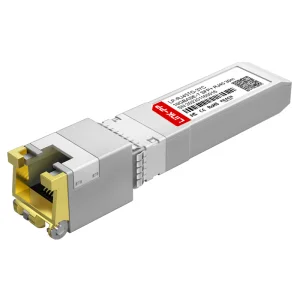
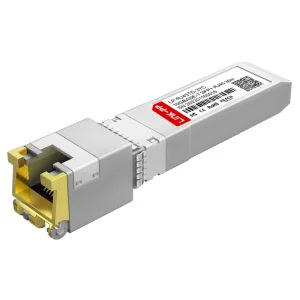
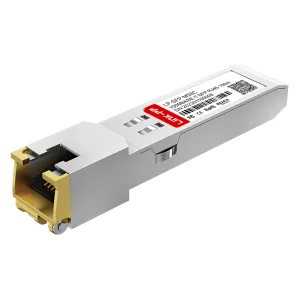
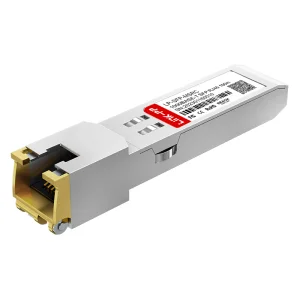
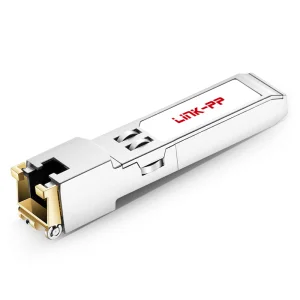
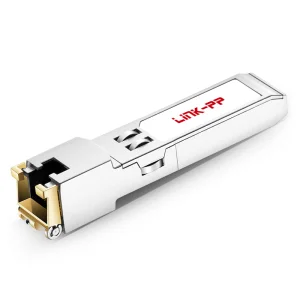
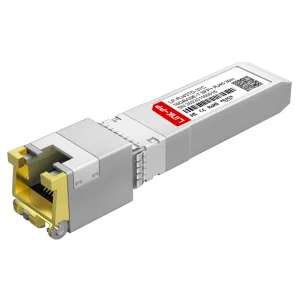
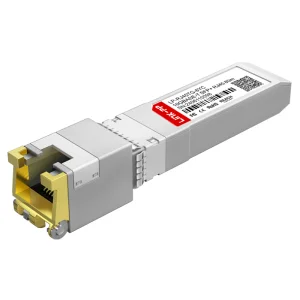
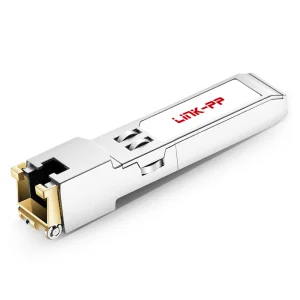
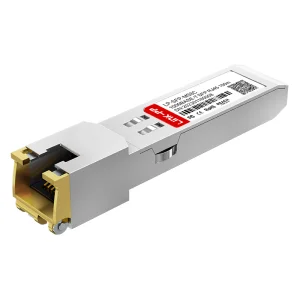
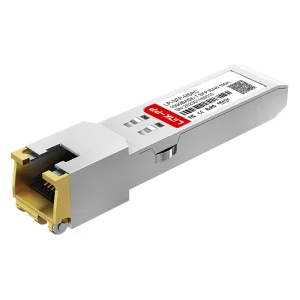
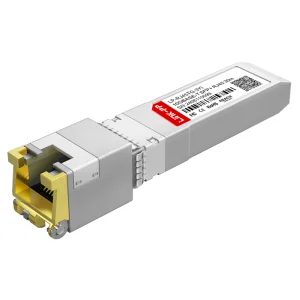
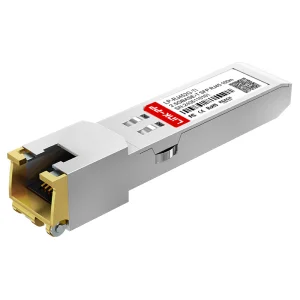
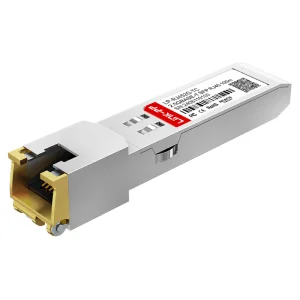
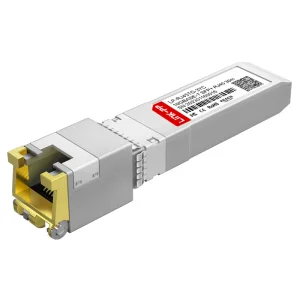
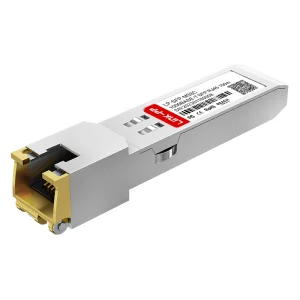
Explore our industry-standard SFP+ and SFP RJ45 copper transceivers, designed for data centers, enterprise networks, and telecom systems requiring up to 10Gbps transmission over Cat6a/Cat7 cables.
RJ45 Copper SFP (Small Form-factor Pluggable) transceivers bridge the gap between optical and copper networks. Unlike optical modules that transmit via laser over fiber, these modules utilize high-performance PHY (Physical Layer) chips to translate optical signaling into electrical pulses suitable for twisted-pair copper cables. This enables gigabit and 10-gigabit ethernet links using existing Category 5e, 6, 6a, or 7 structured cabling infrastructures.
By using standard copper cabling, operators can defer expensive fiber retrofitting programs. However, designing high-speed copper SFP modules requires deep engineering expertise to manage signal integrity, cross-talk, and electromagnet interference (EMI) at high baud rates. SFP+ copper modules must execute sophisticated digital signal processing (DSP) algorithms to equalize and recover signals over lengths up to 100 meters, which makes high-quality transceivers essential for long-term network uptime.
Overcoming power limitations and high heat output is the hallmark of premium copper transceivers.
Our transceivers integrate ultra-low power physical layer (PHY) chips. By shrinking node geometry, these chips convert high-speed serial data to 10GBASE-T PAM16 signals with a typical power draw of only 2.0W to 2.5W, well within MSA standards.
We use high-conductivity thermal interface materials and optimized structural gold plating. This allows the heat generated by the internal DSP to be quickly transferred to the module casing, preventing port thermal shutdown in high-density switches.
Our copper SFP modules feature an all-metal zinc alloy housing. This structure minimizes electromagnetic radiation and ensures compatibility in close proximity to multi-gigabit wireless access points and other high-frequency equipment.
A professional, global manufacturer and exporter specializing in high-performance fiber optic and copper communication solutions.
Founded in 2016, Novafiber has developed strong engineering and manufacturing capabilities with a modern production facility covering approximately 420㎡. With over 9 years of industry experience and 7 years of export experience, the company has built a solid reputation in the global optical communication market.
Novafiber generates an annual export revenue of approximately USD 8.5 million, serving customers across North America, Europe, Southeast Asia, and the Middle East. The company maintains a flexible and efficient supply chain network with more than 1,200 supply chain partners, enabling stable mass production and fast delivery.
Its R&D team consists of 180 experienced engineers, supporting advanced development of high-speed optical modules. The company demonstrates strong innovation capability with 320 new product releases in the past year, covering solutions from 1G to 800G optical transceivers, DAC/AOC cables, and customized optical communication products. Customization is a key strength of Novafiber, offering flexible OEM/ODM services, including protocol adaptation, wavelength tuning, firmware customization, branding, and packaging solutions.



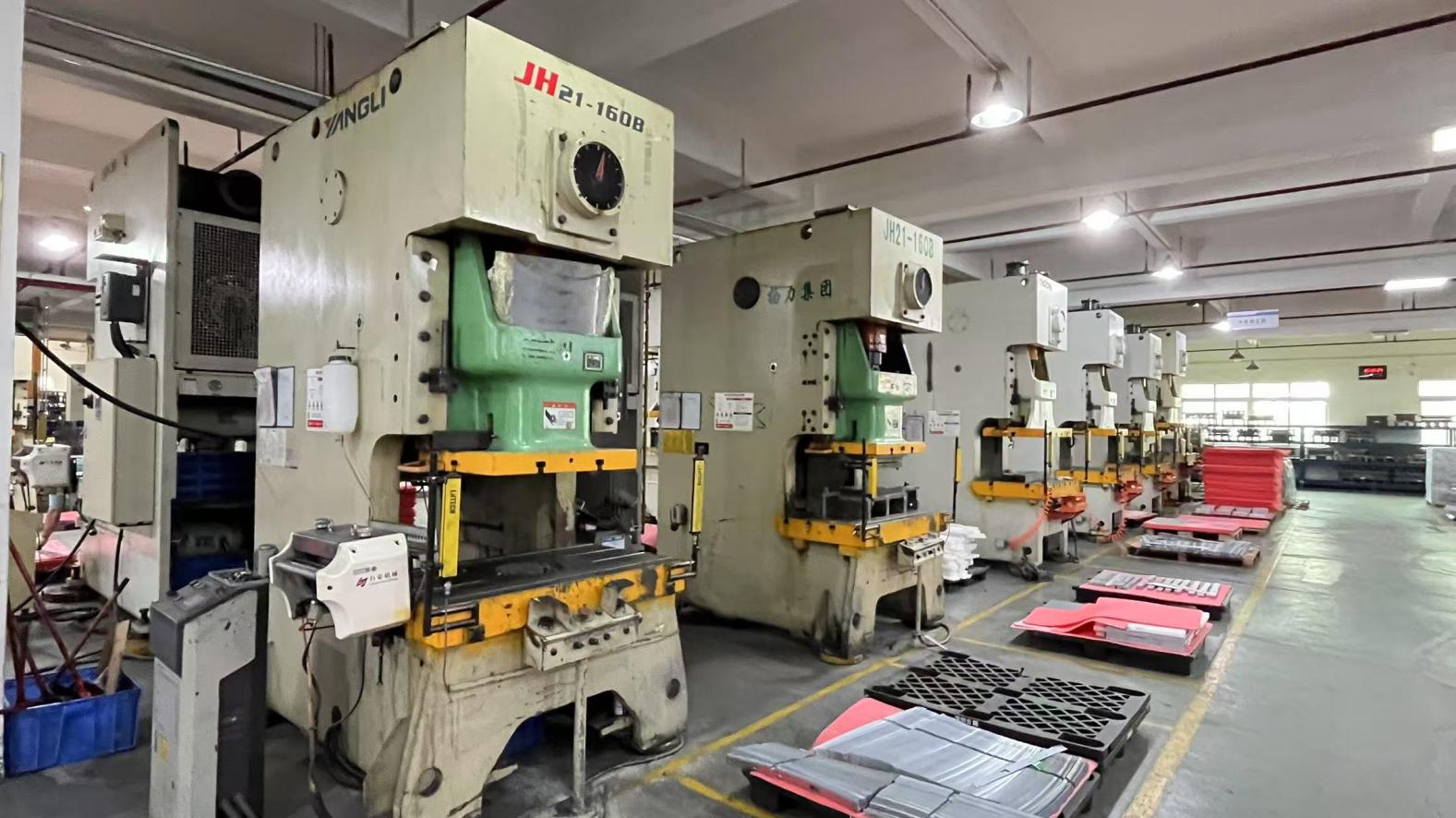
Operating out of the global hardware innovation hub in China, Novafiber secures raw materials, ICs, and PCBAs via a resilient cluster of over 1,200 verified tier-1 suppliers. This proximity to the electronics supply chain allows us to maintain shorter lead times and adapt to sudden demand surges, ensuring stable supply availability for critical international infrastructure deployments.
Quality is maintained by our 65 quality inspection personnel who enforce rigorous quality control systems. Every batch follows strict manufacturing protocols: IPC standards, automated optical inspection (AOI), and environmental stress screening (ESS). Our inspection process involves 100% functional testing, burn-in testing, and high-temperature aging tests, meaning no module leaves our facility without verified performance metrics.
Where and how to deploy RJ45 Copper SFP modules for maximum efficiency and return on investment.
In data center setups, connecting leaf switches to adjacent server racks is cost-effective with RJ45 Copper SFPs. They enable high-speed 10G links using standard patch cables, avoiding the costs of optical patch cables and transceivers.
Upgrading enterprise switches from 1G to 10G typically requires new cabling. SFP+ copper modules allow network administrators to reuse existing Cat6/6a cable runs for uplinks up to 30m, 80m, or 100m, depending on the module rating.
Modern Wi-Fi 6E/7 Access Points demand backhaul speeds of 2.5Gbps or 5Gbps. Using our multi-rate SFP+ RJ45 modules, operators can establish auto-negotiating connections over copper, removing bottlenecking without rewriting the physical layer.
Industrial settings require durable networking gear. Our industrial-grade RJ45 SFP modules are rated for temperatures from -40°C to +85°C, making them suitable for factories, substations, and outdoor traffic cabinets.
How SFP copper modules are adapting to next-generation data center standards and power constraints.
The continuous push for higher bandwidth has driven copper transceiver design to its physical limits. While 10GBASE-T SFP+ remains a widely deployed standard for short-reach applications, the optical communications industry is looking toward multi-gigabit scaling (2.5G/5G/10G/25G) and power reduction.
25GBASE-T Evolution: Emerging data center designs require 25G channels over copper. Delivering 25Gbps over twisted-pair cables presents challenges, including signal attenuation and high-frequency noise. Our R&D team is working on 25G copper modules that utilize PAM4 (Pulse Amplitude Modulation 4-level) signaling and advanced DSPs to support 30m connections on Cat8 cabling. This technology will allow data centers to transition to 25G server connections without the need for immediate fiber retrofitting.
Decarbonization & Green Networking: Power consumption is a primary concern for data center operators. Older 10G copper SFP modules drew up to 3W of power, causing heating issues in high-density switches. The industry's current focus is on developing transceivers that consume less than 1.5W for a 30m run. This is achieved by transitioning to 12nm and 7nm PHY silicon, which reduces the thermal footprint and operational energy costs.
Ensuring our products meet international standards and are backed by reliable logistics and engineering support.
Our copper SFP modules are designed in compliance with the SFP Multi-Source Agreement (MSA) and IEEE 802.3an/ab/bz standards, ensuring compatibility across hardware from Cisco, Ubiquiti, HPE, Aruba, Juniper, and other major vendors.
Our manufacturing and export processes comply with CE, FCC, RoHS, and REACH requirements. This guarantees that our products meet global safety, environmental, and electromagnetic compatibility standards.
We partner with major international freight carriers to offer fast shipping options. Standard orders are dispatched within 3-5 business days, with customs handling managed for North America, Europe, and Asia-Pacific destinations.
Answers to common technical and sourcing questions regarding copper SFP modules.
Browse our selection of specialized, industrial, and vendor-compatible transceivers, fully tested for reliability and long-distance operation.
 Novafiber