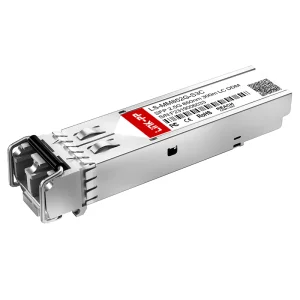
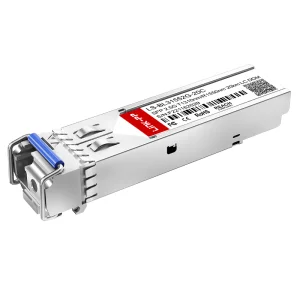
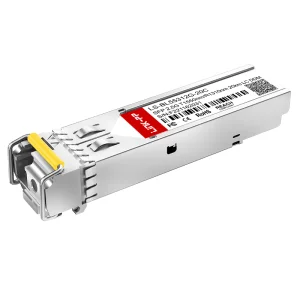
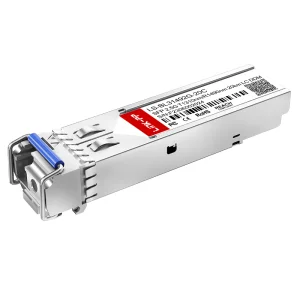
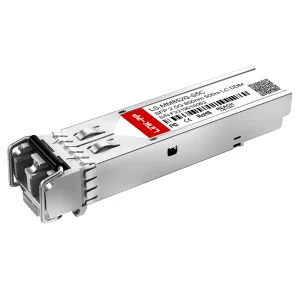
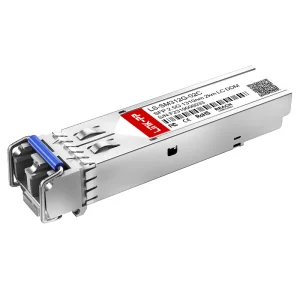
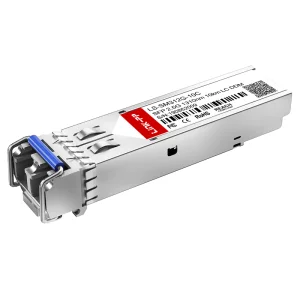
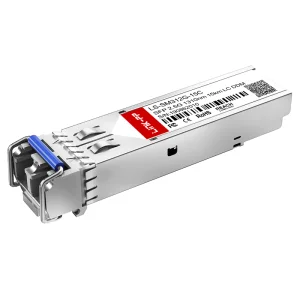
Optical Transceivers 2.5G~6G SFP Module Manufacturers & Suppliers

High-reliability, industrial-grade small form-factor pluggable optical transceivers for modern access networks, 5G wireless systems, and enterprise legacy infrastructure.

Featured 2.5G SFP Transceiver Modules

Explore our premium selection of 2.5G and 6G SFP transceivers, designed for long-distance stability, compatibility with multi-vendor systems, and high thermal efficiency.
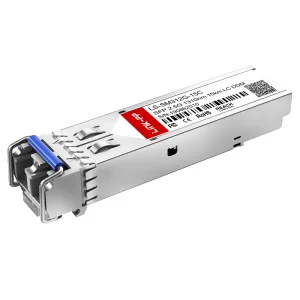
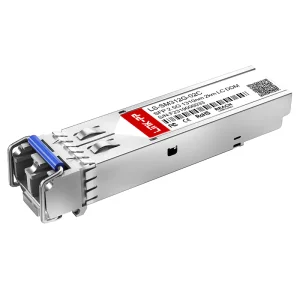
2.5GBASE-LX Single Mode 2.5G SFP 1310nm 15km

2.5GBASE-LX Single Mode 2.5G SFP 1310nm 15km Duplex LC SMF Optical Transceiver Module

View Details
2.5GBASE-IX Duplex LC SMF Optical Transceiver Module Single Mode 1310nm 2km

2.5GBASE-IX Duplex LC SMF Optical Transceiver Module Single Mode 1310nm 2.5G SFP Module 2km

View Details
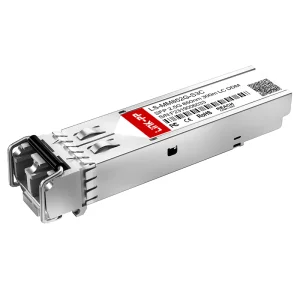
2.5GBASE-SX Multimode 850nm 2.5G SFP Module 300m

2.5GBASE-SX Multimode 850nm 2.5G SFP Module 300m Duplex LC MMF Optical Transceiver

View Details
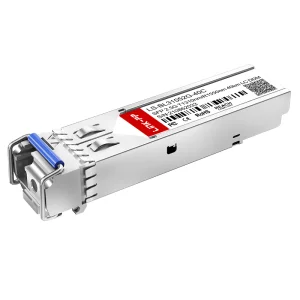
1310nm-TX/1550nm-RX Bidirectional Single Mode SFP 2.5G Bidi 20km

1310nm-TX/1550nm-RX Bidirectional Single Mode SFP 2.5G Bidi 20km LC Optical Transceiver Module

View Details
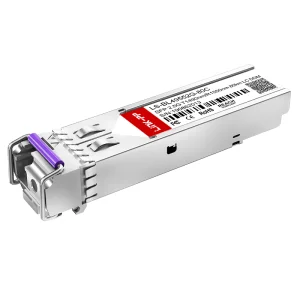
1550nm-TX/1310nm-RX Simplex LC SFP 2.5G Bidi 20km

1550nm-TX/1310nm-RX Simplex LC SFP 2.5G Bidi 20km Single Mode Optic Transceiver Module

View Details
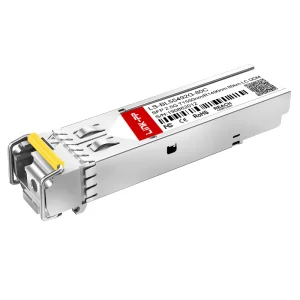
1310nm-TX/1490nm-RX Bidirectional 2.5G SFP Bidi 20km

1310nm-TX/1490nm-RX Bidirectional 2.5G SFP Bidi 20km SMF LC Optical Transceiver Module

View Details
1310nm-TX/1550nm-RX Bidirectional SFP 2.5G Bidi 40km

1310nm-TX/1550nm-RX Bidirectional SFP 2.5G Bidi 40km SMF LC Optical Transceiver Module

View Details
1490nm-TX/1550nm-RX Single Mode 2.5G SFP Bidi Transceiver 80km

1490nm-TX/1550nm-RX Single Mode 2.5G SFP Bidi Transceiver 80km Simplex LC Optical Module

View Details

Industrial Whitepaper: The Evolution and Strategic Value of 2.5G to 6G SFP Modules in Modern Optical Networks

In the landscape of modern optical networking, while the limelight is often captured by 100G, 400G, and 800G coherent solutions, the 2.5G to 6G SFP (Small Form-factor Pluggable) optical transceiver segment remains an indispensable workhorse. These transceivers play a vital role in access networks, mobile fronthaul architectures (CPRI/OBSAI), wireless backhauls, industrial Ethernet, and fiber-to-the-home (FTTH) networks. Offering an ideal balance of cost-efficiency, power optimization, and reliable performance across varying distances, the 2.5G~6G spectrum provides operators and system integrators with critical bandwidth scaling options where high-speed alternatives are economically or technically unfeasible.

Understanding the Core Architecture: WDM, Single Mode, and Multimode Technologies

The 2.5G~6G SFP family spans a diverse array of optical configurations. For short-range high-density campus interconnects, Multimode 850nm SFP modules leverage cost-effective VCSEL (Vertical-Cavity Surface-Emitting Laser) technology to drive links up to 300m or 550m over standard OM3/OM4 fiber. In contrast, for mid-span to long-haul carrier networks, Single Mode fibers are coupled with DFB (Distributed Feedback) lasers at wavelengths of 1310nm and 1550nm, pushing standard reach parameters from 2km to over 80km.

A significant innovation in optimizing fiber capacity is the deployment of BiDi (Bidirectional) SFP modules. By utilizing Wave Division Multiplexing (WDM) to separate transmit and receive channels onto different wavelengths (e.g., 1310nm-TX/1550nm-RX and vice-versa) over a single strand of glass, BiDi technology effectively doubles network capacity without the layout of new physical cabling. This mechanism is critical for legacy networks where duct space is at a premium.

2016
Year Founded
180+
R&D Engineers
$8.5M
Annual Export Value
1,200+
Supply Chain Partners

Novafiber Communications Co., Ltd. - Manufacturing Excellence & Global Leadership

Established in 2016, Novafiber Communications Co., Ltd. has positioned itself as a premier global developer and manufacturer of optical transceiver solutions. Based in China's high-tech manufacturing hubs, Novafiber operates an advanced facility spanning approximately 420m², housing cleanroom production lines, high-speed automated alignment systems, and rigorous environmental stress chambers. Over a span of 9 years in the industry, including 7 years of pure export excellence, Novafiber has achieved an annual export volume reaching USD 8.5 million, servicing tier-1 telecom operators, cloud providers, and system integrators across North America, Europe, Southeast Asia, and the Middle East.

With an intensive dedication to quality assurance, Novafiber employs 65 specialized quality inspection personnel who enforce zero-defect quality systems. The production facility adheres strictly to IPC standards, utilizing automated optical inspection (AOI), high-temperature aging tests, and comprehensive environmental stress screening (ESS) to guarantee unmatched stability in high-density telecommunication deployments.

Our Strategic Advantages & Supply Chain Prowess

Why global enterprises and telcos trust Novafiber for high-volume optical transceiver sourcing and customized engineering.

Unparalleled R&D Innovation

An R&D department powered by 180 engineers released over 320 new customized designs last year, from legacy SFP optics to 800G coherent solutions.

Rigorous Testing & IPC Compliance

Every transceiver module undergoes 100% functional programming, temperature cycling, laser performance monitoring (DDM), and high-reliability burn-in testing.

Supply Chain Resilience

With 1,200+ partner relations, we secure key optical sub-assemblies (TOSA/ROSA) and chipsets, maintaining lead times within 1–2 weeks even for custom runs.

China Factory Advantage: Scaling, Cost Optimization, and OEM/ODM Adaptability

The global dominance of Chinese optoelectronics manufacturing is underpinned by structural synergies. China's integrated supply chain clusters offer rapid access to specialized components, ranging from laser-diode chips to high-precision ceramic ferrules, printed circuit board assemblies (PCBAs), and aluminum-zinc alloy housings. For international procurement managers, this cluster translates directly to minimized overhead, high cost-efficiency, and massive scalability.

As a leading Chinese supplier, Novafiber excels in customization services. Our OEM and ODM support models accommodate multi-protocol adaptations, custom firmware coding for third-party host switch compatibility (such as Cisco, Juniper, Arista, Huawei, and HP), wavelength tuning, and bespoke branding/packaging services. This agility ensures that our transceivers slot seamlessly into existing multi-vendor network designs without requiring adjustments to the host hardware.

Global Enterprise Sourcing Strategy: Overcoming Distance, Latency, and Compatibility Barriers

When selecting a supplier for 2.5G to 6G SFP transceivers, network architects look beyond price-per-unit. A rigorous analysis demands verification across several parameters:

  • Interoperability & Host System Compatibility: Optic modules must run EEPROM configurations compatible with specific network switches and routers to bypass system warning blockades.
  • Thermal Adaptability: Commercial (0°C to 70°C) versus Industrial Grade (-40°C to 85°C) limits. SFP modules utilized in cellular masts or outdoor cabinets must survive extreme thermal swings.
  • Real-time Diagnostics (DDM/DOM): Integrated Digital Diagnostic Monitoring allows operators to check laser bias current, optical output power, receiver sensitivity, operating temperature, and voltage supply in real time, preventing sudden link drops.

Novafiber's 2.5G and 6G SFP series feature built-in DDM microcontrollers conforming to the industry-standard SFF-8472 MSA. This design empowers engineers to remotely track critical link data, simplifying maintenance and improving overall network uptime.

Localized Applications & High-Value Industry Scenarios

Where are 2.5G~6G SFP modules deployed in modern applications? These speeds serve as standard transition zones between low-speed legacy links and high-speed core backbones:

1. 5G Fronthaul & CPRI/OBSAI Protocol Transmissions

In wireless cellular networks, the links between Remote Radio Units (RRU) and Baseband Units (BBU) utilize the Common Public Radio Interface (CPRI) or Open Base Station Architecture Initiative (OBSAI) protocols. Specifically, CPRI Options 3 (2.458 Gbps), 4 (3.072 Gbps), and 5 (4.915 Gbps) rely heavily on 2.5G to 6G optical modules to handle raw RF data streams with minimal latency, supporting high-density signal distribution in urban centers.

2. GPON & XG-PON FTTH Aggregation

Fiber-to-the-Home architectures rely on Optical Line Terminals (OLT) communicating with Optical Network Units (ONU). In standard GPON environments, downlink speeds run at 2.488 Gbps. Utilizing Novafiber's 2.5G SFP modules, operators achieve highly reliable physical-layer transport to manage high-bandwidth household packages without packet dropouts.

3. Industrial Ethernet & Smart City Infrastructure

Smart video surveillance cameras, high-definition traffic monitoring, and heavy industrial automation require networks that resist electromagnetic interference. Single-mode 2.5G SFP transceivers operating over rugged fiber connections provide the ideal data pipe for connecting distributed switches over kilometers of outdoor terrain, maintaining continuous stream integrity.

In-Depth Q&A: Core Technical and Sourcing Insights

Answers to technical and logical questions raised by hardware engineers, network installers, and global buyers.

Q1: Can a 2.5G SFP transceiver module run inside a 10G SFP+ slot?
A1: In most cases, yes, provided the host switch/router's port is configured to run at 2.5G speed and supports multi-rate configurations. However, compatibility is dependent on the host operating system's software capability to read and auto-negotiate lower speeds. We recommend contacting our engineering support to verify compatibility matrix sheets.
Q2: What is the main difference between BiDi (Bidirectional) SFP and standard Duplex SFP?
A2: Standard Duplex SFP uses two separate fibers (one to transmit, one to receive). BiDi SFP utilizes WDM technology to combine transmit and receive paths onto a single fiber using distinct wavelengths (e.g., 1310nm-TX and 1550nm-RX). This cuts fiber cabling costs by 50%.
Q3: How does DDM/DOM protect active networks?
A3: DDM (Digital Diagnostics Monitoring) provides real-time tracking of internal parameters. A network management system can set alarm thresholds for laser output dropoff or temperature rises, allowing engineers to replace aging modules before complete transmission failure occurs.
Q4: Why does Novafiber perform ESS (Environmental Stress Screening) testing?
A4: ESS subjects the transceivers to thermal cycles and active operation under peak conditions to force premature failures of weak components prior to shipment, guaranteeing high reliability in critical telecommunication environments.
Q5: What standard compliance protocols do Novafiber's SFPs meet?
A5: Our SFP modules comply with SFF-8472 Multi-Source Agreements (MSA), CE, FCC, RoHS, and Class 1 Laser Safety standards, ensuring international hardware compliance.
Q6: Can we request customized firmware for older legacy network switches?
A6: Yes. Novafiber maintains a large compatibility testing lab with physical hosts from over 50 leading OEMs. We write custom EEPROM data to match legacy equipment protocols.
Q7: What is the typical lead time for custom OEM batches?
A7: Leveraging our stable network of over 1,200 supply chain partners, standard volumes ship in 3-7 days, while custom OEM manufacturing runs average 1-2 weeks.
Q8: How do Single Mode (SMF) and Multimode (MMF) fibers compare in distance and cost?
A8: Multimode (using 850nm VCSEL) is economical for short links under 550 meters. Single Mode (using 1310nm/1550nm lasers) is ideal for links reaching up to 80km, but requires high-precision optical components.

SFP Module Range Product Catalog (Part 2)

Explore additional variations of our single mode and multimode 2.5G SFP transceivers featuring up to 80km reach.
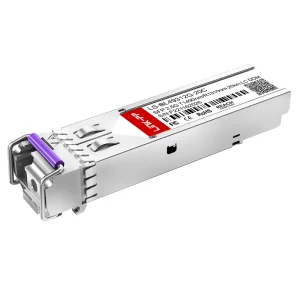
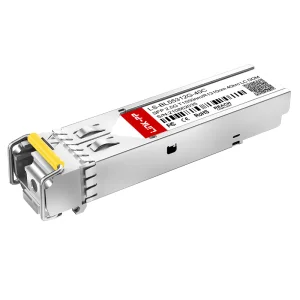
1490nm-TX/1310nm-RX Single Mode SFP 2.5G Bidi 20km

1490nm-TX/1310nm-RX Single Mode SFP 2.5G Bidi 20km Simplex LC Optic Transceiver Module

View Details
1550nm-TX/1310nm-RX Single Mode SFP 2.5G Bidi 40km

1550nm-TX/1310nm-RX Single Mode SFP 2.5G Bidi 40km Simplex LC Optic Transceiver Module

View Details
1550nm-TX/1490nm-RX Simplex LC SFP 2.5G Bidi 80km

1550nm-TX/1490nm-RX Simplex LC SFP 2.5G Bidi 80km SMF Bidirectional Optical Transceiver Module

View Details
2.5GBASE-SX Multimode 850nm 2.5G SFP 300m

2.5GBASE-SX Multimode 850nm 2.5G SFP 300m Duplex LC MMF Optical Transceiver Module

View Details
Multi Mode 850nm SFP 2.5G 550m

Multi Mode 850nm SFP 2.5G 550m MMF Duplex LC Optic Transceiver Module

View Details
2.5GBASE-LX Single Mode 1310nm SFP 2km

2.5GBASE-LX Single Mode 1310nm SFP 2.5G 2km Dual LC Optic Transceiver Module

View Details
Single Mode 2.5G SFP 1310nm 10km DDM

Single Mode 2.5G SFP 1310nm 10km DDM Duplex LC Optical Transceiver Module

View Details
2.5GBASE-LX Single Mode 2.5G SFP 1310nm 15km SMF

2.5GBASE-LX Single Mode 2.5G SFP 1310nm 15km SMF LC Optical Transceiver Module

View Details

Our Advanced R&D Lab & Manufacturing Facilities

A glimpse inside our ISO9001-certified factory showcasing high-performance testing, automation, and component integration.


Novafiber Automated Testing Facility Optoelectronic Component Assembly Line High-Speed Cleanroom Operations Quality Inspection and Burn-In Chambers
All 2.5G~6G SFP Module Products