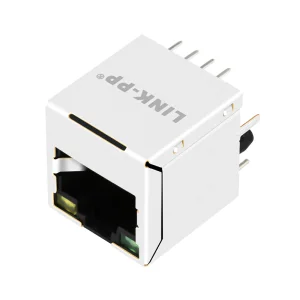
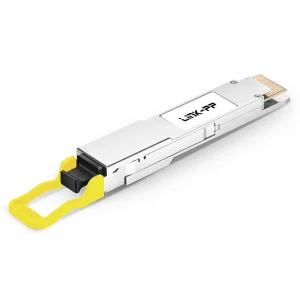
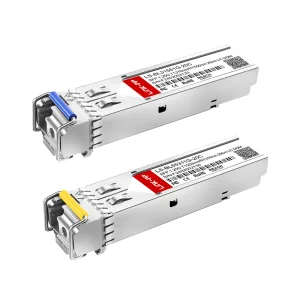
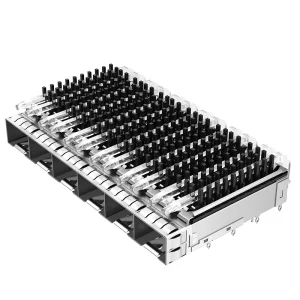
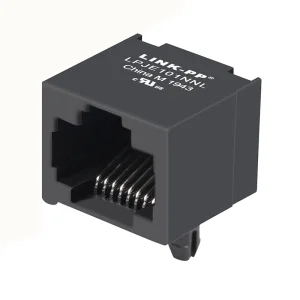
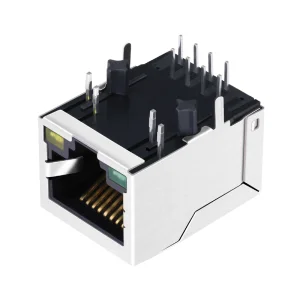
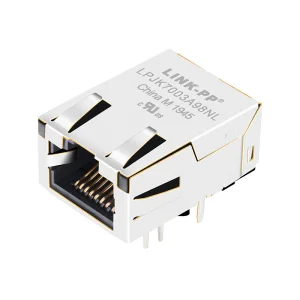
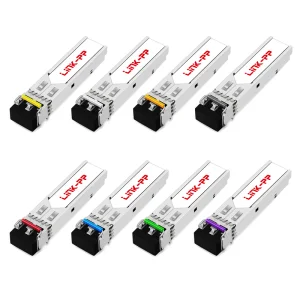
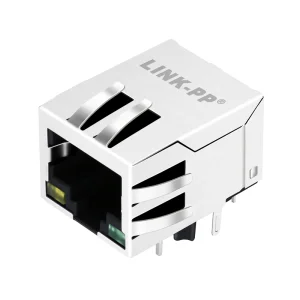
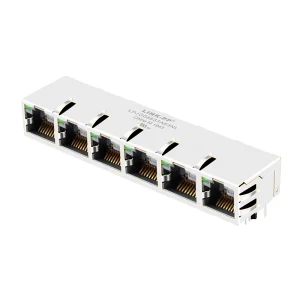
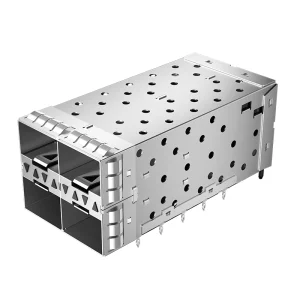
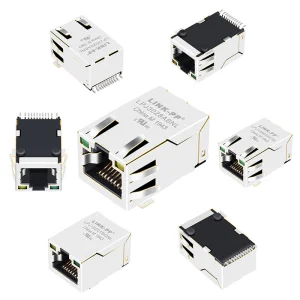
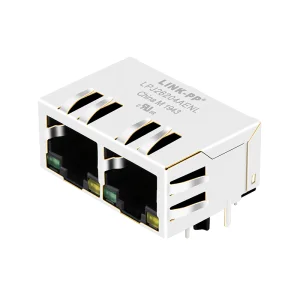
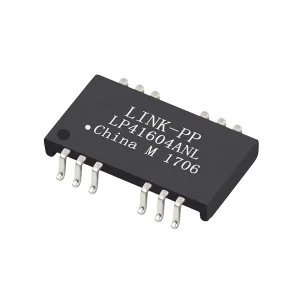
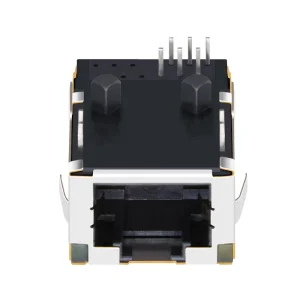
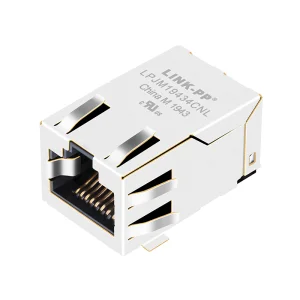
Explore our primary portfolio of SFP+ cages, optical transceivers, and integrated magnetic RJ45 connectors designed for high-density applications.
Analyzing signal integrity, structural dynamics, and optical coupling in next-generation high-speed interconnect interfaces.
In modern high-speed telecommunications and hyperscale data center environments, the Small Form-factor Pluggable (SFP) connector interface stands as the absolute bedrock of optical and electrical signaling. SFP connector interfaces, alongside their high-speed variants such as SFP+, SFP28, SFP56, and QSFP-DD, are tightly regulated by the Multi-Source Agreements (MSAs). These agreements define physical dimensions, mechanical mating interfaces, electrical pin assignments, and management protocols (such as SFF-8472 and SFF-8431). This universal compatibility ensures that network switches, routers, and host channel adapters (HCAs) can interoperate seamlessly with transceiver modules, direct attach copper (DAC) cables, and active optical cables (AOC) from diverse manufacturers.
Did you know? As transmission speeds scale from 10G to 400G and 800G, the connector interface must mitigate significant high-frequency challenges, including insertion loss, return loss, and electromagnetic interference (EMI). High-performance SFP cages and receptacle connectors feature advanced spring fingers, elastomeric gaskets, and integrated heatsinks to guarantee mechanical integrity and signal compliance at up to 112G PAM4 per channel.
At the core of the SFP connector interface lies a 20-pin receptacle hosting SMT (Surface Mount Technology) or press-fit contacts. The design of these contact points is vital for preserving the impedance match of the differential pairs. The nominal differential impedance is target-designed to 100 Ohms. Any mismatch due to spatial variations in the receptacle pins can lead to severe signal reflections, degrading the Bit Error Rate (BER) of the system. High-performance SFP connector interfaces manufactured by industry leaders utilize selective gold plating (typically 30 micro-inches minimum) over nickel on the mating contacts. This ensures thousands of insertion-extraction cycles without a degradation in contact resistance, maintaining optimal electrical connection even under thermal cycling and vibrational stress.
Because SFP modules generate considerable heat—particularly modern coherent optical transceivers and high-speed copper modules (10GBASE-T)—the SFP interface must serve as a thermal conduit. Integrated cages feature external heat sinks with customized fin geometries designed to capture system airflow. In addition, to prevent high-frequency radiation from leaking through the bezel cutouts, cages are outfitted with EMI shielding spring gaskets or conductive elastomeric gaskets. These grounding structures guide stray RF energy back to the system chassis ground, preventing electromagnetic interference with adjacent high-speed circuits and ensuring compliance with FCC and CE standards.
| Interface Type | Data Rate Per Channel | Modulation Format | Target Applications | MSA Reference Standards |
|---|---|---|---|---|
| SFP / SFP+ | 1.25 Gbps to 10 Gbps | NRZ | Enterprise LAN, 1G/10G Ethernet | SFF-8431, SFF-8472 |
| SFP28 | 25 Gbps to 28 Gbps | NRZ | 5G Fronthaul, 25G Ethernet Switch Uplinks | SFF-8402, IEEE 802.3by |
| SFP56 | 50 Gbps to 56 Gbps | PAM4 | Enterprise Core, Storage Area Networks (SAN) | SFF-8402, IEEE 802.3cd |
| QSFP-DD | up to 400 Gbps / 800 Gbps | PAM4 / Coherent | Hyperscale Cloud Data Centers, AI Clusters | QSFP-DD Hardware Specification |
How the rise of Artificial Intelligence, Edge Computing, and 5G/6G infrastructures is driving interconnect innovation.
AI compute clusters powered by hundreds of thousands of GPUs demand unprecedented bandwidth. The SFP interface has evolved into dual-channel SFP-DD configurations, enabling massive system density upgrades without altering traditional port forms.
As speeds cross 1.6T, electrical losses between the switch ASIC and pluggable optical engines become a bottle-neck. The industry is transitioning from purely pluggable SFP interfaces toward CPO architectures, co-locating silicon optics on the substrate.
Data center sustainability regulations are forcing manufacturers to design connectors that reduce energy draw. Improved cage designs with optimized ventilation and low-power optoelectronics are now baseline requirements for tier-1 operators.
Navigating compliance, supply chain stability, and interoperability across major global markets.
Enterprise procurement departments, telecommunications system integrators, and data center engineers face multi-dimensional challenges when selecting a reliable Chinese manufacturer for SFP connector interfaces. In a highly consolidated market, purchasing decisions must transcend basic unit pricing. The primary purchasing criteria revolve around interoperability, compliance certifications, long-term environmental reliability, and production scalability.
Interoperability is a crucial pain point. An optical module or SFP connector cage must show 100% plug-and-play compatibility across a heterogeneous array of network appliances from brands such as Cisco, Arista, Juniper, Huawei, and Mellanox. This level of compatibility requires manufacturers to possess advanced programming labs, running extensive EEPROM matching, micro-code firmware adaptation, and live switch diagnostic tests.
Addressing these needs requires a macro-level infrastructure approach. Novafiber Communications Co., Ltd. has developed specialized, end-to-end solutions tailored for distinct application scenarios:




Uncompromising quality assurance and cross-border regulatory compliance built into every batch.
Founded in 2016, Novafiber Communications Co., Ltd. has established itself as an innovative, quality-first manufacturer in the optical communication landscape. Operating from a modern facility, Novafiber combines over 9 years of industry experience with 7 years of export expertise, generating an annual export revenue exceeding USD 8.5 million. By serving clients across North America, Europe, Southeast Asia, and the Middle East, we understand the critical nature of compliance and quality control.
Our commitment to quality is reinforced by a specialized team of 65 quality inspection personnel. Every SFP connector interface, optical module, and RJ45 connector undergoes a multi-stage validation process. This includes IPC-standard automated optical inspection (AOI), 100% loopback testing, bit error rate testing (BERT), and environmental stress screening (ESS). High-temperature aging and burn-in testing are standard procedures, ensuring that our products achieve an exceptionally low failure rate over their lifecycle.
OEM/ODM Customization & Localized Engineering Support: Backed by a powerful R&D team consisting of 180 experienced engineers, Novafiber launched 320 new product releases last year alone. We provide full customization capabilities, from firmware coding for custom protocols and custom-designed SFP cage heatsinks, to specific packaging and branding configurations for global distributors.
To assure frictionless international logistics and deployment, Novafiber supports strict environmental and safety regulations. All products comply with RoHS, REACH, and CE directives, and are manufactured using UL94-V0 rated fire-retardant materials. Through our network of over 1,200 supply chain partners, we ensure stable material sourcing and rapid transit to meet tight deployment deadlines.
Mapping the next generation of transceiver interfaces from 800G toward 1.6T and beyond.
As the optical communications industry pushes past 800G toward 1.6T and 3.2T architectures, the design of the SFP connector interface is undergoing radical changes. The classic copper electrical pins must support increasingly high Baud rates, shifting the signal processing burden onto advanced DSP (Digital Signal Processing) chips and LPO (Linear Pluggable Optics) systems. Our R&D roadmap focuses heavily on developing connector interfaces that lower latency and minimize power consumption. By optimizing host board trace layouts, introducing low-loss dielectric materials, and utilizing co-packaged optics, we aim to deliver solutions that satisfy both the physical demands and thermal requirements of future AI networks.
Explore additional modular jacks, transceiver interfaces, and magnetic connectors in our inventory.
Get authoritative answers on compatibility, customization, and engineering specs.
Press-fit connectors feature elastic pins that establish a solderless, mechanical connection inside the plated through-holes (PTH) of the host PCB, providing superior mechanical hold and easier rework. Surface Mount Technology (SMT) connectors, on the other hand, are soldered directly onto the PCB surface. SMT is often preferred for automated assembly and can offer cleaner high-frequency electrical performance when properly optimized, while press-fit excels in high-density, multi-port stacked configurations.
We operate a dedicated EEPROM programming and verification facility. Every optical transceiver is coded with vendor-compliant micro-code matching the target switch brand's diagnostic expectations (including Cisco, Arista, Juniper, HP, and Mellanox). Additionally, we conduct functional loopback tests directly on matching host machines to ensure zero port-blocking errors.
Light pipes are transparent optical waveguides integrated into the SFP cage. They direct light from LEDs located on the host PCB to the front bezel of the port, providing system administrators with visual status indicators (link speed, activity, and fault). Yes, Novafiber offers customized light pipe configurations, including single, dual, or quad-port configurations, as well as customized heights to clear front-panel bezels.
Our SFP connector interfaces, cages, and RJ45 jacks are fully compliant with RoHS (Restriction of Hazardous Substances) and REACH directives. All plastic housings utilize UL94-V0 rated thermoplastic material, ensuring high flame retardance and stability under high-temperature reflow soldering processes.
Yes. With 180 engineers in our R&D department, we support full custom OEM/ODM services. This includes modifying cage pin layouts, mounting dimensions, heatsink fin configurations, and adding external shielding components to match customized host card architectures.
 Novafiber