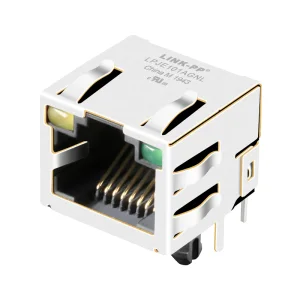
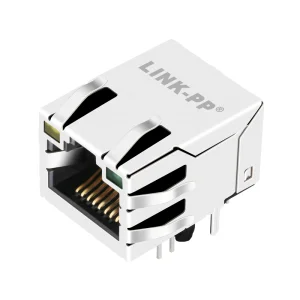
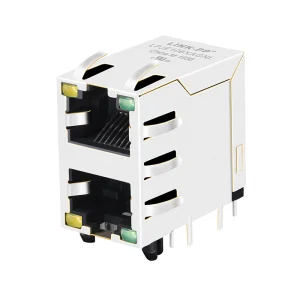
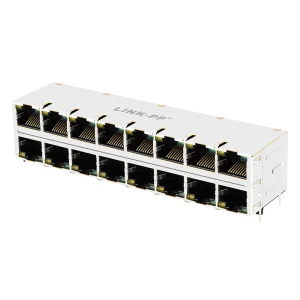
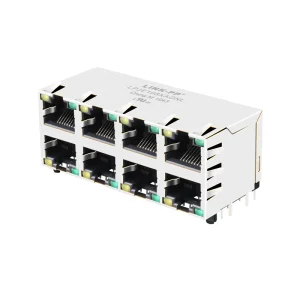
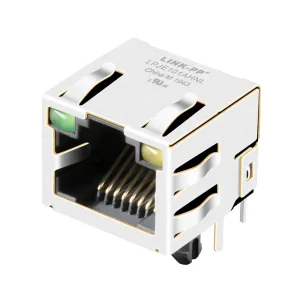
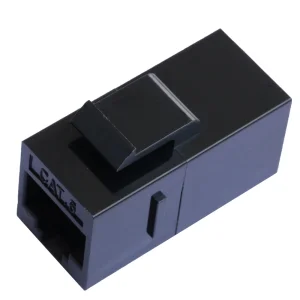
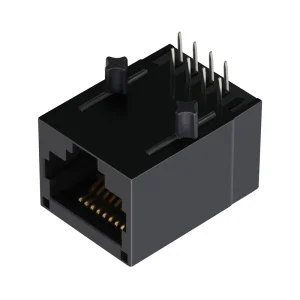
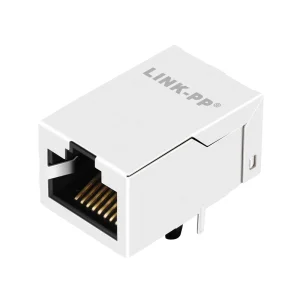
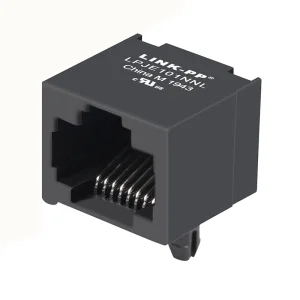
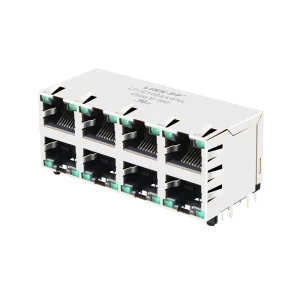
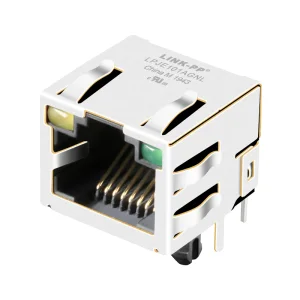
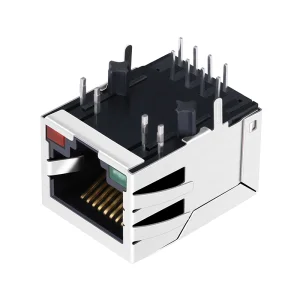
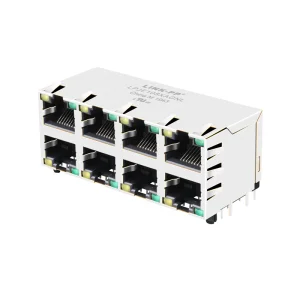
In typical Ethernet hardware design, an RJ45 connector contains built-in magnetic components (isolation transformers and common-mode chokes) designed to isolate the system transceiver (PHY) from the copper cabling infrastructure. However, an RJ45 Without Magnetics (often referred to as a non-magnetic or plain modular jack) consists purely of mechanical contacts, housing, and optional shielding/LEDs.
This design transfers the responsibility of magnetic isolation directly to the system motherboard or host PCB layout, where discrete transformer components are placed between the PHY chip and the modular connector. This layout strategy yields significant advantages in noise isolation, board flexibility, and overall component cost, especially for high-density, multi-port, or customized networking configurations.
1. Custom PHY Matching & Design Control: High-performance networking PHY chips (from Broadcom, Marvell, Intel, etc.) often exhibit unique electrical characteristics. Using a non-magnetic RJ45 connector allows PCB designers to select specific, optimized discrete transformers that precisely match the PHY manufacturer's reference architecture.
2. Thermal Dissipation & Space Optimization: Multi-port Integrated Connector Modules (ICMs) generate heat inside a confined space. Dispersing the magnetic components across the PCB surface improves thermal dissipation, critical in Trinidad and Tobago's high-temperature tropical climate.
3. Cost-Efficiency in Scale: Plain modular jacks are substantially less expensive to manufacture than Integrated MagJacks. In large-scale hardware deployments, integrating discrete transformer ICs alongside multi-port non-magnetic RJ45s significantly reduces the total bill of materials (BOM).
| Feature | RJ45 Integrated Magnetics (MagJack) | RJ45 Without Magnetics (Plain Jack) |
|---|---|---|
| BOM Complexity | Lower (Single component on PCB) | Higher (Requires discrete transformer layout) |
| EMI Tuning Flexibility | Fixed (Inside the connector shell) | Excellent (Designer can modify PCB filter networks) |
| Thermal Profile | Concentrated heat at the port array | Distributed thermal paths across the motherboard |
| Product Lifespan / MTBF | Dependent on built-in coil degradation | Extremely long mechanical contact durability |
| Unit Cost | Premium pricing | Highly cost-effective (Commodity pricing) |
Trinidad and Tobago stands as a key global supplier of ammonia, methanol, and liquefied natural gas (LNG), with the Point Lisas Industrial Estate serving as the core of this petrochemical capacity. Processing facilities require industrial-grade control networks (SCADA) designed to operate under continuous exposure to extreme ambient heat, heavy machinery vibrations, and severe electromagnetic interference (EMI).
By implementing discrete transformer circuits paired with non-magnetic RJ45 connectors on custom-engineered PCB controllers, industrial equipment designers prevent high-frequency noise from corrupting data signals. Furthermore, utilizing high-shielding variations (such as multi-port shielded RJ45 modular jacks) ensures that external cabling noise is safely shunted to the chassis ground before it can reach sensitive silicon components.
Offshore drilling operations in Trinidad's deepwater gas blocks depend on robust communications arrays that link seismic sensors, drilling telemetry, and crew communication terminals. Offshore platforms feature dense electrical spaces with large power generators, where typical networking cables act as antennas for noise. Using robust, metal-shielded RJ45 jacks without magnetics—complemented by heavy-duty external isolation transformers—ensures compliance with maritime and offshore electronics safety standards, providing the necessary galvanic isolation to prevent ground loop currents.
The Telecommunications Authority of Trinidad and Tobago (TATT) has driven initiatives to modernize regional broadband infrastructure. This includes upgrading municipal networks to fiber-optic backhauls linked with localized copper-based Ethernet drops. Media converters, fiber transceivers (like those engineered by Novafiber), and localized switches rely on high-grade RJ45 connectors to deliver Gigabit speeds to end consumers, businesses, and government nodes in Port of Spain and San Fernando.
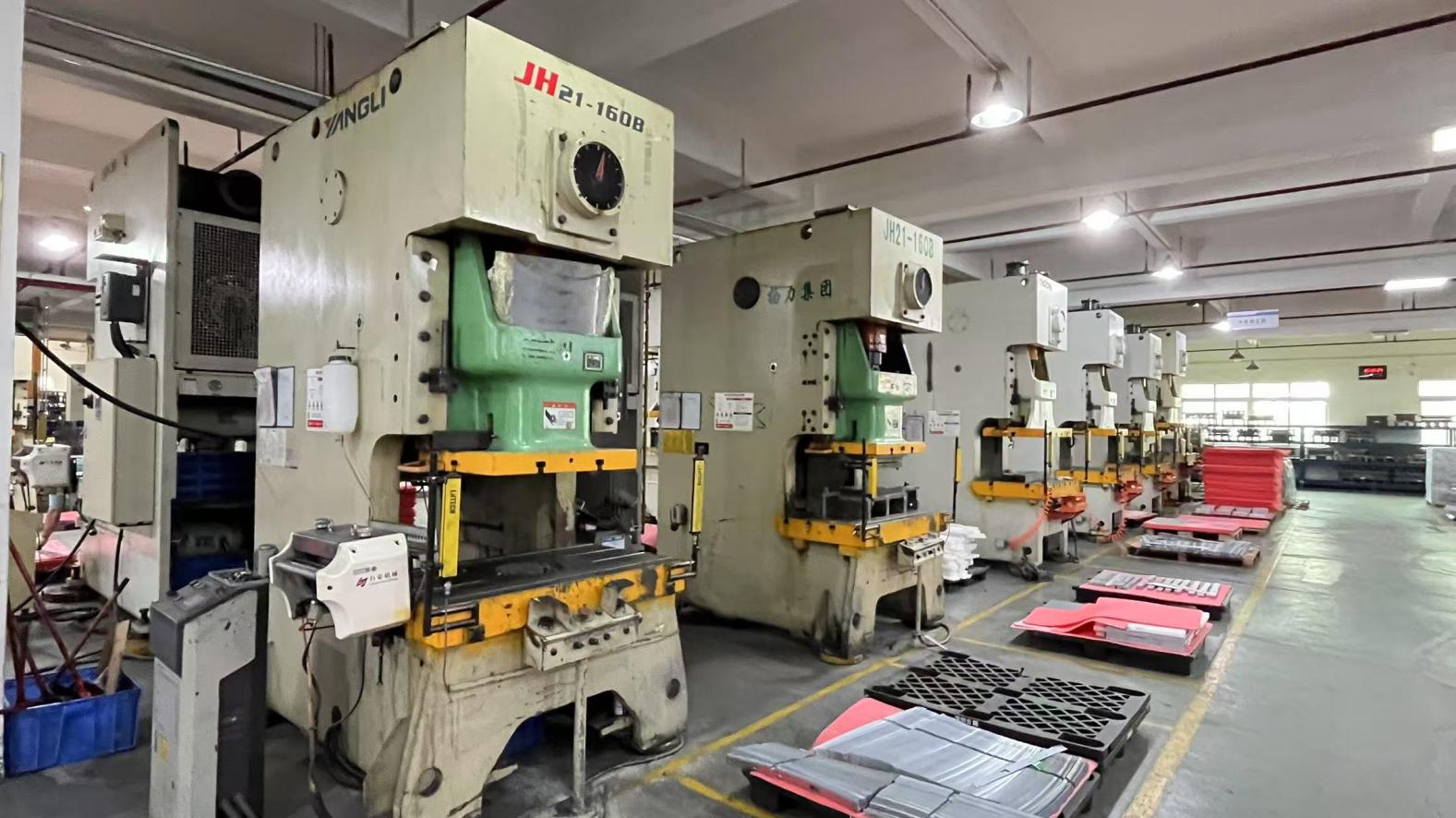
Founded in 2016, Novafiber Communications Co., Ltd. has grown into a leading global developer and manufacturer of optical transceivers and networking connectivity components. Boasting over 9 years of industry experience and 7 years of active export experience, the company operates a specialized manufacturing footprint designed to satisfy the rigorous demands of enterprise datacenters and international telecom carriers.
With an annual export revenue exceeding USD 8.5 million across North America, Europe, Southeast Asia, and the Middle East, Novafiber relies on its robust supply chain network of over 1,200 supply chain partners. This network ensures a reliable, continuous supply of high-grade raw materials, copper contacts, and plastic housings required to manufacture durable physical layer products like non-magnetic RJ45 jacks.
To maintain zero-defect output for industrial deployments in Trinidad and Tobago, our components undergo multi-phase validation systems. With 65 quality inspection personnel on-site, products are monitored from raw materials to final packaging. Our validation protocol includes:
Designing circuits with discrete magnetics requires strict adherence to high-frequency routing standards to maintain signal integrity and ensure electromagnetic compliance (EMC). Unlike integrated connectors where internal shields isolate magnetics from external noise, discrete boards route exposed differential lines across the PCB.
1. Keep Routing Lines Short: Keep the differential traces between the RJ45 jack and the discrete transformer as short as possible. Traces exceeding 25mm can pick up internal noise from digital planes or SMT switching devices.
2. Keep Signal Pairs Close Together: Route TX and RX pairs with controlled 100-ohm differential impedance. Ensure that the distance between the two lines of a pair remains constant to minimize crosstalk.
3. Isolate Ground Planes: Separate the chassis ground (which connects directly to the metal shield of the non-magnetic RJ45) from the system digital ground by a minimum gap of 2mm. Connect them only through a high-voltage capacitor (typically 2kV, 1000pF) to provide safe ESD shunting while preventing ground-loop currents.
| Layout Standard | Requirement Value | Reasoning |
|---|---|---|
| Differential Impedance | 100 Ohms ±10% | Prevents reflection of high-frequency pulses. |
| Chassis-to-System Isolation | > 2.0 mm Clearance | Meets 1500V AC dielectric isolation standards. |
| ESD Bob Smith Termination | 75 Ohm Resistors, 2kV Capacitor | Common-mode noise termination for unused pairs. |
| Gold Contact Plating | 30μ" to 50μ" Min | Prevents contact oxidation in humid industrial environments. |
As Trinidad and Tobago moves toward smart industrial cities, legacy networking architectures are being updated to support Single Pair Ethernet (SPE / 10BASE-T1L) and Multi-Gigabit bandwidth (2.5G/5G/10G Base-T). Non-magnetic RJ45 connectors remain critical during this transition. High-frequency digital processing places a heavier load on transceivers, meaning that keeping thermal sources separated from mechanical ports remains key to preventing performance bottlenecks.
Furthermore, automated assembly lines in modern factories require SMT reflow-capable high-temperature plastics (LCP) and reflow-compatible housing designs. This allows RJ45 connectors to withstand pick-and-place assembly processes without warping or losing internal mechanical tolerance limits.



We offer customized designs, SMT testing support, and bulk supply chains optimized for Trinidad and Tobago and the wider Caribbean region. Contact our technical team today.
Send Inquiry Now Novafiber