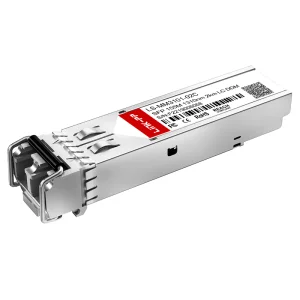
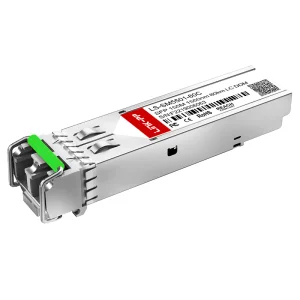
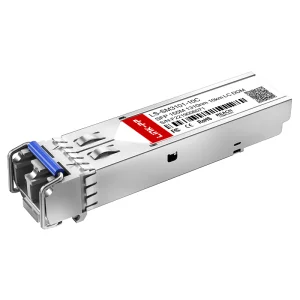
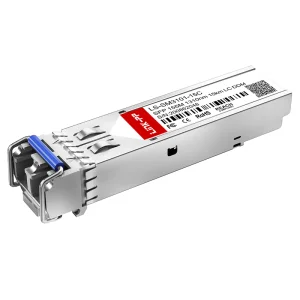
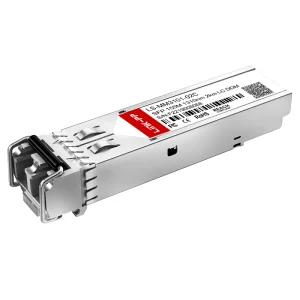
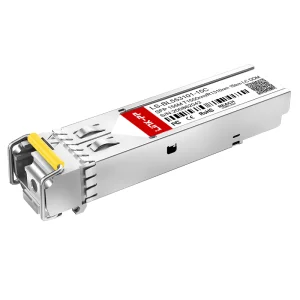
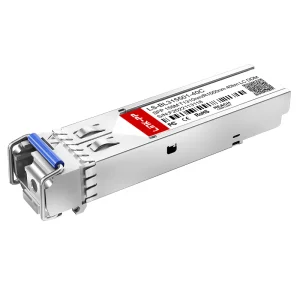
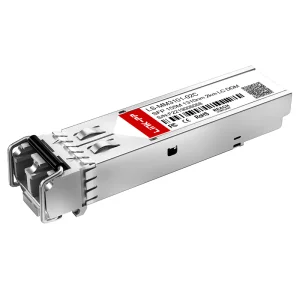
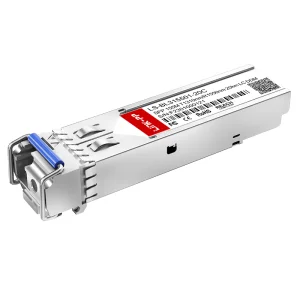
Explore our top-performing 155M and 622M SFP transceivers, fully compatible with leading industrial network systems deployed across Norway's maritime and energy sectors.
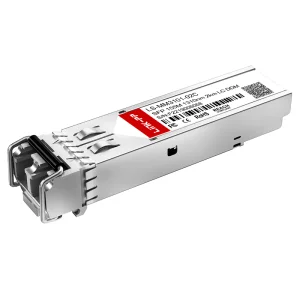
An in-depth analysis of subsea telemetry, offshore energy extraction, and remote utility control networks in Northern Europe.
Norway's complex shoreline, characterized by deep fjords and extensive subsea cabling, relies heavily on legacy SDH/SONET systems operating at 155Mbps (STM-1) and 622Mbps (STM-4). These interfaces guarantee predictable latency and synchronous data transmission for acoustic sensors, remote underwater vehicles (ROVs), and coastal monitoring systems where modern packet-switched architectures introduce jitter.
With Norway’s massive investments in offshore wind projects like Hywind Tampen, system stability is critical. Industrial Ethernet networks connecting turbine telemetry systems operate under strict electromagnetic interference (EMI) profiles. Our 155M SFP modules provide low-rate, high-reliability optical insulation over long fiber runs, preventing interference from high-voltage cables.
Industrial infrastructure in Northern Norway and Svalbard demands networking components that perform in sub-zero temperatures. Standard commercial transceivers fail under freezing conditions. Our SFP modules are rated for Extended (EEC) and Industrial (-40°C to +85°C) temperature ranges, keeping critical utility networks up and running in the most unforgiving climates.
How Novafiber secures long-term lifecycle availability and absolute compatibility for enterprise operators.
As multi-national network equipment manufacturers (NEMs) phase out mature architectures in favor of 100G, 400G, and 800G modules, industrial operators and system integrators face a major challenge. Infrastructure like high-voltage substations, railway signaling, and municipal water treatment plants are designed to last 20 to 30 years. Upgrading these multi-million-dollar physical assets simply due to end-of-life (EOL) announcements for 155M/622M optical modules is economically impractical.
To solve this, Novafiber serves as a reliable global manufacturing partner, offering an uninterrupted supply of legacy SFP optical components. We guarantee strict adherence to the SFP Multi-Source Agreement (MSA) standards, ensuring our transceivers integrate seamlessly into existing network systems from vendors like Moxa, Hirschmann, Cisco, Siemens, and Allied Telesis.
A major bottleneck in legacy systems is host-device vendor lock-in. Devices from Hirschmann, Moxa, and other industrial manufacturers check the internal EEPROM of SFPs for proprietary firmware signatures. Our R&D center houses a massive library of host systems. Every single 155M/622M SFP module we ship is custom-coded and dynamically tested on target hardware. This ensures zero "unsupported transceiver" errors, providing true plug-and-play operation for your maintenance teams.
Founded in 2016, we combine rigorous testing protocols with an agile manufacturing supply chain to deliver high-reliability optical components worldwide.
Operating out of a modern manufacturing facility covering approximately 420m², Novafiber maintains flexible production lines backed by a collaborative network of over 1,200 supply chain partners. With over 9 years of industry experience and 7 years of direct export operations, we serve system integrators and telecom networks across Northern Europe, North America, and the Middle East.
Our focus on quality control is absolute. Every transceiver undergoes 100% functional testing, high-temperature aging cycles, and rigorous Environmental Stress Screening (ESS) to guarantee stable performance down to -40°C. Our adherence to IPC standards means our products meet the strict assembly requirements needed for critical systems in defense, transportation, and power utility networks.




How we adjust the physical layer properties of our SFP modules to overcome high attenuation in subsea and rural topologies.
BiDi technology allows bidirectional data transmission over a single strand of fiber, utilizing distinct optical wavelengths (typically 1310nm/1550nm or 1490nm/1550nm). In Norway, where laying new offshore or subsea fiber is extremely expensive, BiDi modules instantly double the capacity of existing fiber runs, saving thousands of Euros in structural costs.
Connecting remote Norwegian wind farms or isolated maritime outposts requires modules capable of traversing long distances without active repeaters. Our 100BASE-ZX SFPs utilize high-quality DFB lasers and high-sensitivity APD receivers, supporting single-mode fiber links of up to 80km (or even 120km on custom builds) with minimal optical leakage.
Real-time diagnostics are vital when managing remote, unmanned offshore platforms in the North Sea. Equipped with SFF-8472 compliant DDM, our SFP modules report critical metrics like real-time temperature, laser bias current, transmitted optical power, received optical power, and transceiver supply voltage, alerting you to potential fiber damage before it causes downtime.
While hyperscale cloud data centers are driving the development of 800G and 1.6T optics, industrial networks at the edge are moving in a different direction: maximizing stability, reliability, and security over existing fiber. The technical roadmap for 155M and 622M SFP modules focuses on integrating smart diagnostic functions and enhanced protection designs within the classic SFP form factor.
At Novafiber, our R&D initiatives focus on lowering power consumption and extending the temperature limits of our modules. By using advanced laser driver designs, we are reducing transceiver power consumption to less than 0.8W. This helps lower ambient temperatures inside sealed IP67 industrial enclosures, which are widely used in coastal and offshore systems.
Additionally, we are expanding our custom wavelength capabilities. By offering coarse wavelength division multiplexing (CWDM) options on low-rate 155M and 622M platforms, operators can aggregate up to 18 distinct channels on a single fiber pair. This provides an affordable way to scale operations without laying new cabling.
We guarantee compliance with local regulations and offer smooth logistics to Oslo, Bergen, Stavanger, and Trondheim.
All shipped SFPs carry full CE, RoHS, and WEEE certifications. We guarantee that all components are lead-free and comply with Norwegian environmental laws, ensuring smooth clearance through tollvesenet (Norwegian Customs).
We offer express air freight options with DHL, FedEx, and UPS. This ensures your components reach key maritime hubs like Bergen or Stavanger in 3 to 5 business days, helping you minimize unexpected network downtime.
Our confidence in our manufacturing quality allows us to offer an industry-leading 3-year replacement warranty. If a module fails due to component issues, we will ship a replacement immediately, no questions asked.
Get answers to the most common engineering and procurement questions regarding 155M/622M optical modules.
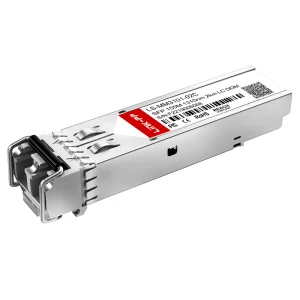
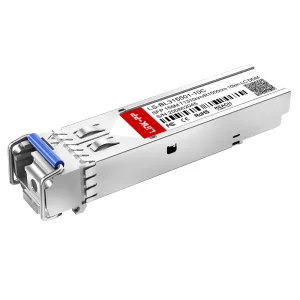
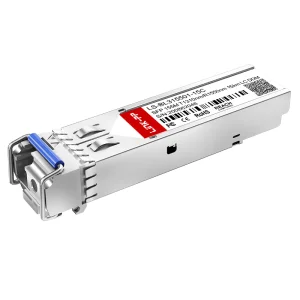
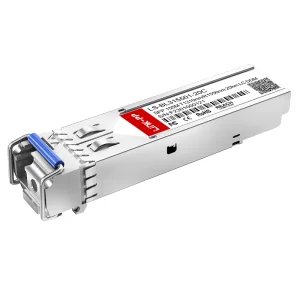
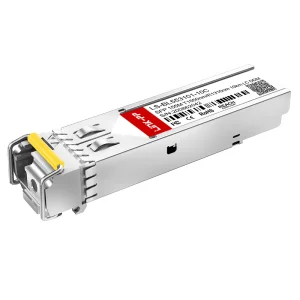
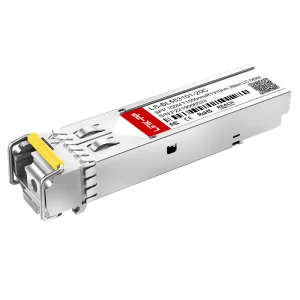
Select from our comprehensive list of 155M, Fast Ethernet, and long-range single-mode modules to support your network maintenance and expansion.
 Novafiber