Novafiber
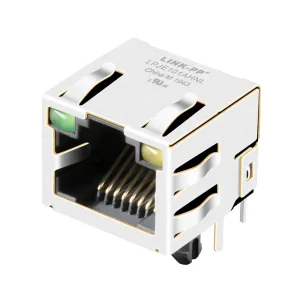
Advanced External RJ45 Design & Electrical Engineering Excellence
Architecting high-frequency physical layer pathways to defeat crosstalk and maximize physical connection longevity.
As the backbone of Ethernet systems worldwide, the External RJ45 connector plays a crucial role in maintaining signal integrity under demanding environmental conditions. Selecting a high-performance external RJ45 connector requires a deep understanding of its electrical, mechanical, and materials characteristics. Designers must balance electrical performance with robust ingress protection, particularly when deploying equipment in outdoor environments, industrial shop floors, and telecommunication base stations.
1. Signal Integrity, Crosstalk Minimization, and Electromagnetic Shielding
In high-bandwidth applications—such as those operating at Cat6, Cat6a, or Cat8 speeds—maintaining high signal-to-noise ratios is paramount. Typical external RJ45 jacks are highly susceptible to Near-End Crosstalk (NEXT) and Far-End Crosstalk (FEXT) due to the close proximity of the internal differential wire pairs. Premium manufacturers combat this by utilizing advanced internal PCB configurations within the jack housing, integrating common-mode chokes, and structuring physical shielding barriers.
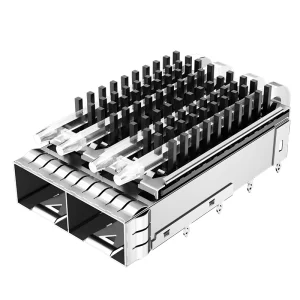
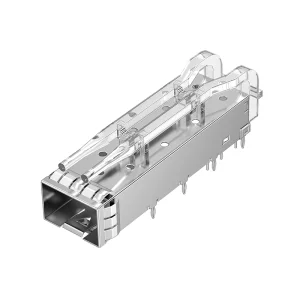
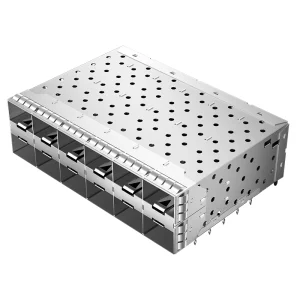
Electromagnetic interference (EMI) can severely degrade network performance, leading to high packet-loss rates. For this reason, high-grade external RJ45 female connectors utilize comprehensive brass or copper-alloy shielding, nickel-plated to prevent oxidation. Integrated metallic fingers extend to interface directly with the SFP cage or chassis ground, ensuring a continuous electrical path that shunts high-frequency electromagnetic noise directly to the chassis floor before it can corrupt differential signaling lanes.
2. Internal Magnetic Integration: Active vs. Passive Connectors
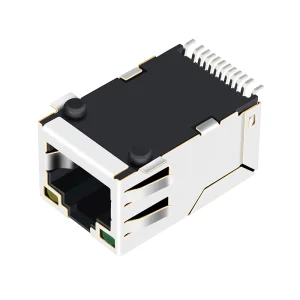
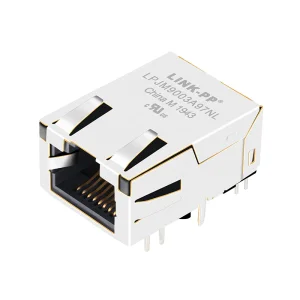
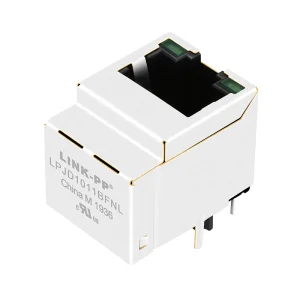
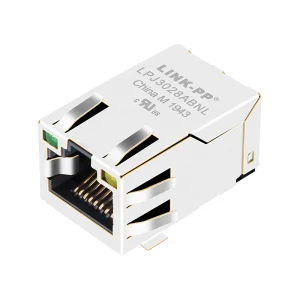
When selecting external connectors, system designers must decide between passive modular jacks and integrated RJ45 connectors with built-in magnetics (commonly referred to as MagJacks or magnetic modular jacks). Passive connectors, such as the LPJE101AHNL Single Port Through-Hole Connector, require discrete magnetic transformers on the system board. Active variants integrate these magnetic components directly inside the RJ45 plastic housing.
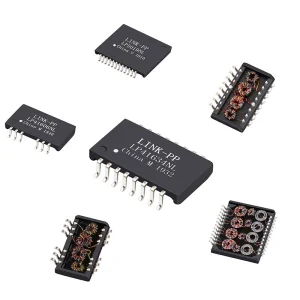
The integrated magnetics act as low-pass filters to filter out high-frequency noise, provide impedance matching between the physical layer (PHY) chip and the UTP cable, and establish mandatory galvanic isolation (conforming to IEC 60950-1 and IEEE 802.3 standards) of at least 1,500 Vrms. This isolation safeguards the internal networking motherboard against surges, lightning strikes, and electrostatic discharges (ESD) commonly encountered in external exposures.