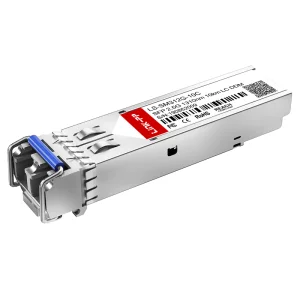
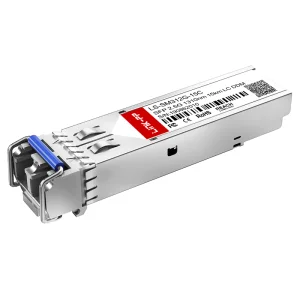
Premium 2.5G SFP modules engineered for Nigeria's expanding metro networks and fiber backhauls.
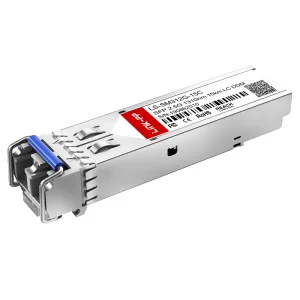
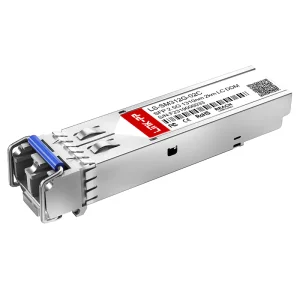
The Federal Republic of Nigeria is experiencing an unprecedented digital transformation. Driven by the Nigerian National Broadband Plan (NNBP 2020-2025), which targets a 70% broadband penetration rate, telecommunications giants like MTN Nigeria, Airtel Africa, Globacom (Glo), and Mafab Communications are aggressively expanding fiber optic backbones. As metro-core networks stretch across urban centers like Lagos, Abuja, Port Harcourt, and Kano, there is a mounting demand for highly reliable, cost-effective 2.5G to 6G optical transceivers.
These optical interfaces form the critical links connecting Base Transceiver Stations (BTS) to the core switching networks. In Nigeria’s tropical climate and dust-heavy Harmattan season, standard grade modules often fail due to thermal stress and particulate penetration. This necessitates deploying robust, carrier-grade 2.5G~6G SFP modules engineered with digital diagnostics monitoring (DDM) to guarantee system uptime.
By leveraging 2.5G to 6G optical modules, local Internet Service Providers (ISPs) and telecom system integrators can scale legacy 1G networks without undergoing capital-intensive upgrades to 10G active equipment, establishing a optimized middle-mile transmission balance.
As networks upgrade from legacy Gigabit Ethernet, the 2.5G and 6G SFP transceiver standards have emerged as foundational layers for several applications:
Furthermore, bidirectional (BiDi) transmission technology using a single optical strand (e.g., 1310nm-TX/1550nm-RX and 1490nm-TX/1310nm-RX) allows Nigerian operators to double their fiber capacity instantly. This is extremely valuable in congested urban areas where laying new fiber cables incurs heavy right-of-way (RoW) fees and execution delays.
Annual Export Value
OEM/ODM Experience
Supply Chain Partners
Fully Tested & Compliant
A comprehensive overview of carrier-grade SFP transceivers optimized for high-temperature and remote telecommunication systems.
| Data Rate / Standard | Wavelength Configuration | Fiber Type & Connector | Transmission Distance | Ideal Application Scenario |
|---|---|---|---|---|
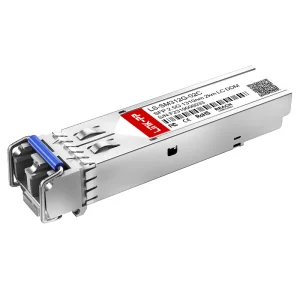
| 2.5G SFP Duplex SMF | 1310nm / 1550nm | Single-Mode Fiber (SMF) LC | 2km - 15km / up to 40km | Metro-core links & ISP local loop connections in Abuja & Lagos |
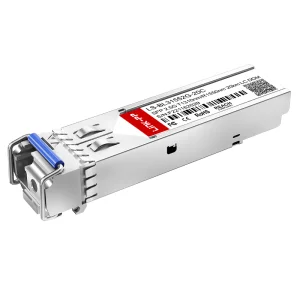
| 2.5G SFP BiDi Simplex SMF | 1310nm-TX / 1550nm-RX | Simplex LC / SC | 20km - 80km | Single-fiber optimization for remote suburban cell tower backhauls |
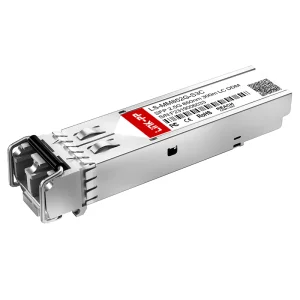
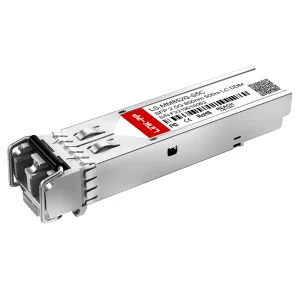
| 2.5G SFP Multi-Mode MMF | 850nm | Multi-Mode Fiber (MMF) LC | 300m - 550m | Intra-Data Center interconnects and local server room cabling |
| 6G SFP CPRI Option 5 | 1310nm / CWDM Channels | Single-Mode Fiber LC | 10km - 20km | Cellular fronthaul link connecting BBU to remote radio heads (RRH) |
Optical hardware operating in Sub-Saharan Africa must survive high ambient temperatures and rapid dust accumulation during the dry season. Our 2.5G and 6G SFP transceivers are configured with industrial temperature ratings (-40°C to 85°C) or extended operating ranges (-10°C to 75°C), utilizing high-efficiency Distributed Feedback (DFB) lasers and highly sensitive PIN/APD receivers. This hardware is optimized to maintain low insertion loss and high optical return loss even under fluctuating power supply grids, which are common across West African telecom nodes.
Novafiber Communications Co., Ltd. is a globally recognized optical transceiver manufacturer specializing in the engineering, design, and distribution of high-performance fiber optic solutions. Founded in 2016, Novafiber operates an advanced production facility encompassing a highly optimized 420㎡ cleanroom structure configured to minimize particulate contamination during delicate optical assembly.
With more than 9 years of optical manufacturing experience and 7 years of direct export operations, we serve as a major global exporter with an annual export volume reaching USD 8.5 million. Our networks span across North America, Europe, Southeast Asia, the Middle East, and rapidly growing African markets like Nigeria, Kenya, and South Africa.
Our supply chain robustness is driven by relationships with over 1,200 trusted component and raw material suppliers, enabling us to guarantee stable production times, component availability, and competitive cost benefits even during global semiconductor shortages.
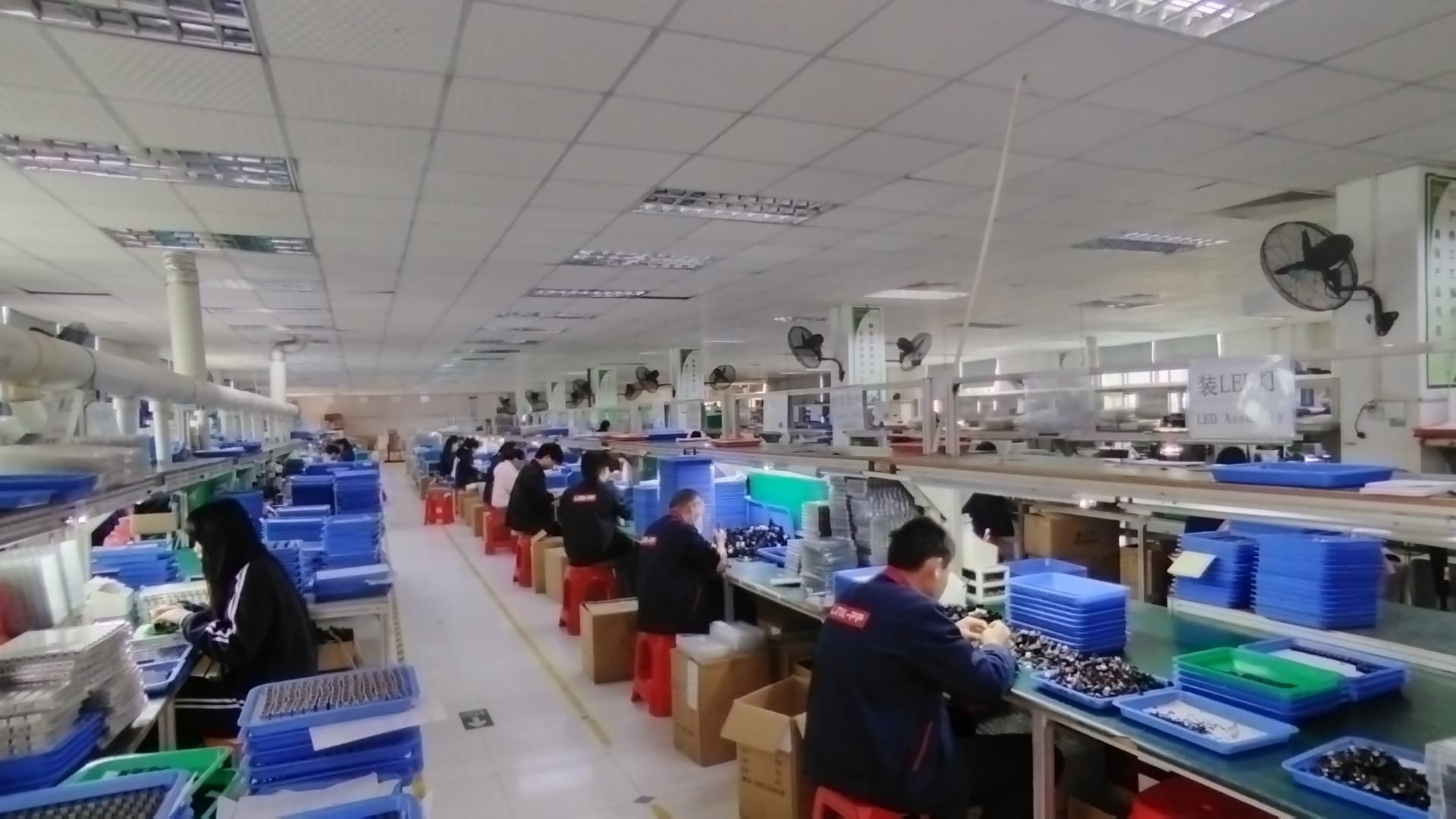
To ensure high quality across our product range, Novafiber deploys a dedicated quality inspection division consisting of 65 quality assurance personnel. We strictly adhere to international IPC guidelines, employing automated optical testing platforms, environmental stress screening (ESS), and continuous thermal cycling tests.
Every single module undergoes a strict testing regimen including 100% operational throughput testing, high-temperature aging chambers, and compliance validation. Our dedicated R&D center, consisting of 180 experienced engineers, released over 320 custom products and adaptations last year. This expertise enables us to offer compatibility across major routing and switching platforms including Cisco, Huawei, MikroTik, Juniper, HP, and ZTE, providing plug-and-play operation for multi-vendor environments in Nigeria.
Explore our extensive line of single-mode, multi-mode, and bidirectional transceiver modules compatible with West African fiber infrastructure layouts.
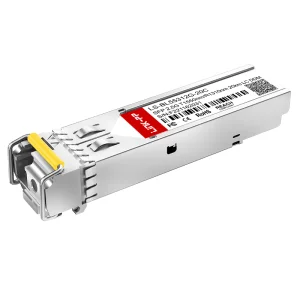
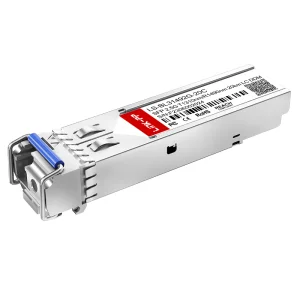
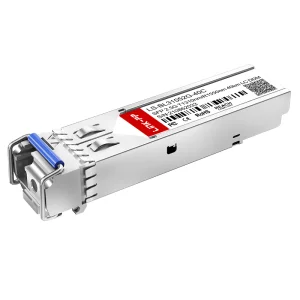
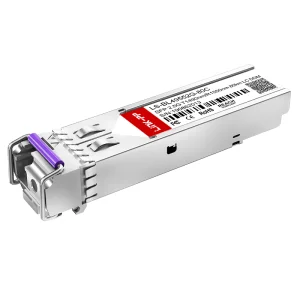
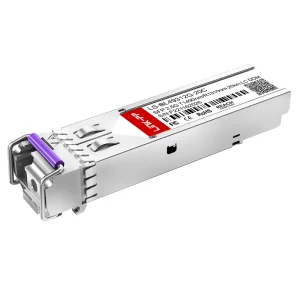
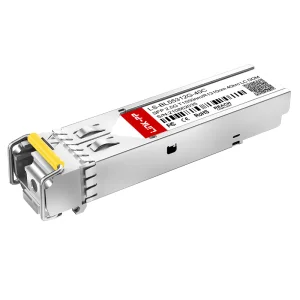
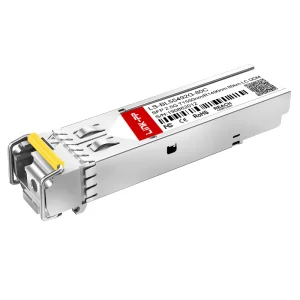
Navafiber ensures all optical transceivers shipped to West Africa comply with regional telecommunication frameworks established by the Nigerian Communications Commission (NCC). By maintaining strict electrical and laser safety protocols (CE, FCC, RoHS, and IEC 60825-1 certifications), our SFP hardware can be seamlessly integrated into public cellular networks, metropolitan ring topologies, and governmental private LAN systems.
To mitigate logistics bottlenecks at Lagos (Apapa/Tin Can Island) ports and Abuja air cargo hubs, Novafiber partners with experienced local customs clearing agents and logistics providers. We offer various incoterms (FOB, CIF, DDP) and prepare exact shipping documents (Form M, SONCAP certifications, and detailed HS coding) to accelerate clearance times and avoid expensive delays.
Our commitment to the Nigerian market extends beyond the initial point of sale. Novafiber offers complete technical support to local field engineers, offering protocol verification, custom EEPROM coding for legacy switches, and remote troubleshooting. All 2.5G to 6G SFP modules are backed by a comprehensive 3-year replacement warranty.
Furthermore, our engineering teams assist ISPs with link budget calculations to prevent signal degradation across long-haul installations. Whether you are scaling networks across Lagos Island or deploying rural telephony links in the Northern states, Novafiber provides the technical expertise and hardware reliability necessary to keep your networks running smoothly.
Expert insights on selecting, deploying, and maintaining 2.5G~6G SFP modules within the Nigerian telecommunication landscape.
We operate an extensive compliance testing laboratory equipped with original routing and switching gear from major hardware providers. Before shipping, each 2.5G~6G SFP module's EEPROM is programmed with compatible application code specific to your system hardware, ensuring seamless integration and error-free operation.
During Harmattan and high-humidity seasons, dust and thermal stress can degrade optical performance. Our transceivers are built using high-reliability DFB lasers and rugged enclosures. We recommend selecting industrial-grade models (-40°C to 85°C) for outdoor cabinets and ensuring fiber connectors are thoroughly cleaned during installation.
BiDi SFP modules use Wavelength Division Multiplexing (WDM) to transmit and receive data on a single fiber strand (e.g., using 1310nm for TX and 1550nm for RX). This effectively doubles your fiber capacity without laying new cables, providing significant cost savings in urban areas with high right-of-way fees.
Every module undergoes automated optical testing, environmental stress screening (ESS), and continuous thermal cycling tests. Our dedicated QA team conducts 100% throughput validation and high-temperature aging tests to ensure all units meet rigorous international standards before shipment.
For standard products, our robust inventory allows us to ship within 3–5 working days. For bulk OEM orders or custom firmware requests, production times typically range from 1 to 2 weeks. Airfreight options via major carriers (DHL, FedEx, UPS) deliver to Lagos or Abuja within 5–7 operational days.
Contact our engineering and sales support specialists today for bulk pricing, customized firmware options, and technical support tailored to your network topology.
Send Inquiry Now


 Novafiber