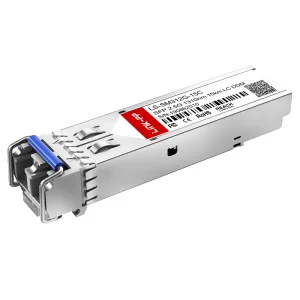
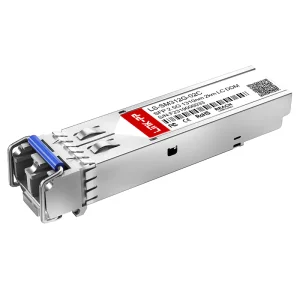
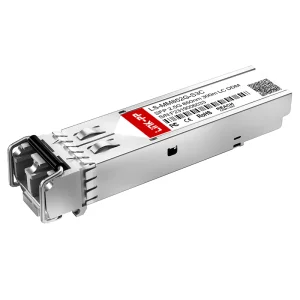
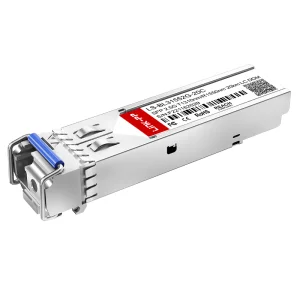
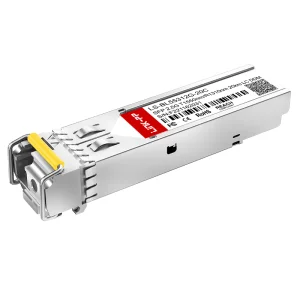
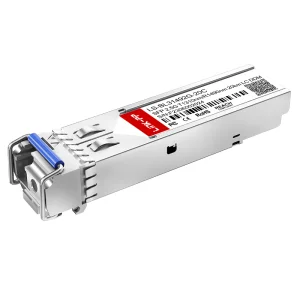
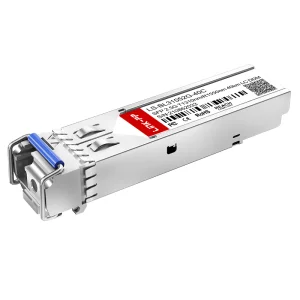
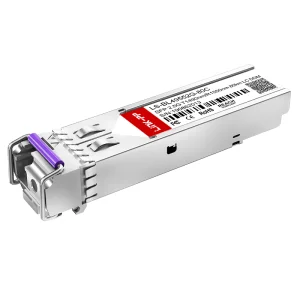
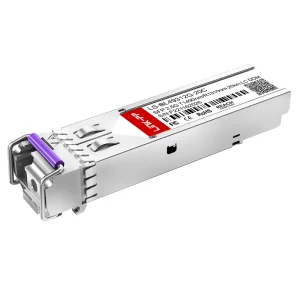
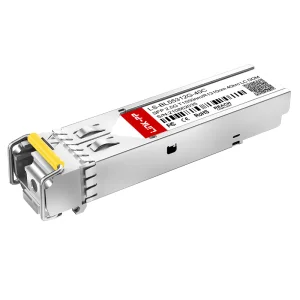
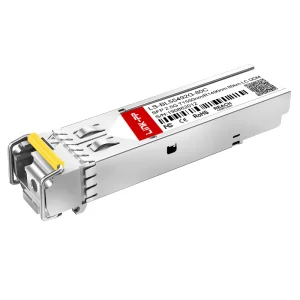
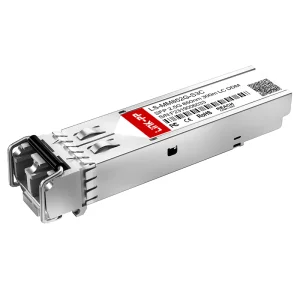
Industrial-grade optical transceivers optimized for high stability and low latency in metropolitan infrastructure deployments.
Industry Experience
Supply Chain Partners
R&D Engineers
ESS Quality Tested
The telecommunications landscape of the Moscow metropolitan area is undergoing a rapid modernization cycle. As key data traffic hubs—such as MMTS-9 and MMTS-10—handle unprecedented traffic volume, regional internet service providers (ISPs), transport authorities, and municipal departments are shifting from legacy gigabit infrastructure to optimized 2.5G and 6G SFP protocols. The adoption of 2.5G and 6G bandwidth tiers serves as a critical bridge, allowing system integrators to upgrade throughput over legacy single-mode fiber (SMF) and multi-mode fiber (MMF) lines without incurring the massive capital expenditure of a full-scale optical cable replacement.
In municipal smart transport systems, CCTV rings, and metropolitan WAN nodes, SFP optical transceivers operate in extreme temperatures and complex electromagnetic environments. Novafiber’s range of 2.5G~6G SFP modules are specifically designed to address these requirements. Leveraging advanced semiconductor lasers and Digital Diagnostic Monitoring (DDM), they provide continuous, low-latency transmission, ensuring reliability for local financial systems, high-speed rail communications, and industrial internet backbones.
In today's global procurement climate, Russian enterprises and system integrators face unique challenges regarding hardware supply continuity, software protocol compatibility, and hardware lifetime support. Relying on generic, non-standardized optical components introduces significant failure risks, including transceiver lockouts, optical power mismatch, and high thermal drift.
Novafiber Communications Co., Ltd. addresses these operational challenges through rigid OEM/ODM compliance. By conducting 100% real-host interoperability tests on systems including Cisco, Juniper, Huawei, Mikrotik, and HP, Novafiber ensures that every optical module delivered to Moscow functions identically to OEM-branded transceivers. Our 65-strong quality inspection division utilizes advanced optical spectrum analyzers and bit error rate testers (BERT) to eliminate product-level faults before dispatch, creating resilient network linkages for Russian industrial and enterprise infrastructures.
Information Gain Fact: Every single Novafiber 2.5G~6G SFP module deployed in Moscow undergoes customized firmware tuning to withstand localized regional router variations, optimizing optical margin ratios by up to 2.5dB compared to generic white-label transceivers.
How Novafiber achieves cost leadership and high-volume delivery through modern smart-manufacturing pipelines.
Our high-density facility uses automated optical sub-assembly (OSA) alignment and automated wire-bonding processes to scale production efficiently, ensuring fast delivery of high-volume orders for major metropolitan deployments.
Optical drift caused by extreme temperatures is minimized using specialized Environmental Stress Screening (ESS). Each SFP is subjected to thermal cycling tests ranging from -40°C to +85°C for industrial-grade modules.
Exporting over USD 8.5 million annually across Europe, the Middle East, and Asia, Novafiber has refined its logistics, custom clearance compliance, and international packaging to support efficient delivery directly to Moscow.
Practical deployment topologies of 2.5G~6G optical modules in Russia's capital.
The expansion of the Moscow Metro (including the Big Circle Line) demands bulletproof data links for train position tracking, signal control, and real-time high-definition video surveillance. Our 6G and 2.5G Bidirectional (Bidi) SFP modules allow network architects to double the data transmission capacity of existing fiber rings. By using simplex LC connections to separate transmission channels (e.g., 1310nm TX/1550nm RX) over a single fiber strand, operators save millions on fiber laying while maintaining latency targets under 1 millisecond.
To comply with localization regulations, regional data hosting centers in Moscow are expanding rapidly. 2.5G SFP transceivers, particularly the 2.5GBASE-SX MMF and 2.5GBASE-LX SMF series, provide optimal performance for interconnecting server racks, NAS units, and access switches. Equipped with highly reliable DDM chips, database administrators can monitor real-time operating parameters like optical output power, receiver sensitivity, and temperature, enabling predictive maintenance before link drops occur.
In special economic zones like Technopolis Moscow, automated factories and pharmaceutical plants use optical networks to isolate delicate control networks from heavy high-voltage EMF interference. Our industrial temperature range (-40°C to +85°C) 2.5G~6G SFP modules ensure uninterrupted data transmission on high-speed industrial Ethernet protocols and robotics control buses, standing up to the harsh thermal environment of heavy production floors.
As telecommunication companies in Moscow upgrade residential broadband to support remote working, high-definition streaming, and online education, the load on OLT (Optical Line Terminal) switchboards increases significantly. Utilizing 2.5G and 6G backhaul SFP transceivers on the uplink interfaces of municipal GPON cabinets provides cost-effective, high-bandwidth aggregation back to the primary optical backbone nodes, preventing evening bandwidth congestion.
A glimpse into our manufacturing compliance, assembly systems, and technical facilities.




The design of modern SFP (Small Form-factor Pluggable) transceiver modules for 2.5Gbps to 6.144Gbps transmission requires strict control of signal integrity and laser emission parameters. At these speeds, transmission errors caused by dispersion and attenuation become critical design considerations, particularly over distances of 20km, 40km, and 80km.
For shorter distances (such as 300m to 2km), Fabry-Perot (FP) lasers are often used due to their simplicity and cost-efficiency. However, FP lasers exhibit a relatively wide spectral width, making them susceptible to chromatic dispersion over longer distances. For fiber spans exceeding 10km (such as our 15km LX or 20km/40km/80km Bidi modules), Distributed Feedback (DFB) lasers are preferred. DFB lasers feature a built-in Bragg grating within the active cavity, forcing the laser to emit a highly stable, single longitudinal wavelength mode. This narrow spectral width minimizes chromatic dispersion penalty, ensuring clean eye-diagram metrics even after traveling through dozens of kilometers of single-mode fiber in Moscow's ring topologies.
A primary driver for 6G SFP transceivers is the Common Public Radio Interface (CPRI) standard, which defines the transport interface between the Baseband Unit (BBU) and the Remote Radio Head (RRH) in mobile infrastructure. CPRI Option 3 (2.4576 Gbps), Option 4 (3.072 Gbps), Option 5 (4.9152 Gbps), and Option 6 (6.144 Gbps) directly map to the 2.5G to 6G SFP speed ranges. System integrators building out mobile telecom stations in the Greater Moscow Area rely on these highly synchronized, low-jitter transceivers to prevent packet drops and clock desynchronization in cellular communication networks.
Each Novafiber SFP module integrates a DDM microcontroller compliant with the SFF-8472 multi-source agreement (MSA). SFF-8472 defines a 256-byte memory map containing real-time diagnostic parameters accessible via an I2C interface:
Technical details, compatibility verification, and procurement policies for buyers in Moscow.
Single-strand Bidi systems and high-power transceivers designed for long-distance municipal and industrial backhauls.
Whether you require customized firmware configuration for specialized network switches, high-volume production pricing, or industrial-grade temperature specifications, our engineering team is here to assist.
Send Inquiry Now Novafiber