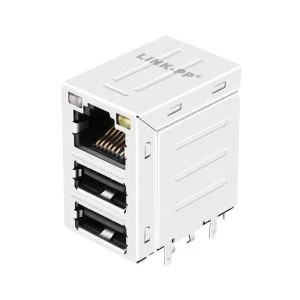
 RU1-161A9WGA 1000 Base-T With Dual USB RJ45 Connector Modular Jack
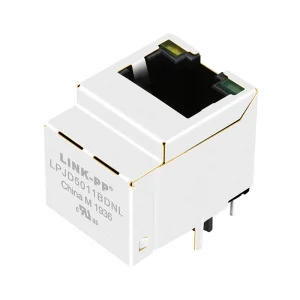 HFJV1-E2450-L12RL 10/100 Base-t Vertical Top Entry Female Magnetic Ethernet RJ45 Connector With Leds
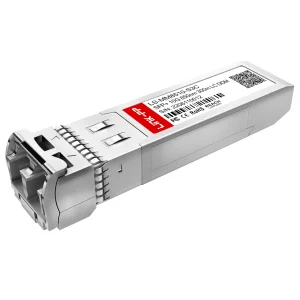 10GBASE-SR SFP+ Transceiver 850nm 300m Duplex LC MMF Fiber Optical Module
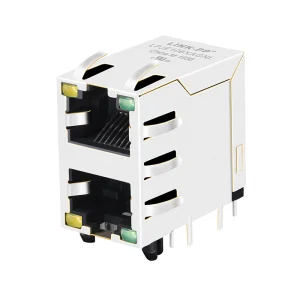 RJSAE-5381-02 615016245421 With G/Y Leds 2X1 Port RJ45 Connector Jack Without Magnetics
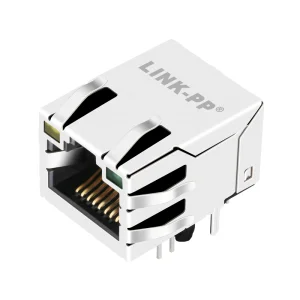 Entry Through-Hole PCB Mounting RJ45 Connector ARJ045-010156
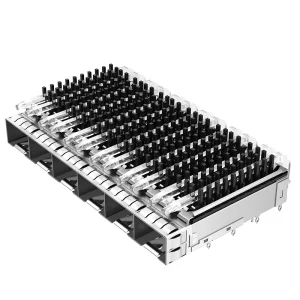 2198236-4 TE Replacement Through Hole 1x6 Ports Light Pipe Press-fit SFP+ Cage With Heatsink
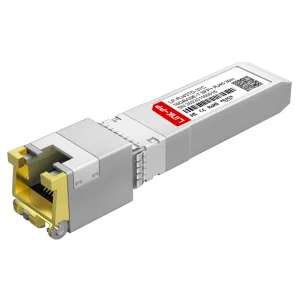 10GBASE-T SFP+ Ethernet Module Copper RJ-45 30m Fiber Optical Transceiver
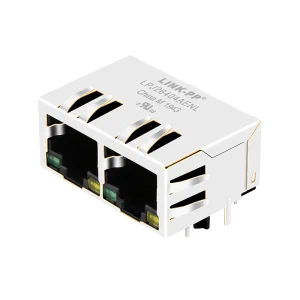 62F-1204GYD2NL JX80-0037NL 1x2 Dual Ports 10/100 Base-t Ethernet RJ45 Magnetic Jack With Leds
A comprehensive analysis of diagnostic infrastructure, hardware testing protocols, and OEM customized network loopbacks for hyperscale datacenters and telecommunication nodes.
Modern telecommunication operations demand zero-tolerance downtime. Ethernet loopback connectors provide a physical hardware-based loopback path to test transmission capabilities and receiver sensitivity of local network interfaces, ensuring rapid fault isolation.
Custom OEM Ethernet loopback components allow customized pinout configurations (e.g., standard MDI/MDIX loop mapping, or specialized proprietary crossovers) matching various network interface cards (NICs) and optical transceiver footprints (SFP, SFP+, SFP28, QSFP+).
With structured loopback plugs, network diagnostic software can trigger self-test loops to gauge Bit Error Rate (BER), latency, jitter, and packet loss without dispatching field engineers, saving substantial operational expenses.
A trusted global optical transceiver and customized network components manufacturer. Harnessing over 9 years of deep engineering expertise to power high-speed communication infrastructure.
Collaborating with over 1,200 supply chain partners globally. This highly integrated network guarantees robust raw material access, ensuring continuous production runs and predictable delivery schedules even under global logistics constraints.
Empowered by 65 dedicated quality control inspectors, we maintain rigorous IPC standard compliance, utilizing Automated Optical Inspection (AOI) and Environmental Stress Screening (ESS) to secure consistent reliability.
Supported by 180 experienced design engineers, Novafiber introduced over 320 new product variations last year, covering high-speed 10G to 800G optical transceivers and modular diagnostic adapters.
An Ethernet loopback connector redirecting transmit signals (TX) back into receive circuits (RX) allows system operators to isolate network issues directly at the physical layer (PHY). While the mechanism seems straightforward, high-speed applications require strict adherence to crosstalk shielding and impedance control parameters.
For standard copper Ethernet loopbacks, simple short-circuits between Tx and Rx pairs are established inside the connector body. Depending on the link speed, different pairs must be bridged:
| Ethernet Standard | Tx Pair (Transmit) | Rx Pair (Receive) | Required Loopback Bridging (Pin to Pin) |
|---|---|---|---|
| 10/100 Base-T (Fast Ethernet) | Pin 1, Pin 2 (Pair 2) | Pin 3, Pin 6 (Pair 3) | Pin 1 to Pin 3, Pin 2 to Pin 6 |
| 1000 Base-T (Gigabit Ethernet) | All 4 Pairs Bidirectional | All 4 Pairs Bidirectional | Pin 1 to Pin 3, Pin 2 to Pin 6, Pin 4 to Pin 7, Pin 5 to Pin 8 |
| 10G Base-T (10 Gigabit Ethernet) | All 4 Pairs Bidirectional | All 4 Pairs Bidirectional | Full 4-Pair Bridging with Cross-talk Shielding & Balanced Impedance |
For high-throughput fiber channels, loopback diagnostics are performed via optical loopback transceivers or passive optical loopback plugs (LC/SC/MPO connectors). In these units, fiber cores are looped from the TX optical subassembly (TOSA) back to the RX optical subassembly (ROSA).
When selecting custom OEM optical loopbacks, attenuation options are critical. If you loop back a high-power TX laser directly into a sensitive RX receiver without attenuation, you risk damaging the optical sensor. Novafiber offers custom built-in attenuators ranging from 0dB to 20dB to accurately simulate typical cable distances and power loss budgets.
OEM customized Ethernet loopback components play distinct roles across diverse computing environments:
Analyzing the evolution of hardware-level diagnostics from legacy gigabit systems to ultra-high-speed PAM4 and Co-Packaged Optics architectures.
Standard RJ45 loopback testing focusing primarily on Category 5e/6 loopbacks, handling basic bit error rate verifications up to 1Gbps. Main applications include enterprise office switches and remote industrial terminal blocks.
Transition to SFP+, SFP28, and QSFP28 loops at 10G, 25G, and 100G levels. Incorporating internal attenuation mechanisms to control the optical budget and prevent signal clipping or hardware deterioration.
Support for 200G, 400G, and 800G diagnostic infrastructure. Loopback adapters must account for complex PAM4 multi-level signaling, requiring specialized hardware DSP modeling and integrated heat dissipation blocks.
The upcoming interface standard moving lasers directly onto the silicon wafer substrate. Diagnostic loopbacks will transition toward integrated software loopbacks coupled with physical external loop testing structures.
Get professional, technical answers to common queries regarding Ethernet and fiber optic loopback hardware implementations.
An Ethernet loopback connector is designed to test transmission and reception capabilities at the hardware level. By routing the transmit signal directly back into the receiver circuit, engineers can identify whether a connection issue lies in the port hardware (NIC/switch port) or the external cable runs.
Optical transceivers have specific optical input ranges. If a high-power transmitter (TX) is linked directly to a receiver (RX) without a loss buffer, the receiver can saturate or burn out. Optical loopbacks often integrate 1dB, 5dB, or 10dB attenuators to simulate real-world fiber losses and safeguard diagnostic hardware.
Yes. Unlike 10/100 Base-T networks which only use pairs 1-2 and 3-6, Gigabit Ethernet (1000 Base-T) routes bi-directional data across all 4 copper pairs. Consequently, a proper gigabit diagnostic plug must link Pin 1 to 3, Pin 2 to 6, Pin 4 to 7, and Pin 5 to 8.
Yes. Novafiber provides complete OEM customization capabilities. We support custom shell molds, specific color-coding (e.g., matching single-mode yellow or multi-mode aqua), customized cable lengths for loopbacks, and branded packaging to suit enterprise distributors.
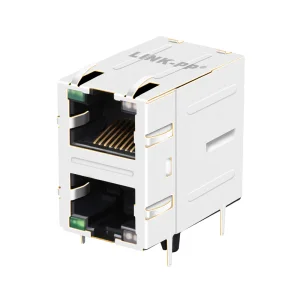 Multi-Port 2X1 Side Entry Through Hole Stacked RJ45 Connector SS-7188S-A-PG4-1-BA-50 0844-2B1T-33-F E5908-0T0343-L 0845-2R1T-W2
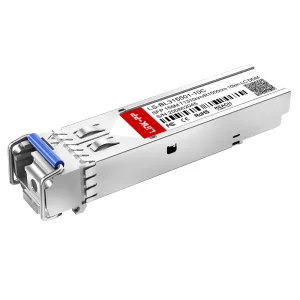 1310nm-TX/1550nm-RX Single Mode Simplex LC SFP 155M Bidi 10km Optical Transceiver Module
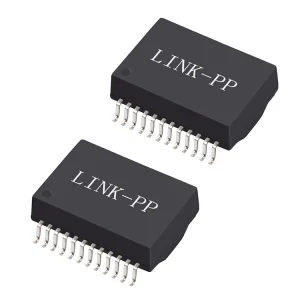 1000 Base-T Single Port Through Hole Telecom Magnetics Modules QD18A11
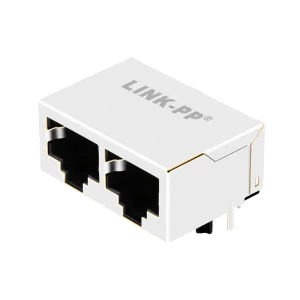 Without Integrated Magnetics 1x2 Port RJ45 Female Connector
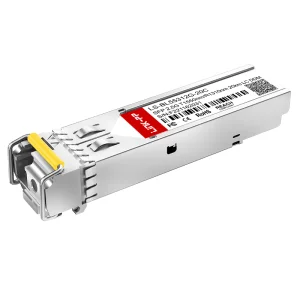 1550nm-TX/1310nm-RX Simplex LC SFP 2.5G Bidi 20km Single Mode Optic Transceiver Module
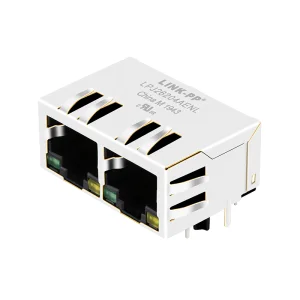 7499021125 Tab Down 1x2 Ports Magnetic RJ45 Female Connector With Led
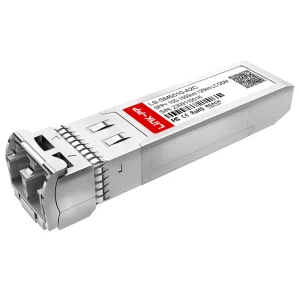 Cisco SFP Compatible Duplex LC SMF Optical Transceiver Module 1550nm Single Mode 10G SFP+ 120km
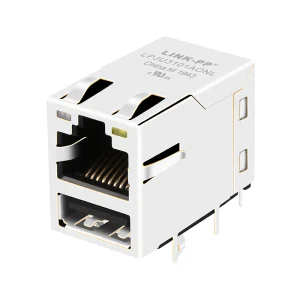 43F-1201DYD2NL 7497011611 8211-1X1T-36-F Single Port USB 3.0 Ethernet Modular RJ45 Female Connector
Step inside our state-of-the-art testing facility and production cleanrooms where high-integrity optical transceivers and loopback interfaces are engineered.




 Novafiber