Explore our industrial-grade connectors, transceiver modules, and adapter assemblies designed for optimal signal integrity and long-term durability.


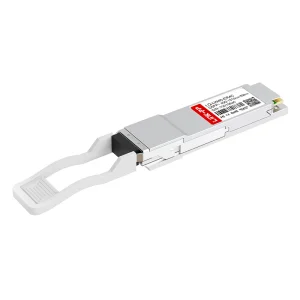
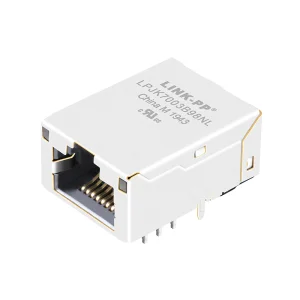
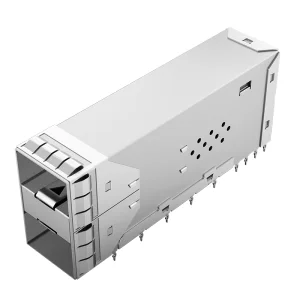
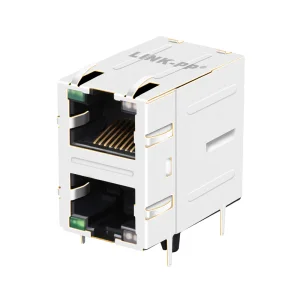
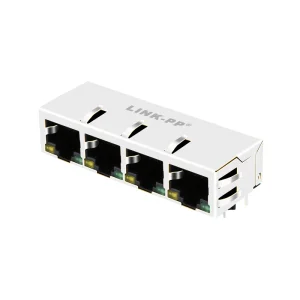

In today's hybrid network infrastructure, legacy analog communication nodes seamlessly converge with high-speed digital networks. The RJ45 to RJ11 adapter is not merely a physical converter; it represents a critical bridge in transmission media. Bridging 8P8C (RJ45) Ethernet interfaces with 6P4C/6P2C (RJ11) telecommunication line standards requires meticulous mechanical engineering, impedance matching, and cross-talk attenuation. This technical guide explores the structural paradigms, macro-industry adaptations, and supply chain efficiencies offered by China's leading interconnect manufacturers.
Ethernet protocols operate via differential signaling across balanced twisted pairs (typically 100 ohms impedance). Traditional analog telephony systems, however, function over single or multi-pair tip-and-ring voice channels (nominally 600 ohms impedance). Adapting these systems physically demands precise pin configuration designs to prevent signal degradation and device damage.
| RJ45 Pin (8P8C) | Ethernet Color Code (T568B) | RJ11 Pin (6P4C) Equivalent | Telephony Function |
|---|---|---|---|
| Pin 3 | White/Green | Pin 1 (Black) | Line 2 Tip (T2) |
| Pin 4 | Blue | Pin 2 (Red) | Line 1 Ring (R1) |
| Pin 5 | White/Blue | Pin 3 (Green) | Line 1 Tip (T1) |
| Pin 6 | Green | Pin 4 (Yellow) | Line 2 Ring (R2) |
Without proper isolation, connecting high-power POE (Power over Ethernet) lines into analog telephony ports can lead to electrical failure. Certified manufacturers utilize heavy-duty PCB traces or direct precision wire leads to isolate the central pins, preventing over-voltage situations on telecommunication circuits.
To meet industrial reliability metrics, the construction of RJ45 to RJ11 adapters relies on specialized materials engineered for thermal and mechanical resilience:
Partnering with a leading Chinese interconnect manufacturer offers access to massive production capabilities, automated quality control systems, and robust supply chain networks. As showcased by industry leaders like Novafiber Communications Co., Ltd. (founded in 2016), China's high-tech manufacturing sector combines vast technical expertise with efficient distribution logistics:
Modern enterprises utilize RJ45 to RJ11 adapters across diverse network topologies:
Legacy PSTN to VoIP Migrations: Commercial buildings equipped with CAT6 structured cabling can distribute analog voice lines to IP PBX systems or fax machines without installing dedicated voice-grade cabling networks.
Industrial IoT (IIoT) & SCADA Systems: Heavy industrial fields often rely on serial communications (RS-232/RS-485) over RJ11 wiring interfaces, routing telemetry lines through standardized RJ45 patch bays.
Broadband FTTH/DSL Gateways: Domestic and commercial modems route incoming fiber or high-speed DSL lines into analog distribution panels, relying on rugged adapter blocks to ensure line stability.
A statistical snapshot of our industrial footprint, quality control matrices, and global logistics achievements.
Industry Experience
R&D Engineers
QC Specialists
Supply Chain Partners
Specializing in fiber optic transceivers, copper adapters, and custom cable assemblies. We deliver certified networking components to telecom operators, data centers, and enterprise integrators worldwide.
High-density components engineered for optical transport, structural routing, and network hardware optimization.
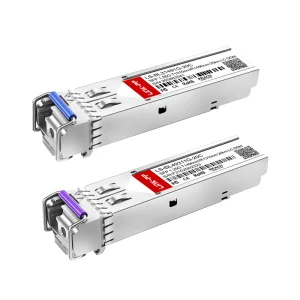
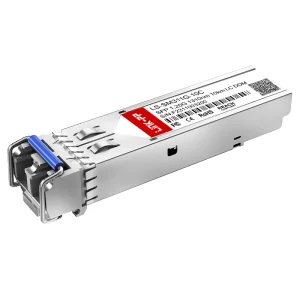
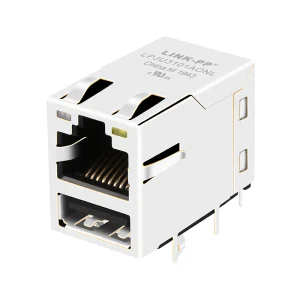
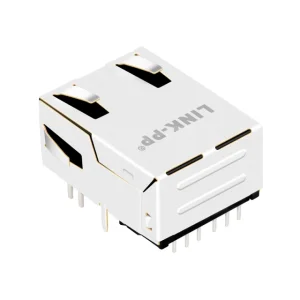
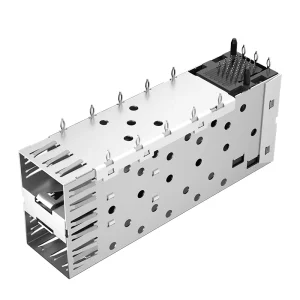
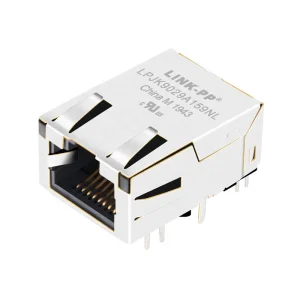
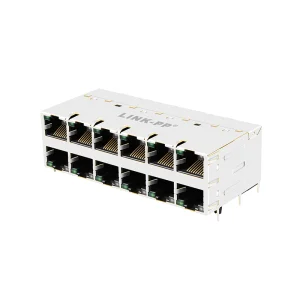

With the integration of IoT sensors and voice-over-data environments, physical adapters are evolving. The development roadmap focuses on embedding micro-circuit protection within the shell casing. Active adapters now integrate transient voltage suppressors (TVS diodes) directly into the adapter PCB to protect connected analog telephone adapters (ATAs) and PBX boxes from high-power spikes caused by lightning or ESD events.
Additionally, modular designs are shifting toward toolless terminations, enabling technicians to configure pin mapping in the field using internal DIP switch systems. This flexibility allows one physical unit to serve multiple connection standards, lowering inventories for large-scale enterprise deployments.
Global deployment demands compliance with stringent regulatory architectures:
Technical guidance and installation queries addressed by our senior network engineers.
A look inside our state-of-the-art production environments and quality assurance validation centers.




 Novafiber