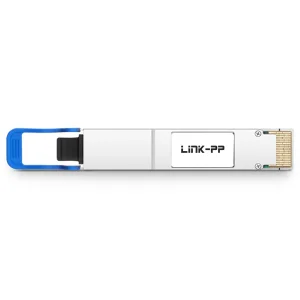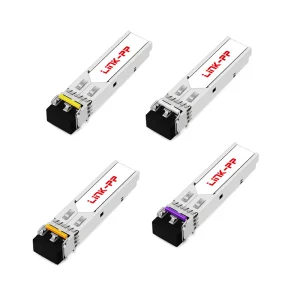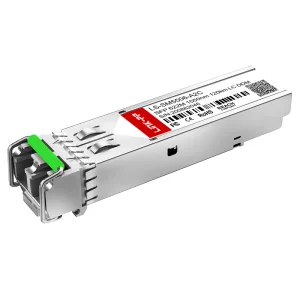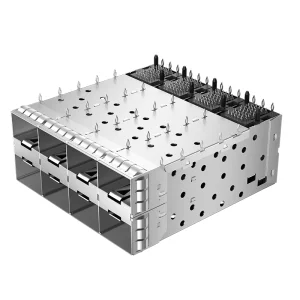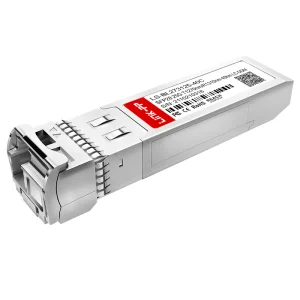
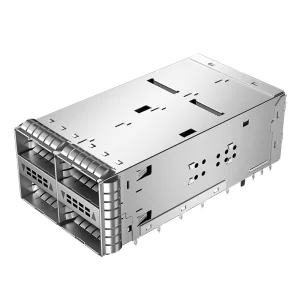
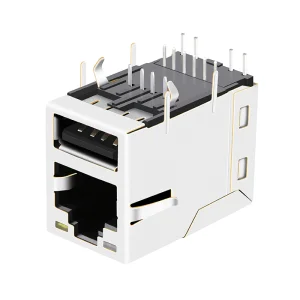
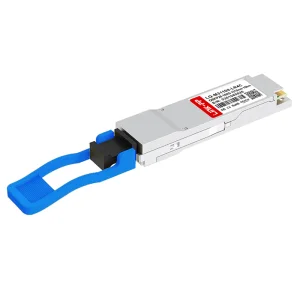
As standard-definition network layers shift towards dense hyperscale architectures, systems engineering requires modular connectivity interfaces that minimize real estate requirements on the Printed Circuit Board (PCB) while simultaneously boosting signal throughput. The Compact Small Form-Factor Pluggable (CSFP) connector and cage assembly represent a critical milestone in this shift. Utilizing a dual-channel bidirectional transmission layout within the traditional single-channel SFP footprint, CSFP optical networks allow manufacturers and infrastructure developers to double the port density of line cards and switches without migrating to larger chassis structures.
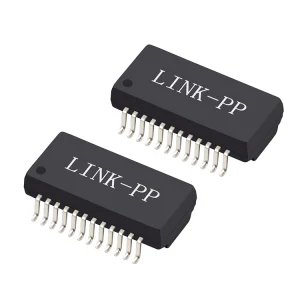
In the industrial communications vertical, this high-density form factor demands precision engineering. Standard optical networks operating via typical transceivers suffer from physical space restrictions when scaled up to hundreds of ports per rack. CSFP transceivers address this physical constraint head-on. By incorporating two independent optical transceiver channels operating over single-mode fiber (SMF) or multi-mode fiber (MMF), a single compact SFP slot doubles capacity. The surrounding electro-magnetic interference (EMI) cages, integrated multi-port connector arrays, and underlying physical layer transformers (such as gigabit telecom transformers) must maintain minimal cross-talk, optimized insertion loss, and low return loss metrics.
CSFP design allows dual independent channels in a standard SFP shell, allowing networking equipment to double their bandwidth capacity per rack unit.
Equipped with advanced EMI metal spring fingers or elastomeric gaskets, our cages protect adjacent high-speed channels from noise coupling.
Manufactured in strict adherence to MSA (Multi-Source Agreement) guidelines, ensuring interoperability across standard industrial hardware platforms.
For system integrators, system manufacturers, and enterprise network clients, sourcing components from specialized clusters in China yields significant efficiency and quality control advantages. Optical packaging requires tight tolerances, precision gold-finger positioning, and reliable press-fit structural cages to ensure clean high-speed transmission. Sourcing optical interfaces directly from an vertically integrated manufacturer avoids intermediate markups and guarantees rapid mechanical customization.
Novafiber Communications Co., Ltd. stands out within China's optical and electro-mechanical manufacturing sector. Established in 2016, Novafiber has developed specialized engineering and precision production capacities with an advanced modern facility covering approximately 420㎡. Over our 9 years of industry experience and 7 years of dedicated export experience, we have built a reputation for high-precision components, supplying buyers across North America, Europe, Southeast Asia, and the Middle East.
Novafiber's operation is built on deep supply chain integration. We maintain close working partnerships with over 1,200 raw material and sub-component suppliers. This network enables us to maintain raw material reserves, optimize component costs, and achieve faster lead times compared to Western counterparts, even during global component shortages.

Modern high-speed datacom modules operate at high frequencies, with transmission channels transmitting at 25 Gbps, 100 Gbps, and up to 400 Gbps (via PAM4 modulation networks). Under these high data rates, SFP connectors must maintain clean signal integrity. Any impedance mismatch along the trace connection, solder joint, or pin mating interface will cause signal reflection, which degrades the Eye Diagram and increases the Bit Error Rate (BER).
To mitigate these high-frequency losses, Novafiber's design engineering focus targets three key aspects of mechanical and electrical design:
The connector contacts utilize high-performance copper alloy material base metals. Contacts are plated with 30μ" to 50μ" gold-over-nickel on mating surfaces to resist corrosion, preserve structural spring characteristics, and guarantee low contact resistance over more than 250 mating cycles. Plastic housings are molded using high-temperature, UL 94V-0 rated LCP (Liquid Crystal Polymer) resins, which maintain structural integrity and dimensions during reflow soldering processes up to 260°C.
Traditional wave soldering introduces thermal stress and solder bridges, which can alter impedance. By transitioning to Press-Fit (Elastic Pin / Eye-of-the-Needle) contact geometry for multi-port cages, we eliminate solder joints. The press-fit interface forms a gas-tight mechanical connection within the plated through-holes (PTH) of the system PCB. This ensures mechanical retention, low contact resistance, and minimizes impedance discontinuities along the signal path.
Furthermore, high-density optical communication architectures generate significant heat. In small-form-factor designs, transceivers operate within tight thermal envelopes. Novafiber's cages and connector assemblies incorporate heat sink options and integrated ventilation apertures. By partnering these mechanical designs with high-efficiency thermal interface materials (TIMs), our cages keep high-speed optical engines operating below critical junction thresholds, avoiding thermal shutdown and extending transceiver lifetime.



Quality and reliability are paramount in high-availability enterprise environments. A single transceiver failure can disrupt critical data networks and result in costly downtime. To prevent this, Novafiber operates a dedicated quality assurance program. Our facility is staffed by 65 quality inspection specialists who implement strict oversight across every production batch.
We build our production around IPC-A-610 standards for electronic assemblies, ensuring each solder joint, press-fit pin, and mechanical housing meets international standards. Every batch undergoes a multi-phase verification process:
Novafiber’s 180 experienced R&D engineers support this rigorous quality control framework. Their work enables us to customize modules for specific client networks, custom-code firmware, adjust wavelength properties, and configure DDM (Digital Diagnostic Monitoring) parameters. With 320 new product releases launched last year, we keep pace with the rapidly evolving telecom sector.
The application of CSFP connectors, high-speed optical transceivers, and integrated magnetic jacks varies across different deployment environments:
In Fiber-To-The-Home (FTTH) Central Offices and 5G baseband processing units, rack space is highly constrained. Fiber cabling density must be maximized to limit operational expenses. Using SFP28 25G BiDi (Bidirectional) transceivers and CSFP interconnects allows telecom operators to utilize single-fiber transmission. This doubles their network channel count without routing new fiber optic trunk lines through congested municipal conduit systems.
Modern AI and machine learning clusters demand high-bandwidth pipelines with low latency. Standard 10G and 25G links are migrating to 100G PLR4, 100G LC Single-Mode, and 400G QSFP-DD formats. For these demanding links, Novafiber provides high-speed transceivers alongside ZQSFP+ multi-port shielded cages. These components maintain clean signals over copper direct attach links and short-reach optical fibers, supporting reliable throughput within computing clusters.
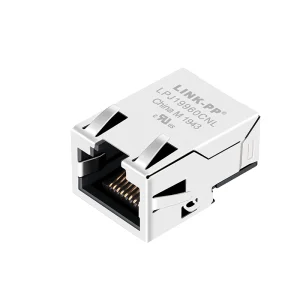
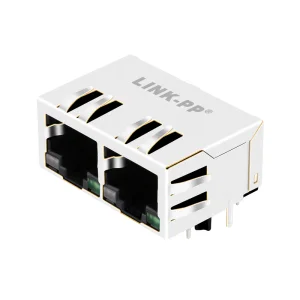
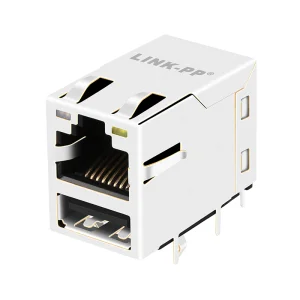
Industrial computing and smart grids present challenging environmental conditions, including thermal fluctuations and electromagnetic interference. For these deployments, our RJ45 connectors with integrated magnetics (such as 10/100/1000 Base-T transformers) provide galvanically isolated, noise-immune physical interfaces. These connectors protect sensitive network ICs from high-voltage spikes, static discharges, and electrical noise common on factory floors.
Explore technical details regarding CSFP architecture, electro-magnetic compatibility, layout optimization, and system deployment guidelines.
 Novafiber