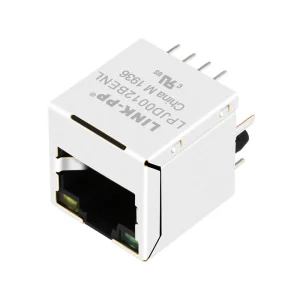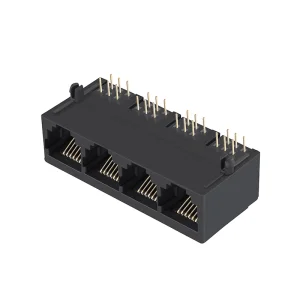
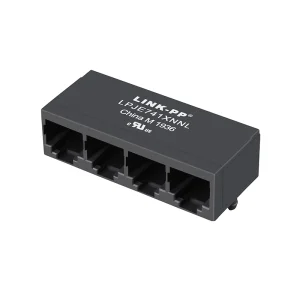
The Metropolitan area of Lima, containing over 10 million inhabitants, serves as the economic engine and logistics center of Peru. As the digital transformation moves forward, driven by initiatives from the Ministry of Transport and Communications (MTC), the demand for high-reliability physical layer copper connectivity components remains robust. Although fiber-optic cabling (FTTH) represents the growth trajectory for backbone structures, copper-based interfaces—primarily RJ11 and RJ12 modular connectors—continue to play an indispensable role in last-mile DSL distributions, security alarm networks, commercial PBX telephone infrastructures, and municipal smart-metering setups across the region.
A key localized consideration in Lima is its unique coastal microclimate. The high atmospheric relative humidity (often exceeding 95%) combined with saline mist from the Pacific Ocean makes electrical components susceptible to accelerated galvanic corrosion and contact degradation. Therefore, engineering and procurement managers operating within Callao, San Isidro, and Miraflores cannot afford to buy sub-standard, low-gold-plated connectors. Cheap imports lead to field failures within months. Our production specifications target this specific pain point, offering custom gold plating (up to 50u") that ensures long-term operational integrity under high-salinity conditions.
Specially engineered gold-plating options (15u", 30u", to 50u") on phos-bronze pins to combat the humid, high-salinity air of coastal Lima and Callao.
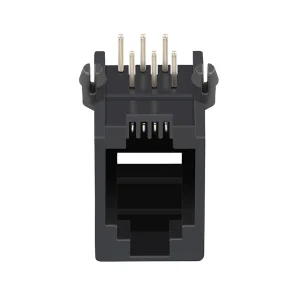
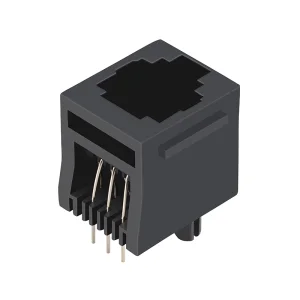
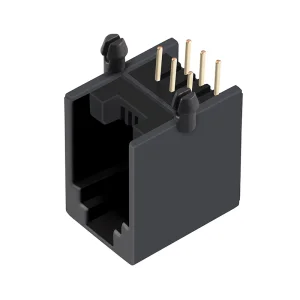
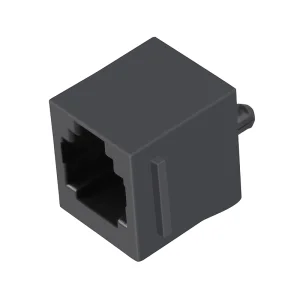
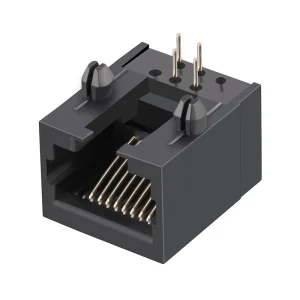
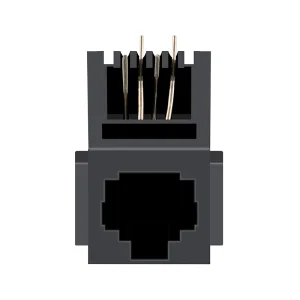
Available in DIP through-hole, surface-mount (SMT), tab-up, and tab-down configurations to fit local telemetry boards and system architectures.
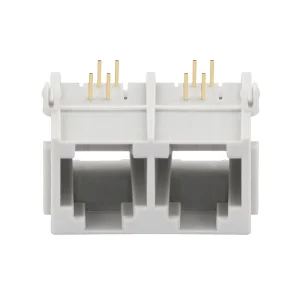
Single-port (1x1) up to multi-port (1x4) arrays to save critical real estate in modern high-density PBX systems and industrial switches.
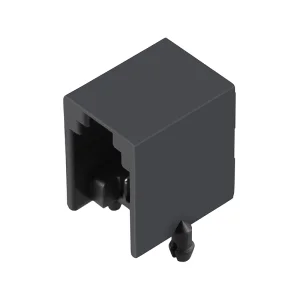
Selecting the appropriate RJ11 jack requires a solid understanding of pin configurations and shielding types. Standard RJ11 connectors use a 6P4C (6 positions, 4 conductors) layout, while RJ12 utilizes a 6P6C variant. In addition, 4P4C configurations are frequently deployed in handset receiver coils. Below, we break down the critical parameters that differentiate standard consumer jacks from our specialized industrial offerings suited for the South American market.
| Feature / Parameter | Standard Commercial Grade | Industrial Grade (Lima Sourcing Standard) |
|---|---|---|
| Contact Material | Phosphor Bronze, Standard plating | Phosphor Bronze, Nickel base, with Selective Gold Plating (15u", 30u", or 50u") |
| Housing Material | PBT / Standard Nylon | High-Temperature LCP (Liquid Crystal Polymer) or Nylon 46 (Reflow solder compatible) |
| Shielding Options | Unshielded | Shielded with Copper Alloy (Nickel/Tin plated) with grounded tabs for EMI protection |
| Dielectric Strength | 1000V AC RMS | Minimally 1500V AC RMS (Transient surge defense for local telecom grids) |
| Durability | 750 mating cycles | Exceeds 1500 mating cycles under standard insertion testing limits |
Factory Scale & Precision Testing
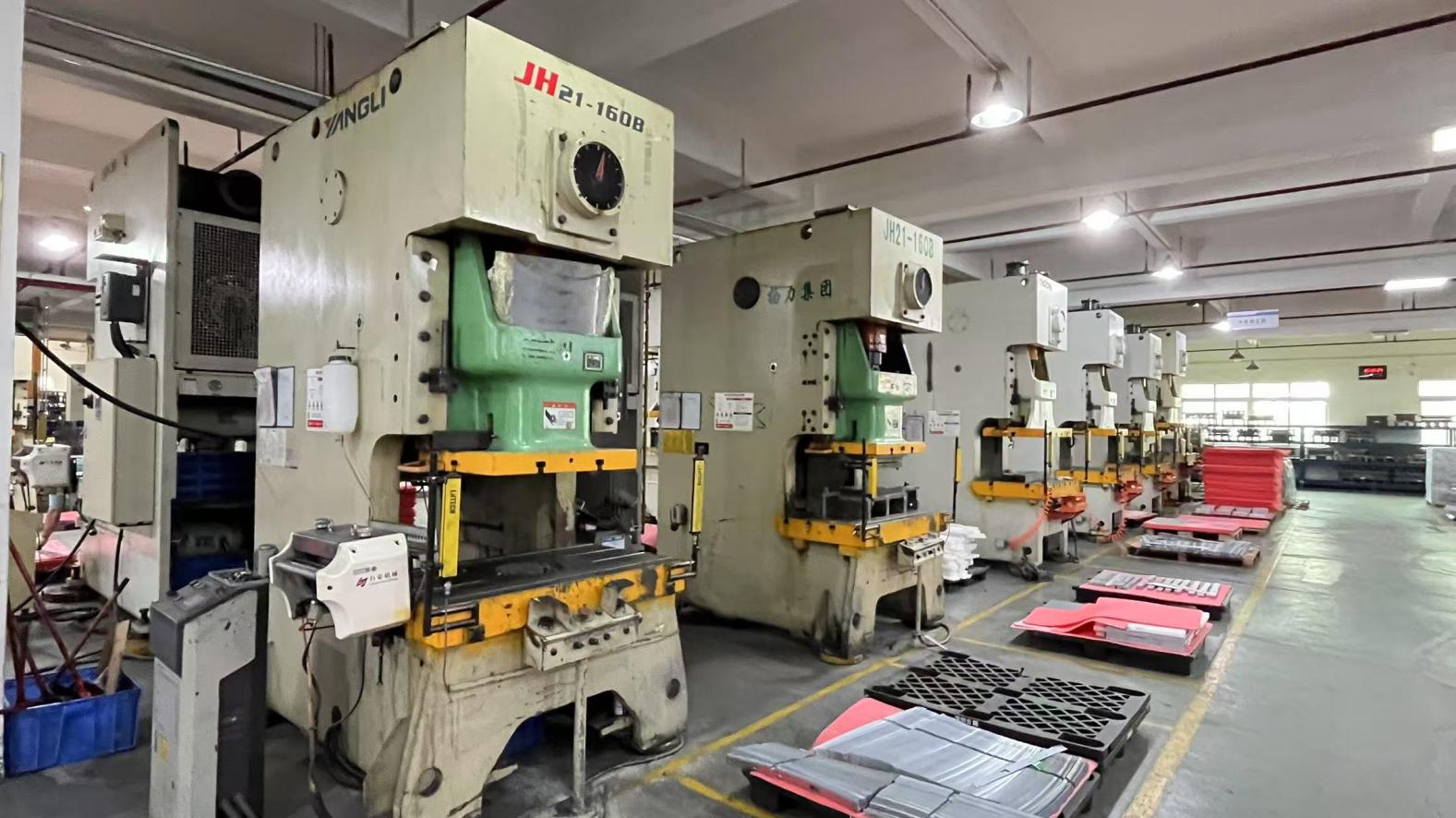
The production of industrial-grade modular connectors relies on micro-tooling precision and continuous testing. Through our advanced Chinese manufacturing base, we manage a deep supply chain that aligns directly with the standards of premium manufacturers like Novafiber Communications Co., Ltd.
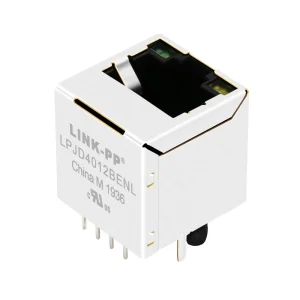
Established in 2016, Novafiber operates modern facility setups covering over 420m² with 9 years of industry experience and 7 years of export history. This expertise in high-speed optical transceivers and interconnect systems translates into strict quality control protocols across our entire RJ11, RJ45, and magnetic connector catalog. By incorporating automated optical inspection (AOI), burn-in testing, and environmental stress screening (ESS), we ensure that every batch destined for Callao Port arrives with zero-defect performance characteristics.
Request Factory Catalog


Importing electronic interfaces and connectors into Peru requires strict adherence to national standardization bodies like INACAL and regulatory framework checks by the MTC. For local distributors and network integrators in Lima, importing bulk lots from our factories in China is straightforward when backed by correct paperwork. We provide full compliance documentation to guarantee custom clearance without delays:
Furthermore, we offer optimized logistics solutions for shipping to Peru. Whether using air freight to Jorge Chávez International Airport (LIM) for urgent project replacement cycles or sea shipping to Port of Callao for container-load inventory management, our logistics team coordinates with Peruvian brokers to ensure DDP or FOB obligations are flawlessly executed.
Typically, the maritime shipping duration from Chinese ports (such as Shenzhen, Ningbo, or Shanghai) to Callao, Lima ranges between 35 to 45 days. Production lead times for bulk RJ11/RJ45 connector runs generally range from 15 to 25 days depending on the customization parameters (such as selective gold plating thickness and customized shell footprints).
High humidity and coastal salt-spray accelerate oxidation on contact surfaces, creating line noise and packet loss. While 3u" or 6u" gold plating suffices for dry inland configurations, the Lima coastal market demands at least 15u" of selective gold plating over nickel. For high-reliability infrastructure nodes, we strongly advise using 30u" or 50u" gold plating on phosphor bronze pins.
All three configurations utilize the same physical 6-position modular design (6P shell). However, the internal conductor wiring differs: RJ11 uses 2 active contacts (6P2C) or 4 contacts (6P4C) for a single or dual analog line. RJ14 uses 4 contacts (6P4C) wired specifically for two separate lines, while RJ12 utilizes all 6 contacts (6P6C) to handle up to three distinct circuits or integrated control systems.
By themselves, passive components like RJ11 jacks, raw sockets, and patch cords do not require individual MTC (Ministry of Transport and Communications) type-approval certification. However, if these connectors are integrated into active equipment like DSL routers, fiber ONT boxes, or PBX hardware, the system as a whole must satisfy Peru's homologation guidelines.
Yes. Our factory R&D engineering divisions can modify mechanical pin spacing, layout alignments (straight vs. right-angle), mounting orientations (vertical vs. horizontal entry), and add grounding solder tails to fit legacy hardware systems currently deployed in Peruvian installations.
 Novafiber