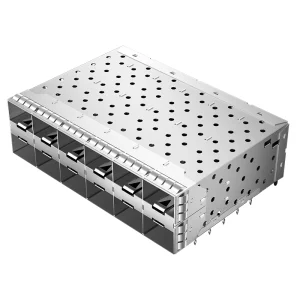
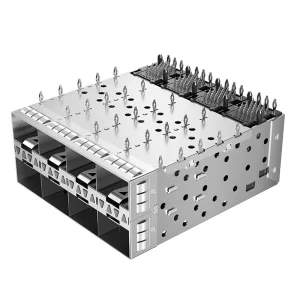
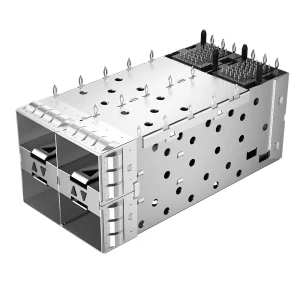
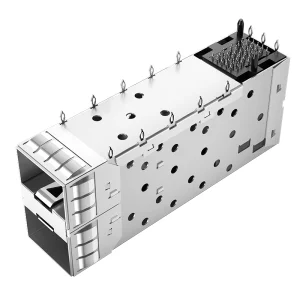
Premium press-fit connectivity configurations designed for instant deployment in enterprise servers, core switches, and high-frequency communication frames.
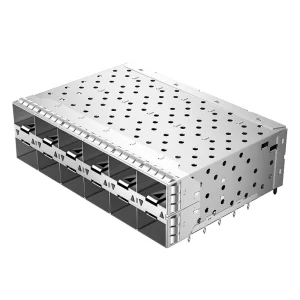
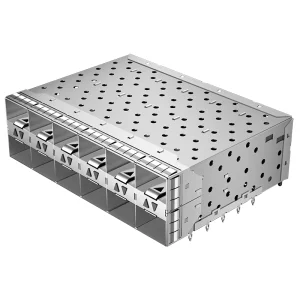
As New Zealand transitions to an hyper-connected economy driven by massive cloud data facilities in Auckland, sovereign defense systems, and the rollout of rural 5G backhaul networks, demand for stable, ultra-reliable network hardware has surged. The rapid development of key subsea link hubs (such as the Southern Cross NEXT and Hawaiki cables) connects New Zealand directly to Australia, the US, and Asia, necessitating data centers capable of routing hundreds of Terabits per second.
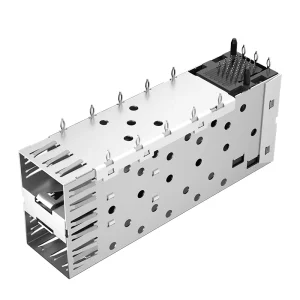
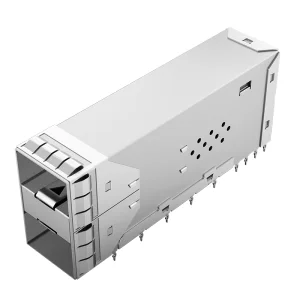
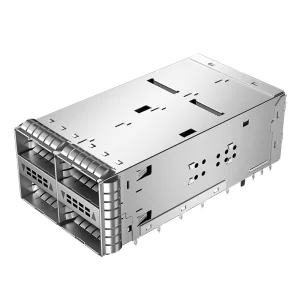
In this high-frequency infrastructure landscape, single-port interfaces no longer suffice. System architects across Oceania are actively migrating to stacked 2xN configurations. By vertically stacking SFP, SFP28, or QSFP ports on PCBs, networks can double their operational density in a standard 1RU rack unit. This saves vital floor space, dramatically reduces power overheads, and guarantees optimal air-circulation paths within critical networking environments.
A deep look into the structural, thermal, and electrical performance of high-density SFP interconnect systems.
Stacked configurations pack twice the electrical paths into the same footprint, increasing susceptibility to cross-channel interference. Our cages utilize a patent-aligned 360° spring-finger shield alongside elastomeric outer gaskets, achieving -30dB attenuation up to 28GHz to maintain strict signal margins.
System monitoring is highly critical in remote telco cabinets across South Island regions. Integrated optical-grade light pipes capture inner LED emission from the PCB and route it directly to the front face, enabling engineers to instantly verify link statuses under low-visibility conditions.
With transceiver modules running hot, heat accumulation poses a severe threat. Our cages integrate structural ventilation windows directly on top, bottom, and side panels, fostering passive heat convection. This reduces system cooling overheads by up to 15%.
Discover high-performance components optimized for next-generation ZQSFP+ and Molex/TE replacement architectures.
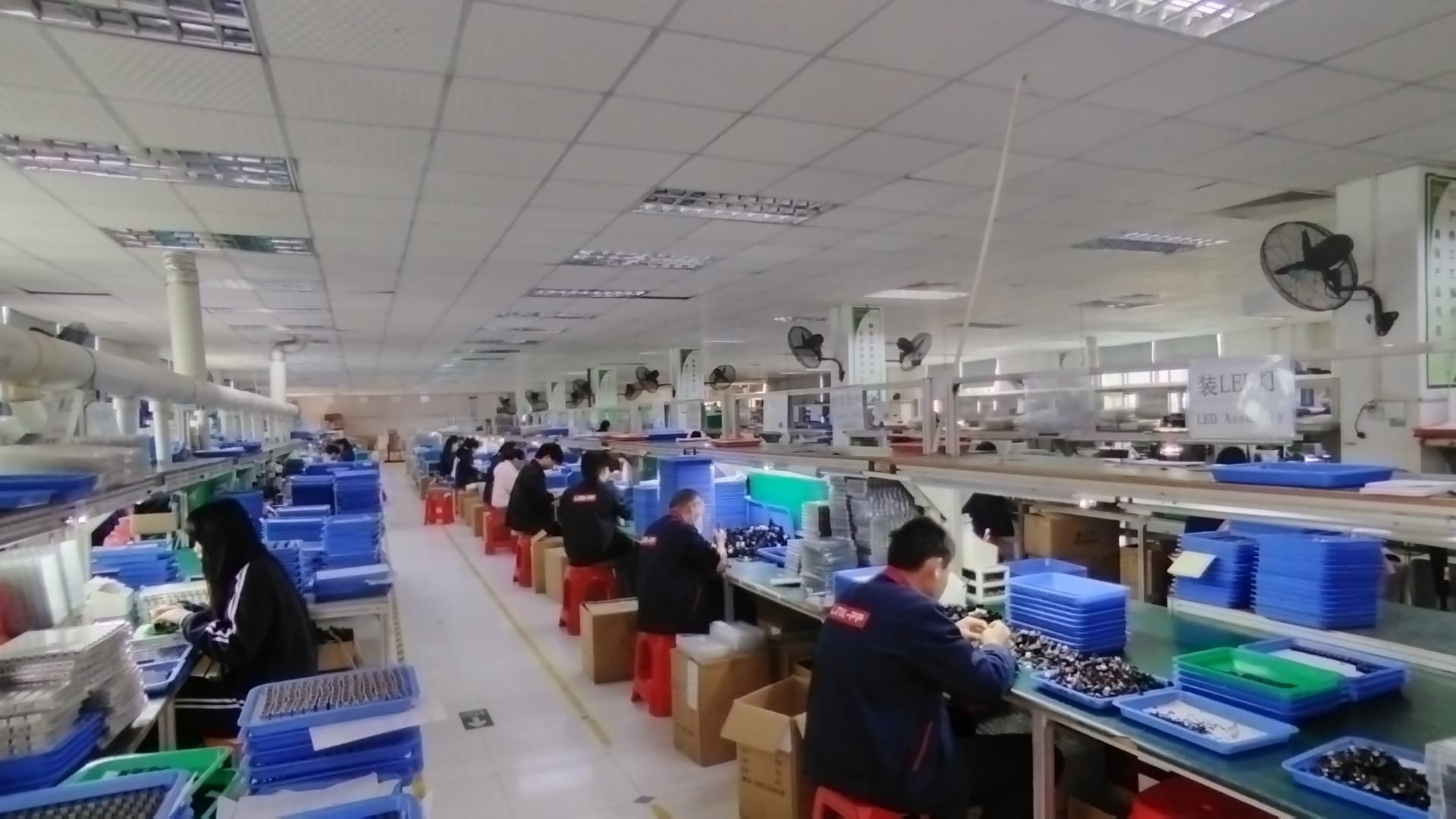
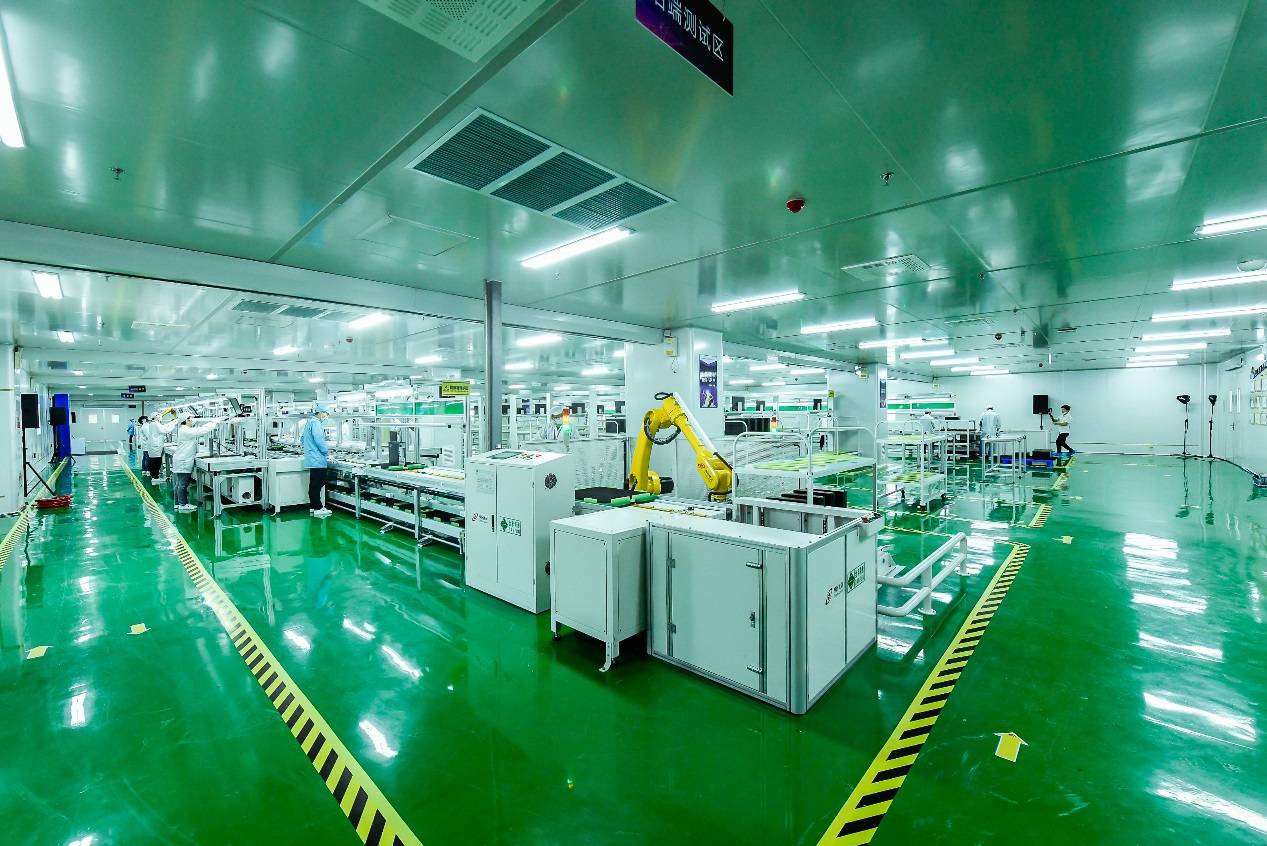
As a global hub for technological hardware, China's hardware manufacturing ecosystem offers unparalleled supply chain advantages. Novafiber Communications Co., Ltd. is a leading optical transceiver and structural interconnect manufacturer, dedicated to delivering cost-effective, high-reliability products to global markets, including New Zealand.
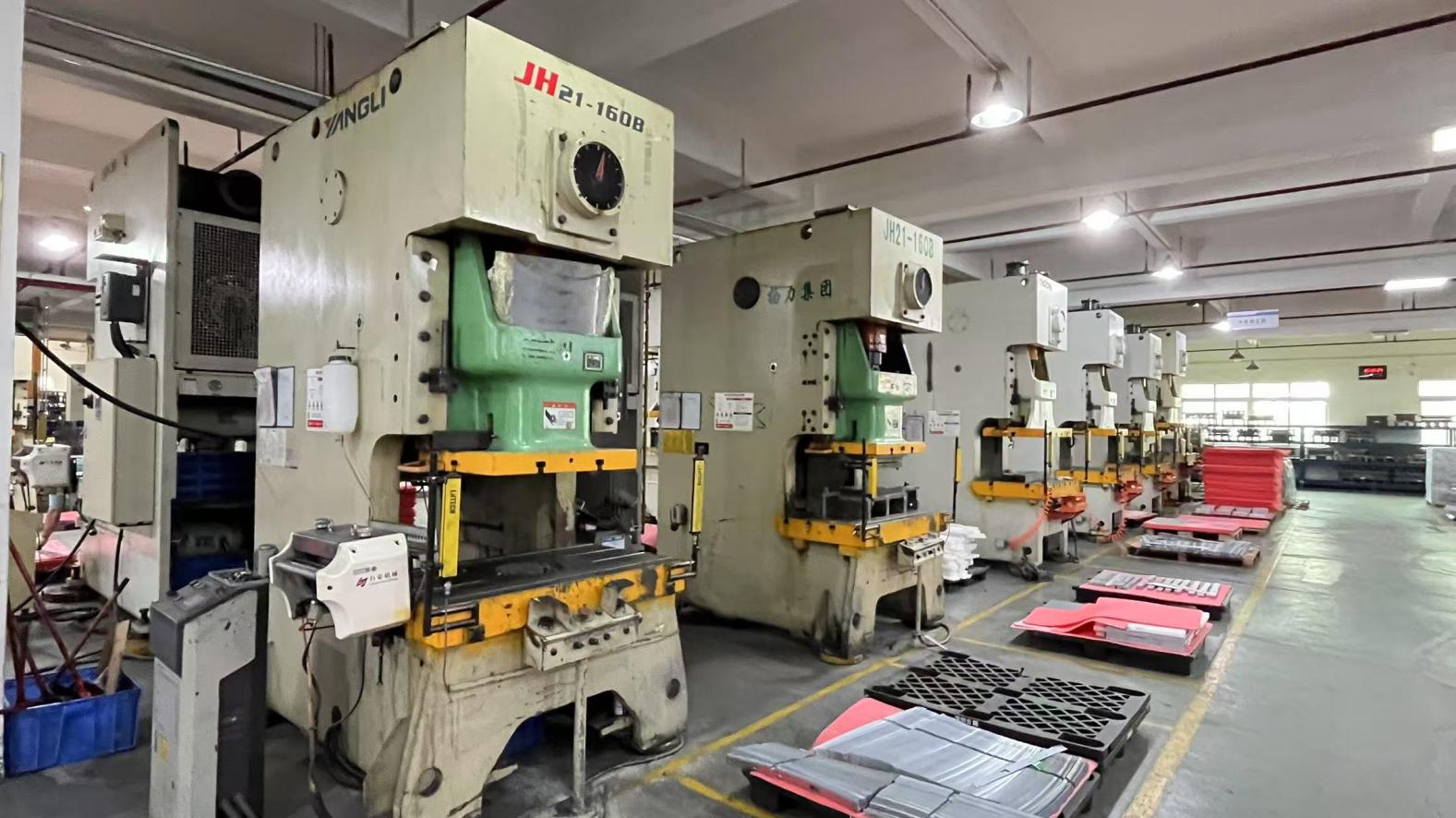
Founded in 2016, our facility operates on strict lean manufacturing methodologies. Backed by 9 years of deep industry expertise and 7 years of active export operations, we have streamlined our assembly and component sourcing channels. Partnering with over 1,200 trusted raw material suppliers, we ensure uninterrupted production runs, shielding clients from supply disruptions.
Furthermore, our dedicated engineering team of 180 specialists continuously refines electrical footprints, enabling us to launch over 320 new product designs annually. This rapid R&D cycle helps Kiwi telecom installers access replacements for obsolete parts or source custom configurations without the usual long lead times.
New Zealand's commercial and industrial installations demand alignment with strict environmental regulations. At Novafiber, our production processes adhere strictly to RoHS (Restriction of Hazardous Substances) and REACH directives. This guarantees that all materials—from solder-stop platings to plastic light pipes—contain no hazardous elements, protecting local ecosystems.
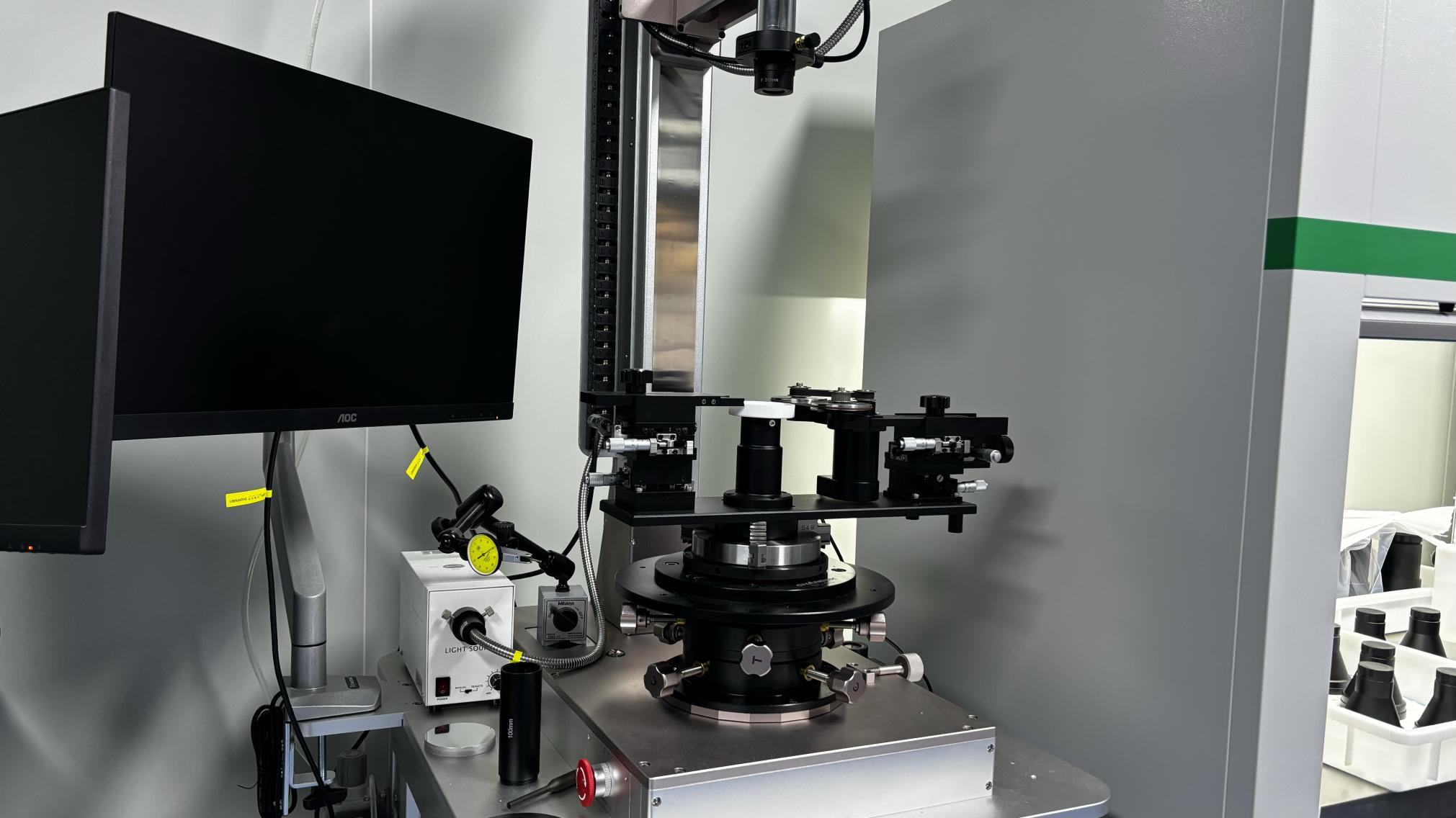
Additionally, our stacked ports undergo strict quality checks prior to shipping, including 100% electrical continuity testing, automated optical inspection (AOI), and environmental stress screening (ESS) to simulate the damp, coastal conditions common to New Zealand regions. By using high-grade phosphor bronze alloys with selective gold plating, our connectors stand up to coastal salinity, mitigating oxidation and galvanic corrosion over decades of service.
With an export revenue of USD 8.5 million, we offer rapid sea and air shipping options to major New Zealand hubs, including Auckland, Wellington, and Lyttelton. Our regional support teams stand ready to assist system integrators with custom CAD modeling, layout optimization, and physical prototyping.
Browse our extensive selection of 2xN SFP+ press-fit cages, featuring various EMI shielding styles and port configurations.
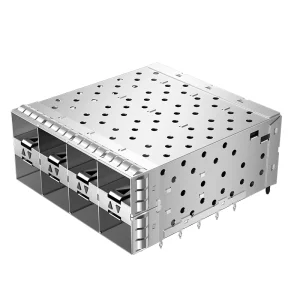
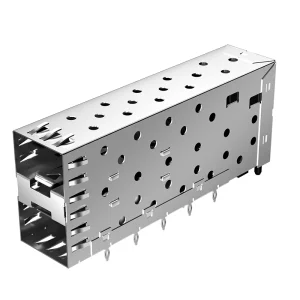
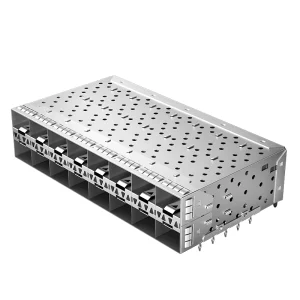
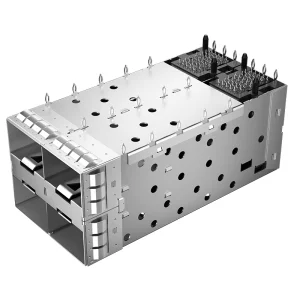
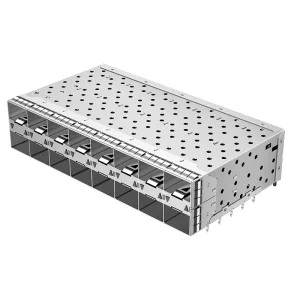
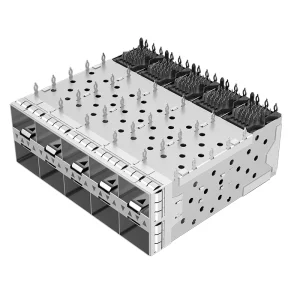
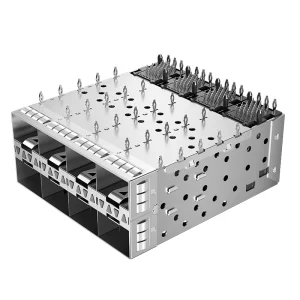
Modern networks are shifting from 10G/25G NRZ coding toward 56G and 112G PAM4 schemes. Under these protocols, signal limits become incredibly tight, and trace attenuation must be controlled to prevent high bit-error rates (BER).
Our upcoming stacked interconnect designs incorporate structural refinements targeted at high-speed data transmission:
These enhancements allow our stacked cages to drop into high-performance environments without altering existing footprints, ensuring standard chassis components remain compatible with future upgrades.
Get answers to common technical, manufacturing, and shipping questions from network administrators and PCB designers.
 Novafiber