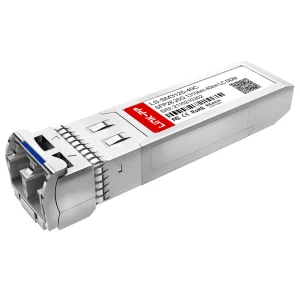
Optimized optical modules for rapid scaling within metropolitan area networks (MAN) and hyper-scale data centers across the UK.
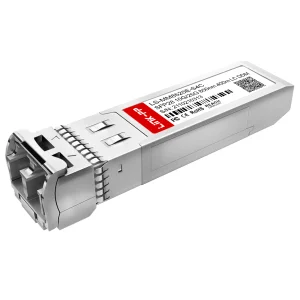
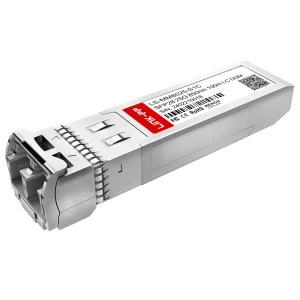
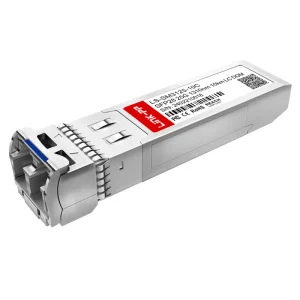
The United Kingdom's enterprise networking architecture is currently undergoing a structural transformation. Driven by the central government's "Project Gigabit" blueprint and the rapid deployment of decentralized Edge computing hubs in metropolitan centers like London, Manchester, Leeds, and Birmingham, the demand for optical communication hardware has reached unprecedented levels. Upgrading legacy 10G infrastructures to 25G and 32G SFP28 optical modules represents the primary mechanism for optimizing bandwidth and link utilization.
In the context of Europe's FLAP (Frankfurt, London, Amsterdam, Paris) data center market, the London metropolitan area remains the largest colocation cluster. As hyper-scale centers transition to higher-capacity fabrics, 25G SFP28 transceivers serve as the critical interface link connecting Top-of-Rack (ToR) switches to server leaf nodes. This provides a clear, cost-effective upgrade path that bypasses the high-heat profile and substantial initial capital outlay of SFP56 configurations, while matching standard NRZ encoding profiles.
Concurrently, the British industrial automation, telecom backhaul (5G Open RAN deployment by providers such as Virgin Media O2 and EE), and financial hosting zones in the London Docklands rely on ultra-low latency. 32G SFP28 Fibre Channel (FC) transceivers form the backbone of modern Storage Area Networks (SANs). These systems demand zero-jitter performance to handle transaction logs and automated, high-frequency stock calculations securely.

A side-by-side comparison of SFP28 25G and 32G Fibre Channel modules designed for UK network operators.
| Feature Parameter | 25G SFP28 SR/LR/ER Ethernet | 32G SFP28 Fibre Channel (FC) | Application Target Area |
|---|---|---|---|
| Nominal Data Rate | 25.78 Gbps | 28.05 Gbps & 14.025 Gbps | Inter-switch links & high-speed SAN arrays |
| Signal Protocol | Standard IEEE 802.3by / 802.3cc | FC-PI-6 Compliance Standard | Enterprise network bridging |
| Link Distance (MMF OM4) | Up to 100m (SR) / 400m (CSR) | Up to 100m (OM4 OM5 Multimode) | High-density rack cabinets |
| Link Distance (SMF G.652) | 10km (LR) / 40km (ER) / DWDM options | 10km (Single Mode LR) | Metro loops & remote recovery sites |
| Power Consumption | < 1.0W (SR/LR) to < 1.5W (Tuned DWDM) | < 1.2W Maximum | Green data center power mitigation |
| Optical Encoding | NRZ (Non-Return-to-Zero) | NRZ (backward compatible to 16G/8G) | Backward compatible legacy integration |
*Note: In network topologies using 100G QSFP28 breakout configurations, a 4x25G split allows direct connections to our standard 25G SFP28 modules. This minimizes conversion latency and optimizes hardware utility.
Tailored optical deployment patterns for high-density environments across the UK.
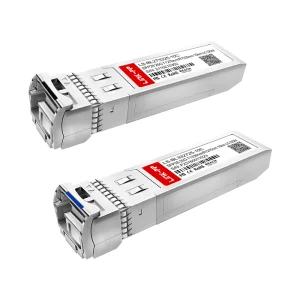
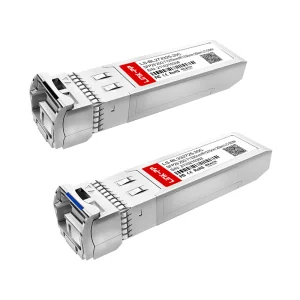
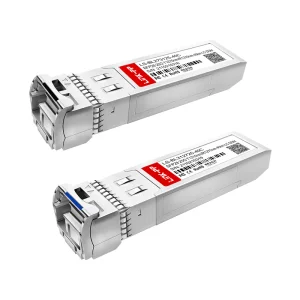
UK telecom operators face strict deadlines to expand nationwide 5G networks. 25G BiDi (Bidirectional) SFP28 optical modules are key here, using single-fiber wavelength division multiplexing (1270nm/1330nm) to transmit and receive signals. This effectively doubles fiber capacity without requiring new fiber runs, lowering deployment costs.
For transaction execution platforms in London and surrounding financial hubs, every microsecond of delay carries significant cost. Our 32G SFP28 Fibre Channel solutions feature optimized internal physical layer circuitry. This limits transit times to a minimum, ensuring reliable high-speed data delivery for mission-critical banking engines.
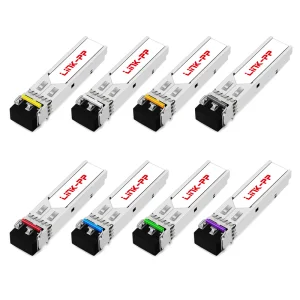
When connecting corporate offices across large metropolitan areas, our CWDM/DWDM SFP28 transceivers enable high-density passive multiplexing over single-mode fiber links. This setup allows up to 10km (or up to 40km with LWDM) of transport without active inline amplification, keeping operational costs low.

Novafiber Communications Co., Ltd. is a professional optical transceiver manufacturer specializing in high-performance fiber optic communication solutions for global data centers, telecom operators, and enterprise networking applications.
Founded in 2016, Novafiber has developed strong engineering and manufacturing capabilities with a modern production facility covering approximately 420㎡. With over 9 years of industry experience and 7 years of export experience, the company has built a solid reputation in the global optical communication market.
Novafiber generates an annual export revenue of approximately USD 8.5 million, serving customers across North America, Europe, Southeast Asia, and the Middle East. The company maintains a flexible and efficient supply chain network with more than 1,200 supply chain partners, enabling stable mass production and fast delivery.
Our dedicated team features 180 experienced R&D engineers driving next-generation hardware designs, alongside 65 quality inspection personnel. Every module undergoes a comprehensive quality control protocol adhering to IPC standards. This includes Automated Optical Inspection (AOI), environmental stress screening (ESS), and 100% real-switch loopback testing to ensure full compatibility with major networking brands.

Post-Brexit regulatory alignment is a key consideration for UK system integrators and procurement teams. Novafiber guarantees that all optical transceivers shipped to the United Kingdom comply fully with the necessary regulatory standards, including the UKCA (UK Conformity Assessed) mark, CE mark, RoHS directive, and WEEE directives.
By working with local distribution networks and keeping inventory near major hubs, we support prompt delivery and low-latency shipping options for urgent replacements and new deployments.
Furthermore, our engineering teams provide localized tech support, helping you resolve protocol integration and custom coding needs directly. This ensures smooth deployments across multi-vendor networks (Cisco, Arista, Juniper, Ciena, Huawei, and others).
Although 25G and 32G SFP28 modules remain highly popular due to their balance of cost, thermal efficiency, and bandwidth, data centers continue to demand higher performance. Our product roadmap offers a smooth upgrade path for operators planning to scale their systems.
By utilizing advanced PAM4 (Pulse Amplitude Modulation 4-Level) signal modulation, we can double data capacity to 50G SFP56 without requiring changes to existing cabling. For next-generation connections, we are developing 100G SFP112 solutions. These allow you to deploy ultra-high-density setups within standard SFP-sized ports, helping extend the operating life of your existing switch hardware.
Additionally, Novafiber is developing long-distance coherent SFP28/QSFP28 configurations. These modules feature integrated digital signal processors (DSPs) to compensate for chromatic dispersion over distances up to 80km. This allows high-capacity metropolitan links to operate smoothly without needing extra inline amplification.

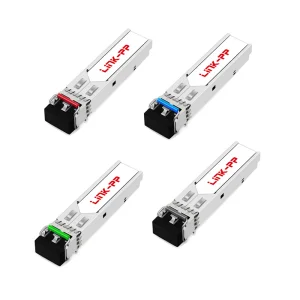
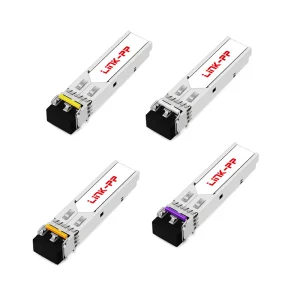
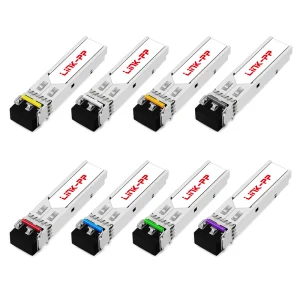
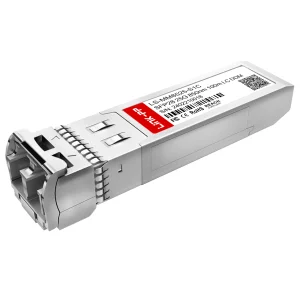
Select from our range of 25G and 32G SFP28 transceivers, featuring custom protocol coding and varying range options.
Answers to common technical and configuration questions for networks in the United Kingdom.
Get in touch with our engineering team for detailed technical specifications, wholesale pricing, compatibility checks, and to request testing samples.
 Novafiber