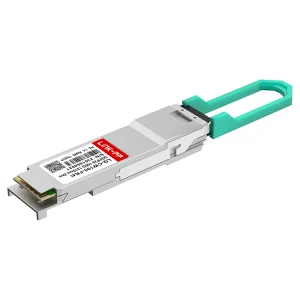
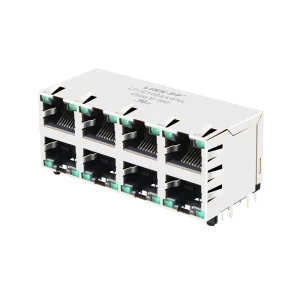
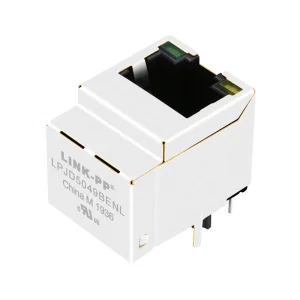
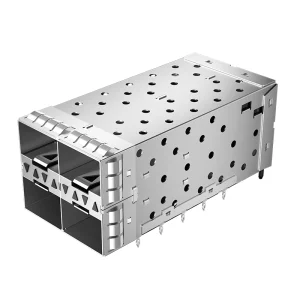
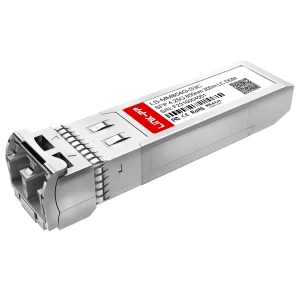
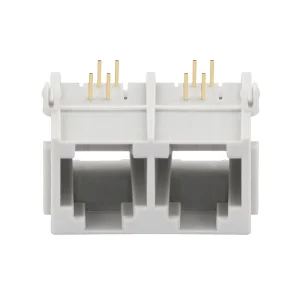
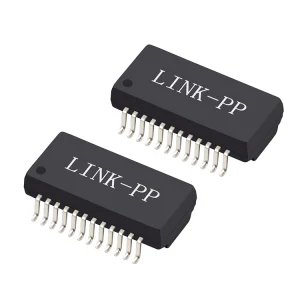
Explore our high-performance transceivers, shielding cages, and magnetic connectors designed for high-density networking arrays.
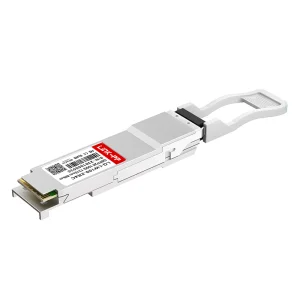
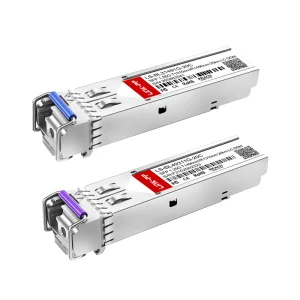
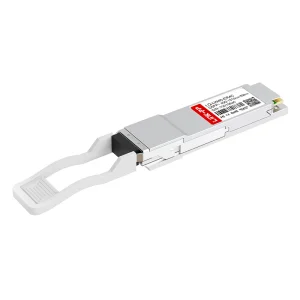
A trusted global leader in optical transceivers manufacturing, supplying carrier-grade components with rigorous compliance and engineering leadership.
Novafiber Communications Co., Ltd. is a professional optical transceiver manufacturer specializing in high-performance fiber optic communication solutions for global data centers, telecom operators, and enterprise networking applications. Since our founding in 2016, we have committed ourselves to closing the gap between cutting-edge optoelectronic design and reliable, large-scale supply chain logistics. Operating a modern, high-precision facility spanning 420㎡, Novafiber manages to deliver dense, high-volume production schedules with a network of over 1,200 supply chain partners.
Our operation is optimized for international OEM/ODM environments. We cater to telecom operators, cloud service providers, data center integrators, and system equipment manufacturers. With an export footprint across North America, Europe, Southeast Asia, and the Middle East, we prioritize compatibility, durability, and high thermal efficiency in all single mode SFP modules.


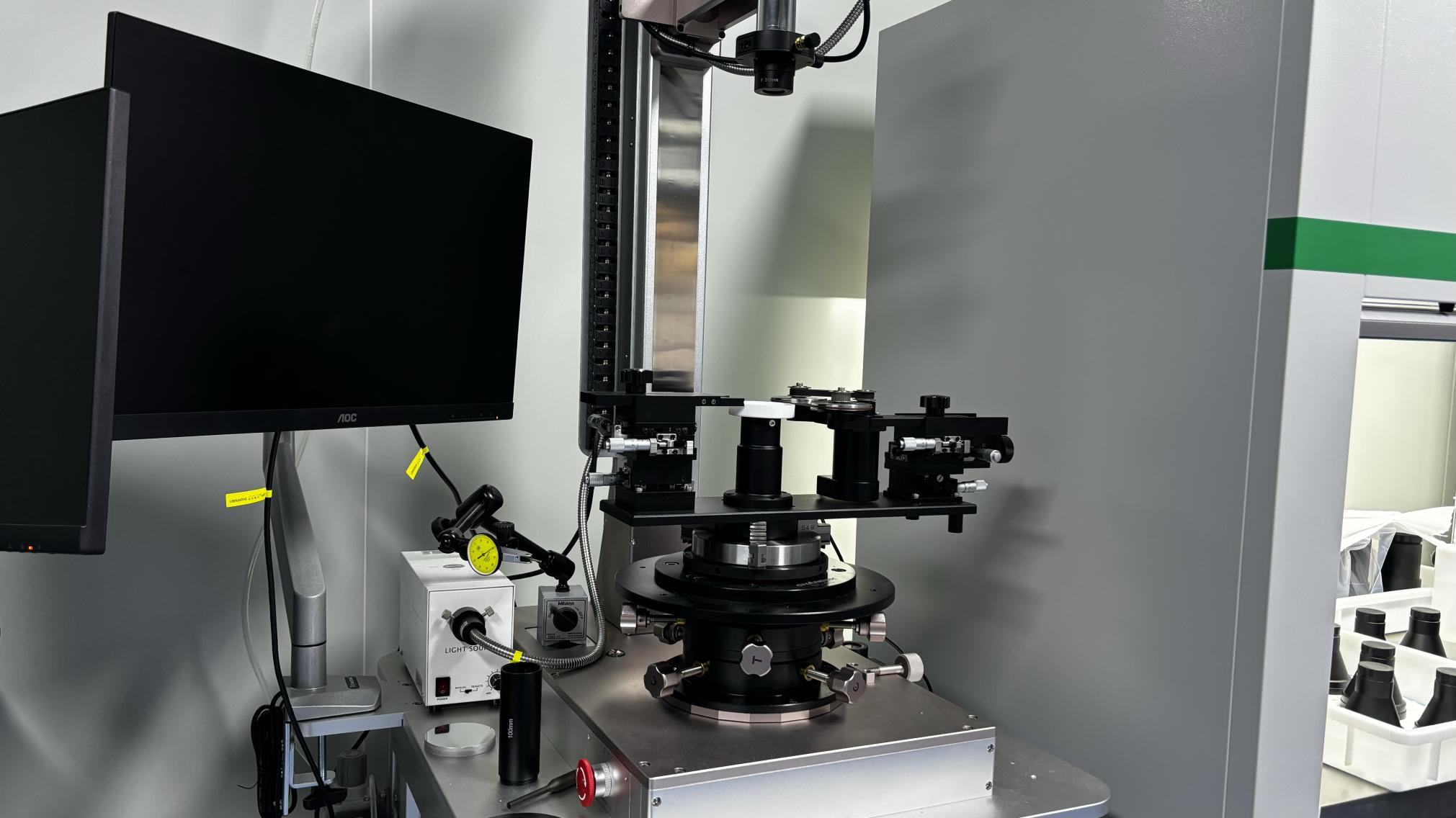

Insights into Silicon Photonics, Coherent Optics, and Multi-Wavelength Multiplexing for Next-Generation Networking.
The transition of global communication architecture from 10G/40G networks to 100G, 400G, and even 800G systems has fundamentally transformed the requirements for optical components. As bandwidth demand spikes due to AI training clusters and machine learning models, Single Mode Fiber (SMF) transceivers play an essential role. Compared to Multimode Fiber (MMF) which is limited by modal dispersion, single mode systems leverage narrow-core fibers (typically 9µm) to carry light directly down the fiber path with negligible attenuation. This makes them indispensable for long-haul networks and large hyperscale data centers.
Traditional optical transceivers rely on discrete components where laser diodes, modulators, and photodetectors are individually aligned and packaged. At speeds exceeding 400Gbps, this mechanical integration model reaches its physical limits. Silicon Photonics integrates optical functions directly onto silicon substrates, utilizing semiconductor manufacturing processes. This architecture reduces insertion losses, lowers power consumption, and increases thermal stability under dense operational profiles.
To maximize spectral efficiency without demanding unfeasible laser switching rates, modern transceivers have moved from Non-Return-to-Zero (NRZ) modulation to 4-Level Pulse Amplitude Modulation (PAM4) and Coherent optical technologies:
As switch capacities scale to 51.2Tbps and 102.4Tbps, driving electrical signals from the switch ASIC to the transceiver modules on the faceplate creates high path loss. The roadmap points towards bringing the optics closer to the processor. NPO and CPO architectures mount the optical engines on the same substrate as the ASIC, removing long PCB traces and decreasing power consumption by up to 30% per port.
| Standard Module Form Factor | Typical Wavelengths (SMF) | Reach & Applications | Key Technological Feature |
|---|---|---|---|
| 1G / 10G SFP & SFP+ | 1310nm, 1550nm, CWDM/DWDM | Up to 80km - Enterprise & Access Networks | Direct Modulation Laser (DML), DDMI Monitoring |
| 40G QSFP+ / 100G QSFP28 | 1310nm CWDM4, 1295-1309nm LAN-WDM | 2km to 80km - Hyper-Scale Interconnects | Electro-absorption Modulated Lasers (EML) |
| 400G QSFP-DD | 8-Wavelength LAN-WDM / PAM4 | 10km to 40km (ER8/ZR) - Core Infrastructure | Coherent Technology & PAM4 DSP Integration |
Combining dense supply chain networks with automated assembly and stringent QA protocols to guarantee reliable, high-volume production.
We maintain an expansive network of component suppliers, raw material partners, and logistics experts. This ensures consistent component availability and mitigates lead-time volatility, even during global supply tight spots.
Our quality control program employs 65 specialized QA inspectors. We utilize automated optical testing (AOI), environmental stress screening (ESS), and high-temperature aging to ensure optical modules operate stably across extended lifespans.
100% functional testing is performed on original switches (including Cisco, Arista, Juniper, and Huawei). We verify digital diagnostics monitoring (DDM) metrics, tx/rx optical thresholds, and bit error rate (BER) parameters.
Novafiber's manufacturing floor features cleanroom configurations with ESD-safe workstations. These areas are dedicated to sub-micron optical alignment and precision wire-bonding. By adopting automated component placement and robotic fiber-coupling systems, our factory delivers high yields and repeatability. Integrating production schedules with ERP platforms allows us to adapt to volume shifts, supporting rapid scaling from small customized batches to mass-production orders.
Providing robust connectivity designs across diverse networking sectors, from telecom systems to heavy industrial networks.
Modern networking calls for more than standalone transceivers; it demands integrated setups that account for environmental challenges, power budgets, and physical connection densities. Novafiber develops solutions for three distinct enterprise environments:
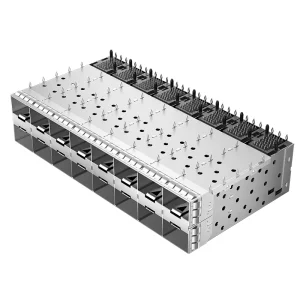
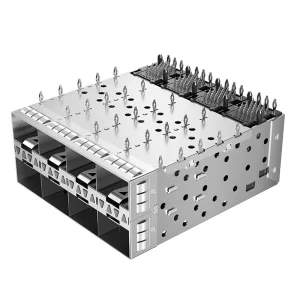
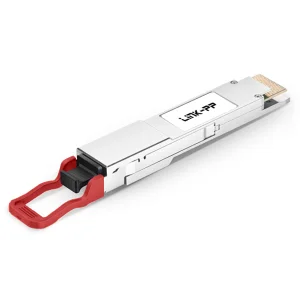
Within high-density data center racks, managing power and heat is critical. Our 100G QSFP28 and 400G QSFP-DD modules are engineered for low thermal dissipation (often under 3.5W per 100G port). When combined with our EMI shielded receptacle cages (such as the 2x8 SFP+ Cage 1-2198346-9), we provide a reliable connection system that limits electromagnetic interference, protecting signal integrity for high-frequency switching engines.
Telecom installations require transceivers that operate reliably under fluctuating weather conditions. Novafiber's industrial temperature range (-40°C to +85°C) modules, including our 1G and 10G BiDi transceivers, allow carriers to double optical capacities over existing fiber cabling. This helps reduce deployment costs in access networks and mobile backhauls.
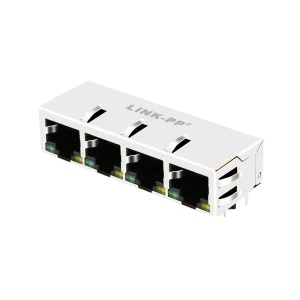
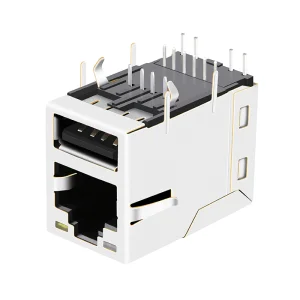
For factory floors and enterprise offices, physical resilience is crucial. Our portfolio includes magnetic RJ45 connectors with integrated PoE/PoE+ capabilities, alongside unshielded RJ11 jacks for legacy systems. This enables stable communication interfaces for industrial automation, smart grid monitoring, and enterprise access switches.
A breakdown of compliance metrics, optical specifications, and technical support frameworks for sourcing departments.
Enterprise procurement teams must balance unit costs, multi-vendor compatibility, and long-term supply security when selecting an optical transceiver vendor. Standardizing procurement protocols helps mitigate risk and ensures smooth deployments:
Simplifying international trade hurdles through strict quality certifications, environmental compliance, and localized assistance.
Navigating international trade and strict environmental regulations is essential for enterprise compliance. Novafiber coordinates with global standards groups to ensure every exported component is ready for deployment in highly regulated markets:
Our products comply with CE, FCC Class B, and UL regulations, meeting international electromagnetic and safety standards for IT and telecom networks.
Every single mode SFP module, cage assembly, and connector is built using lead-free and eco-compliant materials, ensuring compliance with European environmental directives.
With an engineering team of 180 experts, we offer firmware adjustments, protocol updates, and hardware integration support to assist clients across different time zones.
Expert insights addressing key technical, compliance, and custom engineering inquiries for optical transceiver solutions.
The core difference lies in the fiber's core diameter and how light travels within it. Single Mode Fiber (SMF) has a narrow core (typically 9µm) that allows only one mode of light propagation. This eliminates modal dispersion, enabling transmission over long distances (from 2km up to 80km or more) using lasers like DFB or EML. Multimode Fiber (MMF) has a wider core (50µm or 62.5µm) that supports multiple light modes, leading to modal dispersion over longer runs. MMF is generally limited to short-range applications (typically under 300m to 400m) using 850nm VCSEL lasers.
We program each transceiver's internal EEPROM to match the specific coding requirements (such as MSA standards, checksums, and vendor-specific identifiers) of the target equipment. Our engineers test every firmware configuration on original switches from brands like Cisco, Arista, Juniper, Extreme, and Huawei to ensure seamless plug-and-play operation and prevent system errors.
Every module goes through a comprehensive quality verification process. This includes automated optical testing (AOI) to check micro-solder connections, environmental stress screening (ESS) to test performance in varying thermal conditions, and burn-in testing under full electrical load. Finally, we conduct high-temperature aging tests to detect potential early component failures, ensuring high reliability before shipment.
Yes. Our R&D team can customize modules for specific performance requirements. This includes wavelength tuning (such as specific CWDM or DWDM grid wavelengths) and adjusting the internal laser drive or receiver sensitivity to match unique optical budgets and reach specifications (e.g., 20km, 40km, 80km, or up to 120km).
Our products comply with RoHS, REACH, CE, and FCC Class B directives. We screen incoming materials and maintain a clean manufacturing process to ensure our products meet international standards for environmental safety and electromagnetic compatibility.
Explore our high-performance interconnect housings, network jacks, and high-frequency transceivers for data centers.
 Novafiber