Choosing a 10G SFP+ transceiver in 2026 is no longer a simple matter of matching speed and connector type. A module may fit the port physically, yet fail because of wavelength, fiber distance, coding, temperature, or vendor compatibility. That small metal cage deserves careful attention.
Brad Booth, a longtime Ethernet engineer and former Ethernet Alliance leader, once offered a useful reminder: “Interoperability is a system property, not a label on a box.” His point remains practical. A 10G SFP+ transceiver must work with the switch, fiber plant, optics at the opposite end, and monitoring software. One weak link can turn a promising upgrade into a dark link.
Start with the distance. Short multimode runs may suit 10GBASE-SR, while longer single-mode links often require LR or ER optics. Check the exact wavelength, fiber grade, connector polish, and transmission budget. Inspect the installation, too. Dust on an LC connector can create more trouble than an expensive module.
Then examine coding and support. Some switches accept only approved EEPROM profiles. Others tolerate third-party optics but display warnings. Confirm DOM support, operating temperature, warranty terms, and return procedures before purchasing. The cheapest option may not be the least expensive choice.
There is room for honest doubt. Datasheets can simplify real conditions. Heat, bends, aging fibers, and firmware changes still matter. This guide explains how to compare specifications, test compatibility, and choose a 10G SFP+ transceiver with evidence rather than attractive numbers.
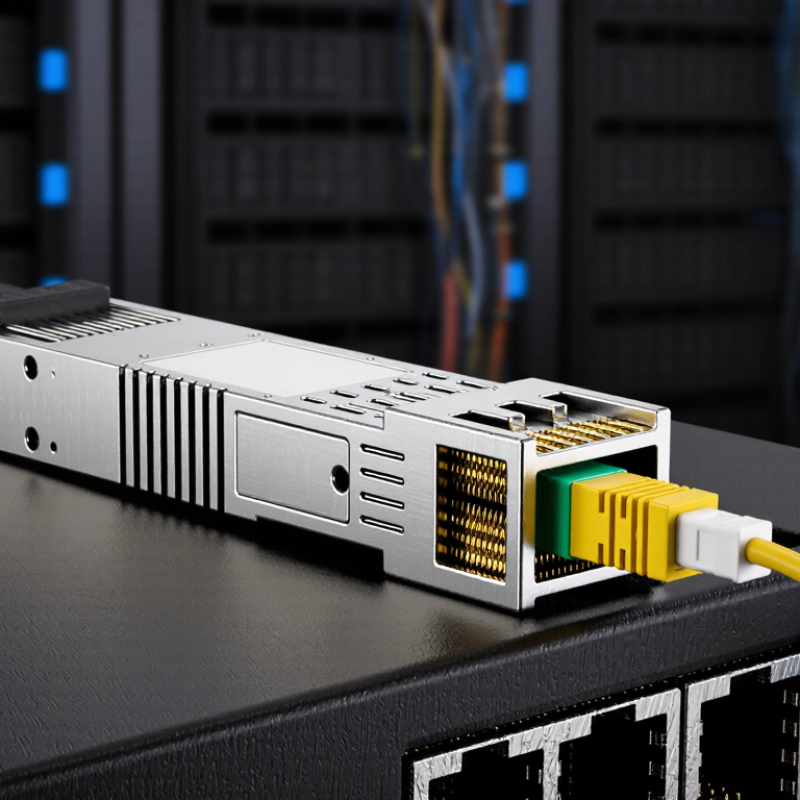
Define Your Network Requirements and Transmission Goals
How to Choose a 10G SFP+ Transceiver in 2026?
Define your network requirements before comparing 10G SFP+ transceivers. Measure the actual link distance, not the estimated distance on a floor plan. A 40-meter server-room connection differs greatly from a 10-kilometer campus link. Identify the fiber type, connector, operating temperature, and switch compatibility. Check whether your equipment requires specific coding or digital diagnostics. These details prevent avoidable link failures.
Your transmission goal matters equally. Decide whether you need stable 10Gbps throughput, low latency, extended reach, or stronger redundancy. For short indoor links, a multimode optical solution may be practical. Single-mode fiber suits longer routes and future expansion. Copper alternatives can work over limited distances, but heat and cable pathways deserve attention. I have seen projects select transceivers by price alone, then discover excessive loss during testing. That mistake is expensive.
Tips: Record the distance, fiber category, connector type, and equipment model before ordering. Request optical budget data and verify transmit and receive power ranges. Leave reasonable margin for aging, patch panels, and dirty connectors. Do not assume every 10G SFP+ module is interchangeable. Confirm temperature ratings for rooftop cabinets or unconditioned rooms. Test one complete link under normal traffic. The result may challenge your original choice.
Match the Transceiver to the Correct Ethernet Standard
How to Choose a 10G SFP+ Transceiver in 2026?
The Ethernet standard should guide your choice, not the module’s appearance. Check the switch port, network design, and IEEE 802.3 requirement before ordering. A 10GBASE-SR transceiver normally uses 850 nm light over multimode fiber. It suits short links, such as server rooms and data centers. OM3 fiber can support about 300 meters, while OM4 may reach 400 meters.
For longer connections, 10GBASE-LR uses 1310 nm light over single-mode fiber. Its typical reach is 10 kilometers. 10GBASE-ER can extend this distance to roughly 40 kilometers, but the installation budget and optical loss need careful review. Do not pair an optical 10GBASE-SR module with a copper 10GBASE-T connection. They use different media and signaling methods. The port may not operate at all.
I check the transceiver coding, wavelength, fiber type, connector, and transmission distance together. Duplex LC connectors are common for optical links, but the installed cabling still decides compatibility. Digital optical monitoring can reveal temperature, voltage, and received power during testing. That evidence is useful when a link becomes unstable. A label alone can mislead.
I once treated distance as the main selection factor. That was too simple. Patch panels, bends, dirty connectors, and aging fiber can reduce the real margin. Verify the Ethernet standard against the switch documentation and test both ends before deployment. Small assumptions become expensive faults.
How to Choose a 10G SFP+ Transceiver in 2026? - Match the Transceiver to the Correct Ethernet Standard
| Ethernet Standard |
Typical SFP+ Media |
Optical Wavelength |
Maximum Standard Reach |
Fiber or Cable Requirement |
Connector |
Best-Fit Deployment |
Selection Consideration |
| 10GBASE-SR |
Multimode optical SFP+ |
850 nm |
Up to 300 m on OM3; up to 400 m on OM4 or OM5 |
Duplex multimode fiber |
Duplex LC |
Data centers, server-to-switch links, and short building backbones |
Choose this option when the installed link uses multimode fiber and the distance is within the short-reach limit. |
| 10GBASE-LRM |
Extended-reach multimode or single-mode optical SFP+ |
1310 nm |
Up to 220 m on legacy multimode fiber; up to 300 m on OM3 |
Duplex multimode or single-mode fiber, depending on the module design |
Duplex LC |
Upgrading older multimode cabling where SR reach is insufficient |
Verify the module’s supported fiber type and link budget because LRM implementations can differ. |
| 10GBASE-LR |
Single-mode optical SFP+ |
1310 nm |
Up to 10 km |
Duplex single-mode fiber |
Duplex LC |
Campus networks, metropolitan links, and long building-to-building connections |
Use LR when the link requires single-mode fiber and the measured distance is longer than multimode limits. |
| 10GBASE-ER |
Extended-reach single-mode optical SFP+ |
1550 nm |
Up to 40 km |
Duplex single-mode fiber |
Duplex LC |
Metropolitan, utility, and inter-site fiber connections |
Confirm optical power, receiver overload limits, and attenuation when the actual span is much shorter than 40 km. |
| 10GBASE-T |
Twisted-pair copper SFP+ module |
Not applicable |
Up to 100 m under the Ethernet standard with suitable balanced twisted-pair cabling; many SFP+ copper modules support shorter distances |
Category 6A or better is recommended for full 100 m operation |
RJ45 |
Copper-based server, switch, and equipment connections |
Check the module’s supported cable category, power consumption, heat output, and maximum stated distance. |
Note: Maximum distances assume compliant cabling, compatible transceivers at both ends, and a link budget within the applicable Ethernet specification. Always verify connector type, fiber type, transmission mode, and equipment compatibility before ordering.
Verify Device Compatibility, Coding, and Operating Temperature
How to Choose a 10G SFP+ Transceiver in 2026?
Compatibility is more than matching “10G” on a product page.
Check the device manual, port type, wavelength, fiber mode, and link distance. A 10GBASE-SR module usually uses 850 nm multimode fiber, while 10GBASE-LR commonly reaches 10 km over single-mode fiber. These distances follow IEEE 802.3 specifications, not marketing language. LightCounting’s 2024 optical communications review valued the transceiver market above 10 billion dollars, showing how quickly module choices are expanding. More choice also creates more mistakes.
Coding deserves careful attention.
A coded SFP+ transceiver stores identification data in its EEPROM, including vendor code, supported rates, and diagnostics. Some switches reject an incorrectly coded module, even when the optics and wavelength are technically suitable. Ask for the exact coding version, not merely “compatible.” I have seen installation teams overlook this detail and spend hours replacing healthy cables. That is avoidable, though compatibility tables are not always perfect.
Temperature can quietly damage reliability.
Commercial modules commonly support 0°C to 70°C, while industrial versions may cover -40°C to 85°C. Confirm the switch cage temperature, airflow direction, and cabinet conditions together. A cold warehouse may still contain a hot rack. The 2024 Uptime Institute data-center survey reported that operators continue tracking thermal conditions as a major reliability concern. Check DOM readings after installation, especially module temperature and optical power. I would not trust a label alone.
Compare Power Use, Reliability, Warranty, and Total Cost
How to Choose a 10G SFP+ Transceiver in 2026?
Power is a small line item until a rack holds hundreds of links. The IEA estimates that data centers consumed about 415 TWh globally in 2024, with demand potentially reaching 945 TWh by 2030. Choose modules rated near 0.8–1.2 watts when network distance allows. Then verify actual draw at idle, full traffic, and high temperature. Datasheet figures are not always field figures.
Reliability needs evidence, not confident wording. Check temperature ratings, digital diagnostics, optical-power alarms, and compliance with SFF-8472 and IEEE 802.3 requirements. Uptime Institute’s 2024 outage analysis reported that 54% of significant outages cost more than $100,000. A failed optic may be inexpensive, but its service interruption is not. I once treated identical-looking modules as interchangeable. That assumption caused unnecessary troubleshooting.
Warranty length matters, but replacement speed matters more. A three-year warranty with unclear return procedures can cost more than a shorter warranty with advance replacement. Request failure-rate data, test methods, and lot traceability. Calculate total cost using purchase price, power consumption, spares, labor, downtime risk, and disposal. For example, a $12 saving can disappear after one emergency visit. Imperfectly, many buyers still compare only the invoice. That is the part worth reconsidering in 2026.
How to Choose a 10G SFP+ Transceiver in 2026?
Comparison of power use, reliability considerations, warranty coverage, and estimated five-year total cost.
Short-reach 10GBASE-SR modules generally use the least power and have the lowest total cost. Long-reach LR and ER optics typically require more optical and thermal headroom, so installation quality, temperature control, and optical-budget validation are important reliability factors.
Planning values are representative non-brand-specific market ranges. Energy cost assumes 24/7 operation for five years at $0.12/kWh. Total cost includes an estimated module price plus electricity; warranty terms vary by supplier and should be confirmed before purchase.
Conclusion
Choosing a 10G SFP+ transceiver starts with a clear understanding of your network requirements and transmission goals. Determine the needed bandwidth, link length, topology, and future expansion plans before selecting a module. Then confirm that the transceiver matches the correct Ethernet standard and supports the required wavelength, fiber type, and transmission distance. Single-mode and multimode fiber serve different applications, so the optical specifications should align with the existing cabling system.
Compatibility is equally important. Check device coding, port support, firmware requirements, and operating-temperature range to reduce installation risks. Finally, compare power consumption, reliability, warranty coverage, and total cost rather than focusing only on the initial purchase price. A well-selected 10G SFP+ transceiver should provide stable performance, efficient operation, and dependable long-term value while fitting both current infrastructure and future network demands.
 Novafiber
